Maintaining a motorcycle yourself can save you money and help you understand your bike better. To do this well, you need the right set of tools. The most important tools include basic hand tools like wrenches, screwdrivers, sockets, and a torque wrench, which allow you to handle most regular maintenance tasks safely and efficiently.
Besides these basics, some specialized tools such as oil filter wrenches and chain adjustment tools make certain jobs easier. Having cleaning supplies and lubricants on hand is also essential to keep your bike running smoothly. With the right kit, you can confidently tackle routine upkeep without relying on a mechanic.
Knowing what tools to invest in saves time and money. This guide will walk you through the essential items to build a practical and effective motorcycle maintenance toolkit. You’ll find out what tools matter most and why having them ready makes all the difference.
Key Takeaways
- Basic hand tools cover most motorcycle maintenance jobs.
- Specialized tools simplify specific repairs and adjustments.
- Cleaning and organizing tools improve maintenance efficiency.
Essential Hand Tools for Motorcycle Maintenance
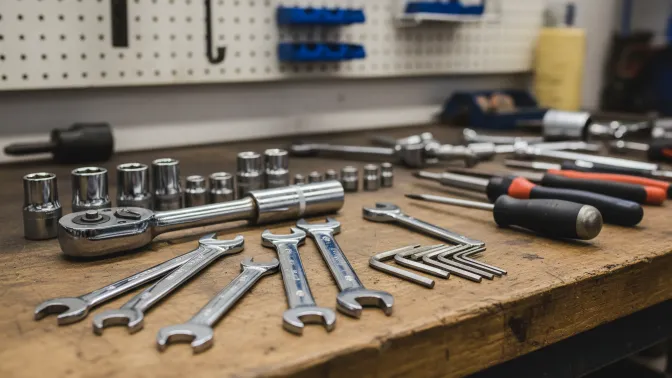
To keep my motorcycle running smoothly, I rely on a few key hand tools. These tools cover most routine tasks like tightening bolts, adjusting parts, and replacing small components. I always make sure to have durable, well-sized tools to avoid damaging my bike or struggling to fit parts.
Wrenches and Sockets
Wrenches and sockets are my go-to tools for loosening and tightening bolts and nuts on the motorcycle. I use a set of combination wrenches because they give good leverage and fit a variety of bolt sizes. Having both metric and standard sizes is important, depending on my bike’s make.
Sockets paired with a ratchet handle make removing bolts faster and less tiring. I keep a range of socket sizes, including deep sockets for reaching recessed bolts. A torque wrench is one tool I won’t skip. It helps me apply the correct tightness to bolts, which is critical to prevent damage or unsafe riding conditions.
Screwdrivers
For screws, I always keep a set of screwdrivers with different types and sizes. That includes flathead and Phillips tips, which cover most screws on motorcycles. I prefer screwdrivers with comfortable grips for better control during use.
Magnetic tips help a lot when working in tight spaces, as they hold screws securely. I avoid using worn or damaged screwdrivers because they can strip screws and make repairs harder. Compact, precision screwdrivers are also handy for smaller parts like electrical connections or throttle adjustments.
Pliers
Pliers are handy for gripping, bending, or cutting wires and small parts. I like to have needle-nose, slip-joint, and cutting pliers in my toolkit. Needle-nose pliers let me access tight spots and handle delicate tasks like adjusting cables or pulling pins.
Cutting pliers are essential for trimming zip ties, wires, or cables. Slip-joint pliers provide an adjustable grip for larger parts and help with parts that may be stuck or rusted. I look for pliers with non-slip handles to ensure safety while working.
Allen Keys
Allen keys, or hex keys, are crucial for bolts with hexagonal sockets, common on modern motorcycles. I keep a complete set of metric Allen keys because most bike parts use metric sizes.
I found that L-shaped keys give me good leverage, but I also use T-handle Allen keys for better grip and torque. Having a variety of lengths helps reach bolts in tight areas. I always check keys for wear to avoid stripping the bolt heads, which can cause expensive repairs.
Specialized Motorcycle Tools
Some tools are made for specific tasks on a motorcycle and can’t be replaced by common household tools. These specialized tools help me work more precisely and save time when doing maintenance or repairs.
Chain Breakers and Riveters
A chain breaker is essential if you need to replace or repair your motorcycle chain. It pushes out pins in the chain links, allowing you to remove damaged sections. The riveter then joins the links back securely by bending the pin end. Without these tools, I wouldn’t be able to get the right tightness or proper chain fit.
Using a quality chain breaker and riveter keeps your chain safe and reliable. Many brands offer kits that combine both tools, making it easier to carry and use. If you want to learn more about how they work, this guide from Motorcycle Cruiser explains chain maintenance well.
Torque Wrenches
Torque wrenches are vital when tightening bolts to the exact pressure the bike’s manual specifies. Over-tightening can damage parts, while under-tightening can cause components to loosen and become unsafe.
I always keep a torque wrench in my toolkit for critical parts like the engine bolts, axle nuts, and brake components. They come in click, beam, and digital types. I prefer a click torque wrench because it gives a clear signal when the desired torque is reached. For precise maintenance, using a torque wrench avoids guesswork and protects parts from damage.
Spark Plug Tools
Special spark plug tools make removing and installing spark plugs easier without damaging them or the engine. They often include a spark plug socket with a rubber insert to grip the plug securely.
When I change spark plugs, I use a long spark plug wrench or socket that fits my bike’s plug size exactly. This tool helps me reach tight spots and prevents the plug from slipping. Keeping the spark plugs clean and tightened properly is key to good engine performance. You can find more details about spark plug tools and care on the NGK Spark Plugs site.
Motorcycle Maintenance Equipment
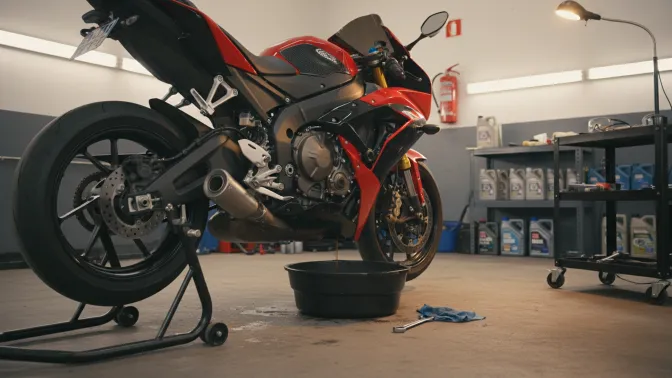
To work on my motorcycle safely and efficiently, I need the right equipment that holds the bike steady, catches fluids, and helps with pouring. Each tool plays an important role in keeping the work clean and manageable.
Motorcycle Stands
I use motorcycle stands to keep my bike stable while working on it. These stands lift the bike off the ground, giving me better access to the wheels, chain, and other parts. There are two main types: front stands and rear stands. Rear stands usually lift the bike by the swingarm or rear axle, which makes tasks like chain adjustments and rear wheel removal easier.
A good stand should fit my bike’s size and weight and be sturdy enough to hold it without wobbling. Some stands have adjustable arms for a better fit. I always make sure to place the stand on level ground to prevent tipping. Using a stand also makes cleaning and lubricating parts simpler because the wheels can spin freely.
Oil Drain Pans
For oil changes, I rely on an oil drain pan to catch old oil safely. These pans come in different sizes, but I choose one large enough to hold all the oil from my motorcycle. A pan with a spout or built-in handle helps me pour out used oil without spills.
It’s important the pan is shallow enough to fit under the bike but wide enough to avoid overflow. Some have measurement marks to help me see how much oil I’ve drained. Using an oil drain pan keeps oil off the floor and protects the environment by making cleanup easier.
Funnels and Fluid Pumps
Funnels are essential when I refill engine oil, coolant, or brake fluid. I use funnels with a narrow spout for precise pouring, which helps prevent spills. Some funnels come with removable filters to catch debris before it enters the system.
For thicker fluids or hard-to-reach reservoirs, a fluid pump is useful. It lets me transfer liquids smoothly without making a mess. Hand pumps or squeeze bottles work well for this purpose. Using the right funnel and pump saves time and avoids contamination, which helps maintain my bike’s performance.
Electrical and Diagnostic Tools
To keep a motorcycle’s electrical system in good shape, I need tools that check voltage, current, and battery health precisely. These tools help me find problems early and avoid bigger issues. They allow me to test circuits and batteries safely and accurately.
Multimeters
I use a multimeter to measure voltage, current, and resistance in a motorcycle’s electrical system. It helps me check if wires and components work correctly. A good multimeter must have clear settings for DC voltage and continuity tests.
When testing, I set the multimeter to the proper range before touching wires or terminals. This prevents damage to the tool or bike. I often use the continuity mode to see if wires connect properly. If I find open circuits or shorts, I know where repairs are needed.
Digital multimeters are easier to read and more reliable than analog ones. Some models also measure temperature or frequency, which can be useful but are less common for basic bike maintenance.
Battery Testers
Battery testers tell me if the battery holds charge and can deliver enough current to start the motorcycle. They give quick results on battery health and help avoid unexpected breakdowns.
I prefer testers that show voltage under load, not just static voltage. This gives a better picture of how the battery performs when the motorcycle starts. Some testers are simple handheld devices, while others connect to a smartphone for detailed diagnostics.
Using a battery tester regularly helps me know when to charge or replace the battery. It also saves time by avoiding repeated starting failures caused by weak batteries.
Cleaning and Lubrication Supplies
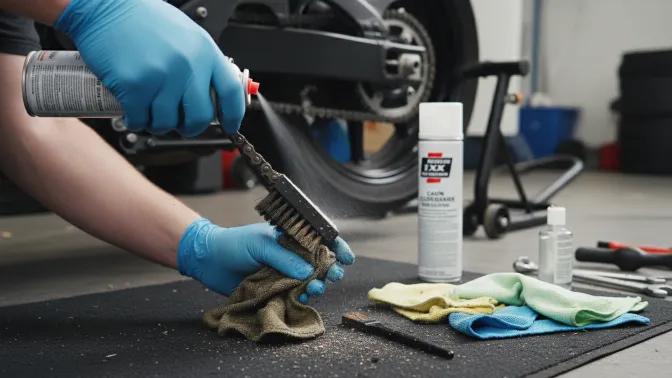
Keeping my motorcycle clean and well-lubricated helps prevent rust and wear. I focus on the right brushes, cloths, and lubricants to reach all parts and protect the bike.
Brushes and Cleaning Cloths
I use different brushes for various parts of the bike. A soft-bristle brush works well for delicate surfaces like paint and plastic. For tougher spots like the chain and wheels, I choose stiff-bristle brushes that can remove dirt and grime without damaging the parts.
Cleaning cloths are just as important. I always keep microfiber cloths on hand. They trap dirt and absorb moisture without scratching the paint or chrome. Using a variety of cloths lets me switch between drying, wiping off grease, or polishing metals safely.
Having the right brushes and cloths makes cleaning faster and prevents damage, which helps keep the bike in good shape.
Lubricants and Sprays
Lubrication is key to keeping parts moving smoothly. I rely on chain lubricants that can penetrate links and reduce friction without attracting too much dirt. I apply these after cleaning and drying the chain thoroughly.
Besides chain lube, I use multi-purpose sprays to protect cables, pivots, and fasteners from rust and wear. These sprays also help loosen bolts when needed.
For cleaning, I keep degreasers and motorcycle-specific cleaners. Degreasers remove old oil and grime from engines and chains, preparing surfaces for fresh lubrication.
Using the right lubricants and sprays regularly keeps my bike safe from corrosion and running efficiently.
Storage and Tool Organization
Keeping my motorcycle tools well organized and easy to find makes maintenance faster and less frustrating. Using the right type of storage helps protect tools from damage and keeps parts from getting lost. Below, I explain the two main storage options I use to keep everything in order.
Toolboxes and Storage Cases
I rely on a sturdy toolbox or storage case to hold the bulk of my tools. A metal or heavy-duty plastic toolbox offers durability and protection. I prefer one with multiple compartments or removable trays to separate wrenches, sockets, and screwdrivers.
Rolling tool carts are great if you have space in your garage because you can move your tools right to your bike. For travel, I use compact cases that fit in my bike’s luggage. These portable kits include essentials like a socket set and screwdrivers, which come in handy on the road.
Look for cases with secure latches and handles for easy transport. You can check options at sites like Harbor Freight or Snap-On for quality boxes designed for mechanics.
Parts Trays
When working on your bike, small parts like screws, nuts, and washers can easily roll away or get mixed up. I keep several magnetic parts trays close by to hold these items safely. The magnets keep the parts firmly in place on metal surfaces or nearby workbenches.
Using clear or brightly colored trays also helps me quickly spot specific small parts. For sensitive components, I use plastic compartment trays with lids to sort parts by type or step in my repair process.
Parts trays improve efficiency by cutting down the time spent searching for lost fasteners during a job. You can find good magnetic and plastic trays from trusted tool suppliers like Milwaukee Tool.
Personal Protective Equipment
When working on my motorcycle, I always wear personal protective equipment (PPE). It helps keep me safe from common injuries like cuts, burns, and eye damage. PPE is just as important as the right tools because accidents can happen even during simple tasks.
The basic PPE I use includes gloves, safety glasses, and closed-toe shoes. Gloves protect my hands from sharp parts and hot surfaces. Safety glasses keep debris and fluids out of my eyes. Closed-toe shoes protect my feet from heavy tools or parts that might fall.
Sometimes, I also wear a dust mask when cleaning or sanding parts. This stops me from breathing in harmful dust or chemicals. If I work with loud tools, I use ear protection to avoid hearing damage.
| PPE Item | Purpose |
|---|---|
| Gloves | Protect hands from cuts and burns |
| Safety Glasses | Shield eyes from debris and fluids |
| Closed-Toe Shoes | Protect feet from dropped tools |
| Dust Mask | Prevent inhaling dust or chemicals |
| Ear Protection | Reduce noise exposure |
Using PPE does not take much time, but it makes my work safer. I always make sure to have these items available before I start any maintenance. It’s a small step that helps me avoid injuries and focus on the task.
Optional Advanced Tools
Some motorcycle maintenance jobs need special tools beyond the basics. These tools help with fine-tuning and handling bigger tasks, making your work more precise and efficient.
Carburetor Synchronizers
Carburetor synchronizers are tools used to balance the airflow between multiple carburetors on bikes with more than one carb. Proper synchronization helps the engine run smoothly and improves fuel efficiency.
I use a vacuum gauge or a mechanical synchronizer to check the vacuum pressure on each carburetor. The goal is to get the vacuum readings equal on all carburetors. If they are off, the engine can run rough, lose power, or use more fuel.
This tool is especially important if you notice uneven idling or hesitation during acceleration. Synchronizing carburetors takes patience but can improve the performance of older or multi-carb motorcycles dramatically.
Tire Changers
Tire changers are tools designed to help remove and install tires on motorcycle wheels without damage. They come in manual and powered versions, but even a simple manual tire changer makes the job easier and safer.
I find this tool useful because changing tires by hand can be tough and risks bending or scratching rims. A tire changer holds the wheel steady and allows me to pry the tire off carefully.
Using a tire changer protects the integrity of the wheel and tire, reducing the chance of improper tire seating or leaks. This is especially helpful if you swap tires regularly or want to avoid the cost of a shop.
FAQs
What are the most basic tools I need for motorcycle maintenance?
I start with a set of wrenches, screwdrivers, and pliers. These tools help me with most tasks like tightening bolts, adjusting cables, and removing parts. A chain tool and a spoke wrench are important if your bike has a chain and spoked wheels.
Do I need special tools for my motorcycle?
Some bikes require specific tools, like oil filter removers or torque wrenches. I check my bike’s manual to see if any special tools are recommended. It’s smart to add those tools gradually as I take on new repair tasks.
Can I maintain my motorcycle with just basic hand tools?
Yes, I can handle routine tasks like oil changes, chain maintenance, and brake adjustments with basic hand tools. For more advanced repairs, having additional tools saves time and prevents damage.
How do I keep my tools organized?
I use a toolbox or a dedicated kit with labeled compartments. This keeps my tools easy to find and protects them from damage or rust. Staying organized helps me work faster and avoid frustration.
Are quality tools important for motorcycle maintenance?
I believe investing in good quality tools is worth it. Cheap tools can break or strip bolts, making fixes harder. Solid tools also last longer, so I don’t have to replace them often.
Conclusion
Having the right tools makes motorcycle maintenance easier and safer. I make sure my toolkit includes basic hand tools like wrenches, screwdrivers, and pliers. These cover most regular repairs and checks.
As I gain experience, I add specialty tools like torque wrenches and oil filter removers. This helps me work more precisely and handle a wider range of tasks. Quality tools also save time and reduce frustration.
Here’s a quick list of essentials I always keep handy:
- Wrenches (open-end and socket)
- Screwdrivers (flathead and Phillips)
- Pliers (needle-nose and standard)
- Torque wrench
- Oil filter wrench
Building a good motorcycle maintenance kit is a step-by-step process. It’s best to start small and expand based on the bike’s needs and the work I want to perform. Having the right equipment increases my confidence in maintaining my motorcycle correctly.