When it comes to motorcycles, the idea of “high mileage” can vary widely depending on the type and size of the bike. Smaller sport bikes are often considered high mileage once they hit between 20,000 to 30,000 miles. Larger cruisers or touring bikes, on the other hand, can handle much more, with 40,000 to 70,000 miles still seen as mid-life rather than high mileage.
High mileage for a motorcycle generally means reaching 20,000 to 50,000 miles, but this depends on the bike’s design, maintenance, and riding conditions. Understanding this range helps you gauge how much wear and tear a motorcycle may have experienced and what you might expect when buying or maintaining one. Different motorcycles age differently, so mileage alone is not the whole story.
I’ll walk you through what mileage really means for your bike, how to spot potential issues, and why mileage doesn’t always tell the full story about a motorcycle’s health. This information will help you make smarter decisions whether you’re buying, selling, or just keeping your ride in good shape.
Key Takeways
- High mileage varies by motorcycle type and size.
- Proper maintenance influences how well a bike handles high mileage.
- Mileage alone does not fully predict a motorcycle’s condition.
Defining High Mileage for Motorcycles
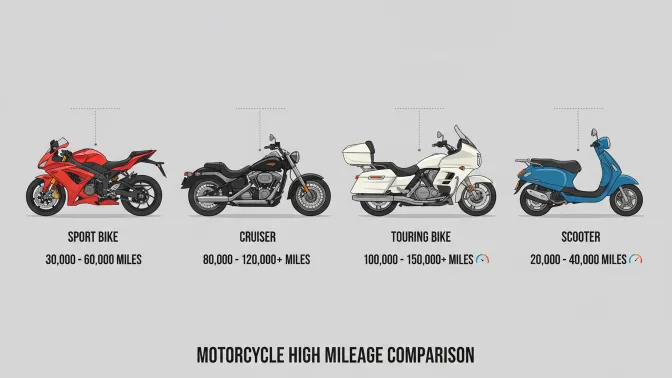
High mileage on motorcycles means many things depending on the type and use of the bike. Factors like engine design and maintenance affect what number marks a bike as “high mileage.” I’ll explain common mileage benchmarks, how they change with different motorcycles, and how motorcycle mileage compares to cars.
General Mileage Benchmarks
For most motorcycles, I consider mileage between 20,000 and 50,000 miles to fall into the high range. Smaller bikes or sport motorcycles usually reach that point closer to 20,000 or 30,000 miles. Larger touring or cruiser bikes can often hit 50,000 miles before the engine and parts show major wear.
Maintenance plays a big role here. A well-kept bike with regular service might last longer even with high mileage, while a neglected one could suffer problems much sooner. I view mileage figures as a rough guide rather than a strict cutoff.
Variations by Motorcycle Type
Motorcycle type affects what counts as high mileage significantly. For example:
- Sport bikes generally have high mileage at around 20,000 to 30,000 miles because they are tuned for performance and often ridden aggressively.
- Cruisers and touring bikes can easily reach 50,000 miles or more as they are made for longer, steadier rides and often have larger, more durable engines.
- Scooters and smaller displacement bikes may show wear earlier due to smaller engines and simpler construction, so high mileage might start closer to 20,000 miles.
I always recommend checking the specific model’s reputation and design to judge its mileage limits better.
Comparisons With Automobile Mileage
Motorcycles are ridden differently than cars, so their mileage can’t be compared directly. Cars average about 10,000 to 15,000 miles per year, while motorcycles usually see closer to 3,000 miles annually.
Because of this, a motorcycle with 30,000 miles might represent about 10 years of use, whereas a car with the same miles could be much newer. Plus, motorcycles put more stress on their engines due to higher RPM ranges and exposure to weather, which affects longevity.
Mileage numbers on motorcycles give me insight into wear but need to be interpreted with context, not like car mileage alone.
Factors Influencing What Is Considered High Mileage
What counts as high mileage on a motorcycle changes based on key factors. These include how well the bike has been maintained, where and how it has been ridden, its engine type and size, and the bike’s age. Understanding these can help you judge a motorcycle’s true condition beyond just the miles shown.
Maintenance History
Maintenance plays a huge role in how long a motorcycle lasts. A bike with 40,000 miles but with regular oil changes, valve adjustments, and timely part replacements may run better than one with less mileage but poor upkeep. I look closely at service records when judging mileage.
Ignoring routine care, like chain lubrication or brake checks, speeds up wear and can turn even moderate mileage into a problem. Sometimes owners neglect the cooling or transmission systems, which can cause costly damage.
A well-maintained bike is less risky even if its miles are high. Checking trusted resources like the Consumer Reports Motorcycle section can help understand maintenance importance on longevity.
Riding Conditions
How and where a motorcycle is ridden affects what counts as high mileage. Bikes frequently used for short trips or city riding often experience more wear due to constant stops and starts. Conversely, long highway rides usually cause less stress per mile.
Rough roads, heavy traffic, and harsh weather also accelerate parts’ wear. A bike ridden off-road or in salty, wet climates will show signs of wear much earlier.
I always ask about typical routes and use conditions when evaluating mileage. Two motorcycles with the same mileage can be very different if one spent most time on smooth highways and the other on uneven streets.
Engine Size and Type
Bigger engines usually handle higher mileage better, but this depends on engine design. For example, cruiser motorcycles with large V-twin engines often reach 40,000-50,000 miles before being considered high mileage. Smaller engines, like those on sport bikes or dirt bikes, may wear faster with fewer miles.
Liquid-cooled engines tend to maintain performance longer than air-cooled ones, especially if properly maintained. Some brands and models are known for durability and can handle more mileage without losing reliability.
Knowing a motorcycle’s specific engine type helps me predict how mileage affects its lifespan. You can learn more about engine differences at Motorcycle.com’s engine guide.
Age of the Motorcycle
Age matters almost as much as mileage. An older motorcycle with low miles might still have issues due to parts drying out, rubber components degrading, or fuel systems clogging over time.
A bike used consistently for ten years at 5,000 miles per year might be in better shape than a three-year-old bike rarely ridden. Age influences the condition of tires, suspension, and electronics, even if miles are low.
I consider both the manufacture year and mileage to estimate how “used” a motorcycle really is. Often, bikes with 15,000 to 30,000 miles but more than ten years old require extra checks for age-related wear.
How High Mileage Impacts Motorcycle Value
High mileage can change how much a motorcycle is worth, but the effect depends on several factors. I look at how mileage influences both resale opportunities and the way a bike loses value over time.
Resale Considerations
When selling a motorcycle, high mileage often lowers the price buyers are willing to pay. Buyers usually see more miles as a sign the engine and parts may need repairs sooner. But not all bikes with many miles sell for less. Brands and models known for lasting longer can keep better value even with higher mileage.
How the bike was used also matters. A bike ridden mostly on highways might be seen as better kept than one used for lots of stop-and-go city riding. Maintenance records become important in these cases because they show how well the bike was cared for, which can ease concerns about its mileage.
Depreciation Trends
Motorcycles typically lose value faster once they hit what many consider “high mileage”—often between 20,000 and 50,000 miles. The slope of depreciation can steepen as wear affects key components like the engine and suspension.
Still, depreciation isn’t only about numbers on the odometer. Good upkeep slows value loss, while neglect speeds it up. Some models hold their value better because parts last longer or are easy to fix, meaning mileage becomes less of a factor in how fast they drop in price.
Common Issues in High Mileage Motorcycles
High mileage on a motorcycle often brings specific mechanical and electrical challenges. These issues usually affect the engine, transmission, clutch, and electrical system. Understanding these helps in spotting trouble early and planning maintenance better.
Engine Wear and Tear
The engine is the most affected part on a high mileage motorcycle. Over tens of thousands of miles, internal components like pistons, rings, and valves wear down. This causes a loss of compression, which hurts power and fuel efficiency.
You might notice rough idling, harder starts, or increased oil consumption. Sometimes, the engine makes unusual noises due to worn bearings or camshaft wear. Regular oil changes help, but after a certain point, a rebuild or replacement may be needed.
Head gaskets and seals also degrade with time, causing leaks. These leaks reduce performance and can lead to overheating. Monitoring coolant levels and watching for smoke from the exhaust are important steps I always recommend.
Transmission and Clutch Concerns
The transmission in a high mileage bike can show signs like difficulty shifting or slipped gears. Gears and shift forks wear, which can cause rough or incomplete gear changes. This becomes noticeable around or past the 30,000-mile mark on many motorcycles.
The clutch is also subject to wear because of constant friction. A worn clutch may slip or feel spongy. This affects acceleration and can increase wear on other parts of the drivetrain.
Replacing or adjusting the clutch and inspecting transmission components regularly will keep the bike running smoothly. I suggest checking for metal shavings in the oil as an early sign of transmission problems.
Electrical System Problems
Electrical components age and become less reliable with high mileage. Common issues include weakened batteries, corroded connections, and failing sensors. These can cause starting problems or erratic performance of lights and gauges.
Wiring insulation can crack or wear, leading to shorts or intermittent faults. Sensors related to fuel injection or ignition timing can fail, impacting engine efficiency.
Regular checks of battery health, cleaning connectors, and testing sensors reduce the chance of sudden electrical failures. I find that a thorough pre-ride inspection catches many electrical problems early before they become serious.
Best Practices for Assessing a High Mileage Motorcycle

When checking a high mileage motorcycle, I focus on how well it was cared for and closely inspect its parts. These two areas can show if the bike is reliable or if it might need costly repairs soon.
Evaluating Maintenance Records
I always ask for detailed maintenance records before considering a high-mileage bike. These documents tell me how often the bike had oil changes, brake checks, and other routine upkeep. A bike with regular service history usually wears better, even if it has many miles.
Look for key services like valve adjustments, chain replacements, and tire changes. Gaps in records or long periods without service can be red flags. I also check if major parts like the clutch or suspension have ever been rebuilt or replaced.
Maintenance history is often more important than mileage alone. It helps predict how long the bike will last. The Consumer Reports motorcycle maintenance guide is a good resource for understanding needed services.
Inspection Tips
Next, I do a hands-on check to spot wear and tear. I focus on the engine for any leaks or strange noises, especially at idle or low speeds. I also test the brakes to see if they respond well and feel firm. Soft brakes can mean worn pads or a problem in the braking system.
Wear on the tires and chain shows how the previous owner rode the bike. I check for uneven tire wear or a chain that is loose or rusted. The suspension should be smooth without any knocking sounds when I push down on the bike.
Electrical parts like lights and signals must also be tested. Problems here might signal poor upkeep or wiring issues. I find a pre-purchase checklist helpful to cover all points, such as the one on Motorcycle.com.
Extending the Lifespan of Your Motorcycle
Taking care of a motorcycle takes planning and careful action. The key to keeping your bike running longer is sticking to a solid routine of maintenance and using the best parts when repairs are needed. Both of these will help avoid breakdowns and keep performance steady.
Regular Maintenance Strategies
I make sure to follow the service schedule in my bike’s manual without skipping steps. Changing the oil regularly, usually every 3,000 to 5,000 miles, keeps the engine running smoothly and avoids wear. Checking and replacing the air filter is just as important because a clean filter helps the engine breathe better.
Next, I check tire pressure and tread before every ride. Proper tire upkeep improves safety and fuel efficiency. I also keep an eye on the brake pads and fluid, as braking power can wear down with use.
Other regular tasks include chain lubrication and adjustment, battery inspection, and tightening all nuts and bolts. Doing these basics on time protects my bike from early failures and keeps it reliable no matter the miles.
Choosing Quality Replacement Parts
When parts need replacing, I don’t cut corners. Using genuine or high-quality aftermarket parts is critical to preserving my motorcycle’s lifespan. Cheap parts might seem like good savings, but they tend to wear out faster and can damage other bike components.
For example, when I replace brake pads, I pick materials that fit my riding style and conditions. Some parts, like spark plugs and filters, should match or exceed the manufacturer’s specs for best results. Also, I avoid using old or refurbished parts that could fail unexpectedly.
Investing in quality parts keeps repairs less frequent and avoids bigger costs later. It also maintains smooth performance and safety, which are both crucial as the miles add up.
Mileage Myths and Misconceptions
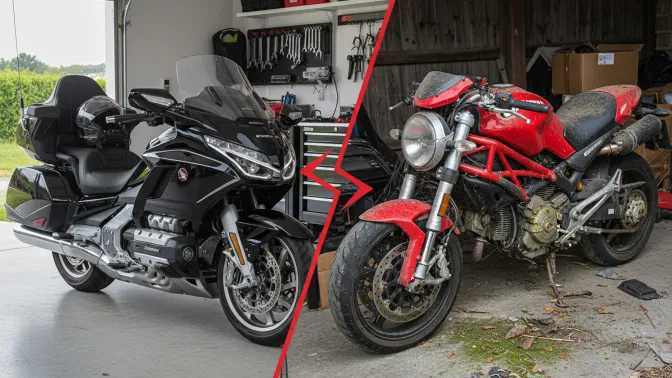
I often hear people say that any motorcycle over 20,000 miles is done for. That’s not true. High mileage depends a lot on the type of bike. For example, a sport bike may start showing wear after 25,000 miles, but cruisers and touring bikes can easily last 50,000 miles or more.
Another common myth is that all high-mileage motorcycles have major engine problems. The truth is, how the bike was maintained matters more than how many miles it has. A well-kept bike with 40,000 miles can be better than a bike with 10,000 miles but poor care.
Some people think mileage is the only thing to check when buying a used motorcycle. I believe that’s a mistake. You should also look at how the bike was ridden, the maintenance history, and its overall condition.
Here is a quick view of some common mileage beliefs and facts:
| Myth | Fact |
|---|---|
| Over 20,000 miles is bad | Depends on the bike type and care |
| High mileage means big repairs | Good maintenance can keep bikes reliable |
| Low mileage always better | Condition and history matter more |
It helps to remember that mileage is just one piece of the puzzle. I focus on facts and what the bike really shows, not just a number on the odometer.
FAQs
What counts as high mileage on a motorcycle?
High mileage varies by bike type. For sport bikes, I consider 20,000 to 30,000 miles as high. For cruisers or touring bikes, 40,000 to 70,000 miles can still be average or mid-life.
Does high mileage mean a motorcycle is worn out?
Not always. How the bike was maintained matters more than just miles. Regular oil changes and proper care can keep a bike running well beyond what some call high mileage.
Are some bikes better suited for high miles?
Yes. Larger engines and touring motorcycles often handle higher mileage better than smaller sport bikes. Their parts are built for longer rides and steady use.
| Bike Type | High Mileage Range |
|---|---|
| Sport Bikes | 20,000 – 30,000 miles |
| Cruisers | 40,000 – 70,000 miles |
| Touring Bikes | 40,000 – 70,000 miles |
Should I avoid buying a motorcycle with high mileage?
I think you should look deeper. Check service history, overall condition, and if original parts are intact. High mileage is a factor but doesn’t automatically mean a bad bike.
How does mileage affect resale value?
More miles usually lower value. But a well-kept, high-mileage bike can sell better than a low-mileage bike that was poorly maintained. Mileage alone doesn’t tell the full story.
Conclusion
When I think about high mileage for motorcycles, I know it varies a lot by bike type and use. For small sport bikes, 20,000 to 30,000 miles can be considered high. Larger bikes, like cruisers or touring models, often handle up to 50,000 miles before that label fits.
I also keep in mind that mileage alone doesn’t tell the full story. A well-maintained bike with 40,000 miles might be in better shape than a neglected one with 15,000 miles. Factors like service history, riding habits, and the bike’s environment play a big role.
Here’s a quick look at what I consider key when thinking about high mileage:
- Type of motorcycle (sport vs. cruiser)
- Maintenance and service records
- Riding conditions (city, highway, off-road)
- Age of the bike and parts replaced
I find that understanding these factors helps me make better choices when buying or selling used motorcycles. Mileage numbers give me a rough estimate, but they are not the only measure of a bike’s health.