
You want oil that protects your engine, keeps the clutch working, and fits your bike and riding style. I recommend a high-quality synthetic motorcycle oil that meets your bike maker’s specs (API and JASO ratings) and the right viscosity for your climate — that gives the best balance of protection, performance, and clutch compatibility.
I’ll show how to pick the correct oil for sportbikes, cruisers, and off-road machines, explain why synthetic often wins, and list options that match common uses and service intervals. This will help you choose oil that lowers wear, reduces heat, and keeps your bike shifting smoothly.
Key Takeaways
- Match oil type and viscosity to your motorcycle and climate for best results.
- Choose oils with motorcycle-specific certifications for clutch and engine protection.
- Use synthetic options when you want longer life and better thermal stability.
Understanding Motorcycle Engine Oils
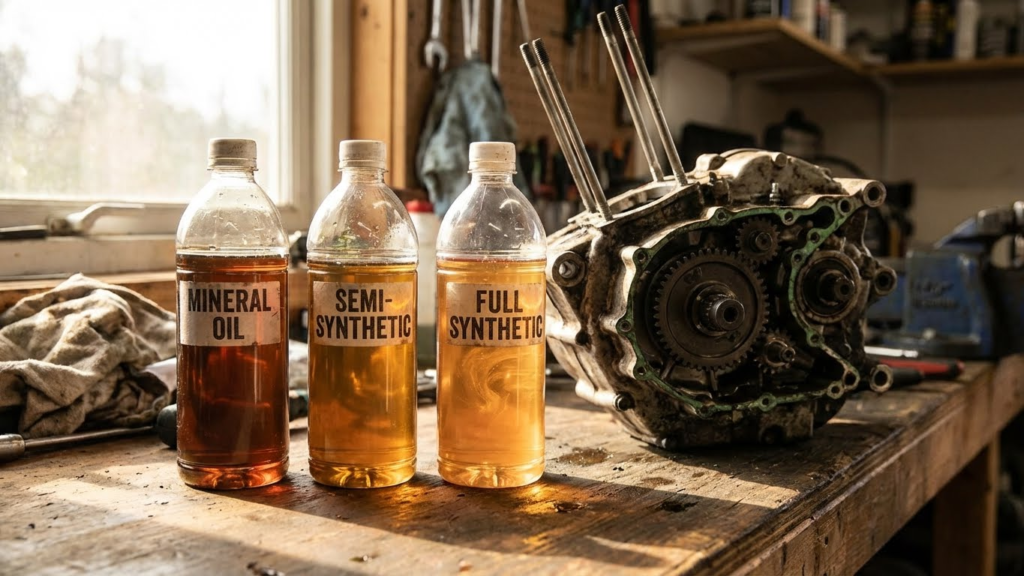
I’ll explain the key choices, what oil actually does inside a bike, and why motorcycle oils differ from car oils. Read the specifics on types, main functions, and the critical differences you must watch for.
Types of Engine Oils for Motorcycles
Motorcycle oils fall into three main types: mineral, semi-synthetic, and fully synthetic. Mineral oil comes from refined crude and works fine for older or low-stress engines. It costs less but breaks down faster under heat.
Semi-synthetic mixes mineral and synthetic base stocks. It offers better thermal stability and longer life than mineral, making it a solid choice for daily riders who want some protection without high cost.
Fully synthetic oils use engineered base stocks and more active additives. They resist shear and high temperatures better. I recommend synthetic for high-revving engines, long highway trips, or modern bikes with tight tolerances.
Choose based on engine design, riding style, and service intervals. Check your owner’s manual for approved oil types and manufacturer specs.
Functions of Engine Oil
Engine oil lubricates metal parts to cut friction and reduce wear. It forms a film between moving parts like bearings, camshafts, and pistons.
Oil also cools parts by carrying heat away from hot spots. It suspends and carries contaminants and combustion byproducts to the filter. Additives control corrosion, prevent foaming, and keep valves and rings clean.
Oil must maintain viscosity across temperature ranges. Too thin at high temps causes poor film strength; too thick at cold start-up slows oil flow. I watch viscosity grade and change intervals to keep oil doing these jobs reliably.
Differences Between Car and Motorcycle Oils
Motorcycle oils must handle wet clutches in many bikes. I avoid car oils that can contain friction modifiers which make clutches slip. Motorcycle oils usually specify “JASO MA/MA2” or equivalent to confirm clutch compatibility.
Motorcycle engines often run at higher RPM and share oil with the gearbox. That means motorcycle oil needs stronger shear stability and gear protection than standard car oil. Viscosity and additive balance differ for these multi-function demands.
Always use oil that lists motorcycle specifications and matches your bike’s required SAE grade. Using the wrong oil risks clutch problems, faster wear, and poor shifting.
Key Factors When Choosing Motorcycle Engine Oil
I focus on the practical things that matter: oil thickness for temperature, industry certifications, and whether a synthetic base makes sense for your bike and riding. Choose oil that matches the bike maker’s specs, your climate, and how you ride.
Viscosity Ratings Explained
Viscosity numbers like 10W-40 tell you how the oil flows cold (10W) and at engine temperature (40). The lower the first number, the better the cold-start flow. The higher the second number, the thicker the oil when hot.
Pick the grade your owner’s manual lists. If you ride in cold climates, I use a lower “W” number for easier starts. For hot climates or long highway runs, I choose a higher hot-rating to keep film strength under load.
Viscosity also affects clutch slip in some wet-clutch bikes. Thicker oil can reduce slippage but may harm feel; thinner oil helps shifting but can thin too much on long hot rides. For quick reference, the SAE viscosity chart on the SAE website explains the numbers in detail: https://www.sae.org/.
API and JASO Standards
API (American Petroleum Institute) gives broad engine protection ratings. For motorcycles, also check JASO (Japanese Automotive Standards Organization) ratings like MA and MA2. JASO MA2 ensures friction properties suitable for wet clutches.
I always match or exceed the API rating in the manual, and I look for JASO MA2 when the bike has a wet clutch or combined transmission. Labels show these certifications; if you can’t find them, consult the oil maker’s tech data sheet.
Government and industry sites maintain standard summaries that help validate claims. The API service pages explain the meaning of current categories: https://www.api.org/.
Synthetic vs Mineral vs Semi-Synthetic
Mineral oils come from crude and cost less, but they break down faster under heat. Semi-synthetics mix mineral and synthetic to give better stability at a moderate price. Full synthetics resist heat and shear, so they protect longer and often extend drain intervals.
I pick full synthetic for high-revving sport bikes, forced-induction engines, or long highway trips. For low-mileage, older commuter bikes, semi-synthetic or mineral can be fine if the manual allows it. Check manufacturer recommendations before switching; some older engines need specific additives found in mineral oils.
Also compare oil change intervals and price-per-mile. Synthetic costs more up front but can lower maintenance time and wear. Look at the product data sheet for shear stability and drain interval guidance from the maker before deciding.
Best Engine Oil Options for Motorcycles
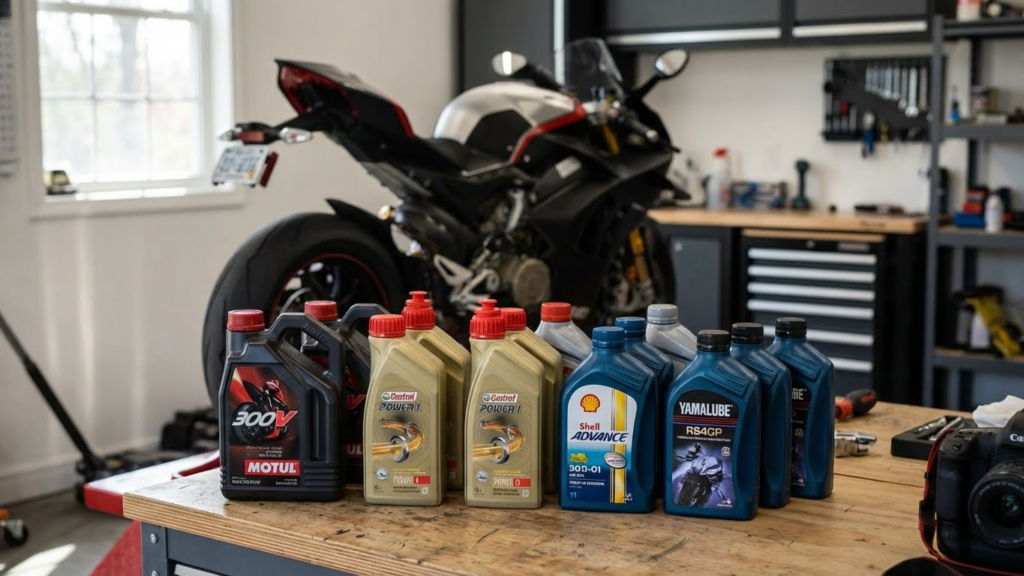
I focus on oils that protect gears, clutch plates, and bearings while matching the bike’s requirements for viscosity and wet-clutch compatibility. I list oils by type and explain why each suits different bikes and riding styles.
Top-Rated Synthetic Oils for Motorcycles
I recommend synthetic oils when riders need strong heat resistance and long drain intervals. Full synthetics keep viscosity stable at high temperatures and protect under hard acceleration and stop-and-go traffic.
Key benefits I look for:
- High thermal stability to resist breakdown on long rides.
- Strong anti-wear additives to protect cams, bearings, and pistons.
- Wet-clutch compatibility so the clutch does not slip.
Typical choices I use or suggest: 10W-40 and 10W-50 fully synthetic blends for sport and high-revving engines; 20W-50 for many V-twins in hot climates. I check certifications like JASO MA/MA2 and API SN to confirm clutch and engine protection.
Recommended Mineral Oils
I choose mineral oils for older bikes and simple engines that don’t demand modern additive packages. They cost less and work well in low-stress, low-revving motors.
When I recommend mineral oil, I focus on:
- Compatibility with vintage engines and seals.
- Smoother shifting in older gearboxes that were designed for simpler oils.
- Lower cost and easier disposal between changes.
Common grades I suggest: 20W-50 or 15W-40 for air-cooled singles and older twins. I avoid mineral oil in high-performance or heavily loaded engines because it breaks down sooner and offers less wear protection.
Leading Semi-Synthetic Oils
I pick semi-synthetic oils when riders want a balance of protection and cost. These oils blend mineral and synthetic bases to give better thermal control than mineral oil while costing less than full synthetic.
Why I recommend semi-synthetics:
- Improved shear stability compared to straight mineral oil.
- Good for mixed-use—commuting, touring, and occasional spirited rides.
- Often meets JASO MA standards, so they work with wet clutches.
Typical choices I favor: 10W-40 semi-synthetic for modern mid-sized bikes and 15W-50 for cruisers. I advise checking the owner’s manual and using a product that lists JASO and API specs to ensure proper protection.
Matching Engine Oil to Motorcycle Type
I focus on the exact oil traits each bike needs: viscosity, additive pack, and whether the engine shares oil with the transmission. Pick oil that matches the engine design, climate, and service interval.
Oil Selection for Sport Bikes
I choose oils that hold film strength at high RPM and protect under high heat. For modern sport bikes I look for full synthetic oils with API SN or higher and JASO MA/MA2 ratings so the wet clutch works smoothly. Viscosity matters: 10W-40 or 10W-50 often fits high-rev four-strokes, while some manufacturers specify 5W-40 for cold starts.
I check the owner’s manual for the exact SAE grade and approved specs. I also prefer oils with strong anti-foaming and shear-stable bases so viscosity stays stable under hard track use. For brands and specs, I consult manufacturer tech pages and independent tests, such as those on motorcycling magazines and OEM sites like Honda or Yamaha.
Oil Requirements for Cruisers and Touring Bikes
I pick oils that give long life, anti-wear protection, and stable damping for big pushrods and wet clutches. V-twins and large cruisers often need 20W-50 or 15W-50; some require oils labeled for V-twin or “twin” formulations with extra zinc (ZDDP) for flat tappet cams. Touring bikes with shaft drives may use oils meeting both engine and final-drive needs, or separate gearbox fluids if the systems are distinct.
I favor synthetic blends or full synthetics when the bike does long highway miles because they resist thermal breakdown and extend drain intervals. Always follow OEM service intervals and check the manufacturer site for spec sheets or bulletins if you plan longer oil change intervals.
Best Oil for Off-Road and Adventure Motorcycles
I choose oils that handle water, dirt, and wide temperature swings. Off-road and dual-sport bikes often run 10W-40 or 10W-50 in four-strokes; two-strokes need proper premix or factory two-stroke oil rated for low-smoke, high lubricity. Adventure bikes that cross cold mornings and hot deserts may use 5W-40 to ease starts but retain protection at high temps.
I look for JASO MA/MA2 for wet-clutch compatibility and robust detergents to handle long air filter intervals. For guidance on extreme environments, I reference manufacturer recommendations and trusted technical resources like the Motorcycle Safety Foundation and OEM service manuals.
Influence of Riding Conditions on Oil Choice
I focus on how heat, cold, ride length, and stop-and-go use change the oil you should pick. These factors affect viscosity, additives, and how often you must change oil.
Temperature and Climate Considerations
I choose oil viscosity to match real temperatures where I ride most. In cold climates I prefer lower “W” ratings like 10W or 5W so the oil flows quickly at startup and reduces wear. In hot climates I use higher hot‑rating oils (e.g., 20W-50) or full synthetics that resist thinning at high engine temperatures.
I also check oil type and additives. Synthetic oils handle extreme heat better and resist oxidation, so they last longer in hot, dusty conditions. If riding where temperatures swing widely, I pick a multi-grade synthetic (e.g., 10W-40) to cover both cold starts and high operating temps.
Frequent Short Rides vs Long-Distance Touring
Short, stop-and-go rides keep the engine near startup temps and don’t fully evaporate moisture and fuel contaminants. For that use I change oil more often and often use oils with good detergents and anti-corrosion additives to protect wet crankcases.
For long-distance touring I pick stable, high‑temperature synthetics with strong shear resistance and long drain intervals. These oils maintain viscosity under sustained high rpm and heavy loads. I also consider oils with proven JASO MA or API motorcycle ratings to ensure clutch compatibility and transmission protection.
Engine Oil Change Intervals and Maintenance
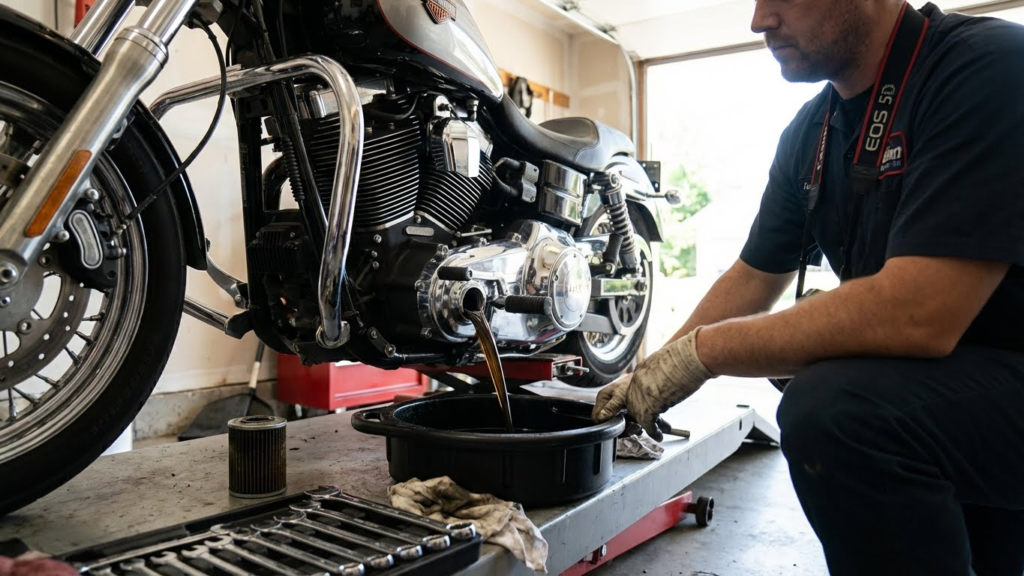
I focus on two things: following the bike maker’s schedule and watching clear signs that oil wears out. Proper timing and simple checks keep the engine reliable and avoid costly damage.
Manufacturer Recommendations
I always start with the owner’s manual for the exact oil-change interval. Manufacturers set miles or hours (for scooters and off-road bikes) and often list different intervals for normal vs. severe use. Typical ranges: 3,000–6,000 miles for conventional oils and up to 7,500–10,000 miles for many full synthetics, but your manual is the final word.
Follow the specified oil grade (example: 10W-40) and API/JASO ratings listed in the manual. Also follow torque specs and filter-change intervals. When the manual gives service intervals in months, use the shorter timeframe if you ride infrequently or store the bike over winter.
Signs Your Motorcycle Oil Needs Changing
I check oil by visual and sensory cues between scheduled services.
- Visual: dark, gritty, or cloudy oil on the dipstick or sight glass means contamination.
- Smell and feel: burnt smell or a gritty texture suggests breakdown or debris.
- Performance: increased engine noise, rough idling, or higher operating temperature can point to degraded oil.
- Mileage/hours: if you exceed the manual’s limit or do many short trips, change oil sooner.
I also inspect the oil filter and drain plug for metal particles during changes. If I see metal shavings, I stop riding and investigate further.
Common Myths About Motorcycle Engine Oil
I often hear that thicker oil always protects better. That is not true. Viscosity matters for your engine’s design and temperature. Using oil that’s too thick can hurt cold starts and lower fuel efficiency.
Some riders say synthetic oil damages wet clutches. I disagree. Modern motorcycle-specific synthetics are made to work with wet clutches when they meet the right JASO MA/MA2 specs. Always check the label for clutch compatibility.
A common claim says you must change oil very frequently or your engine will fail. Regular changes are important, but interval depends on oil type, bike age, and riding style. I follow the owner’s manual and use condition-based checks when possible.
People sometimes swap car oil into a motorcycle to save money. That can be risky. Car oils may lack the right friction properties and additives for a bike’s gearbox and clutch. If you must reuse car oil, verify it meets motorcycle specifications.
Another myth is that higher price always means better oil. Cost can reflect brand and marketing, but the right oil matches specs and viscosity for your bike. I choose oil based on manufacturer guidelines, tests, and proven performance rather than price alone.
I keep a short checklist when choosing oil:
- Match viscosity to the manual.
- Confirm JASO or API ratings for motorcycles.
- Prefer motorcycle-specific formulations for wet-clutch bikes.
These steps cut through myths and keep engines running well.
Environmental and Legal Considerations
I pay attention to oil disposal rules because used oil can harm soil and water. Many places require recycling used oil at collection centers or service shops. Throwing oil in trash or storm drains is illegal in many areas.
I choose oils that meet emissions and fuel-efficiency standards when possible. Synthetic and low-friction oils can reduce fuel use and emissions slightly, but check your bike maker’s specs first. Using the wrong oil can affect catalytic converters and emissions controls.
I look for oils with proper certifications like API, JASO, or manufacturer approvals. These labels show the oil meets performance and engine-protection tests. Keep the oil label or spec sheet with your service records for legal and warranty proof.
I follow local laws on oil change procedures and waste handling. Many regions require spill prevention and containment when changing oil. If I work in a public area or run a shop, I use drip pans, absorbents, and licensed waste haulers.
I recommend keeping records of oil type, date, and mileage. Records help with warranty claims and emissions inspections. They also show you care for the bike and the environment.
FAQs
I get asked which oil type to pick most often. I recommend checking your owner’s manual first, then choosing between full synthetic, synthetic blend, or mineral based on budget and riding style.
What viscosity should I use? I follow the bike maker’s recommended SAE grade such as 10W-40 or 20W-50. Thinner oils flow better in cold starts; thicker oils can protect high-temperature riding.
Do I need motorcycle-specific oil? Yes. I prefer oils labeled for motorcycles because they cater to wet clutches and shared engine/transmission systems. Car oils may cause clutch slippage.
How often should I change oil? I change oil based on the manufacturer’s service interval or every 3,000–5,000 miles for many bikes using conventional oil. Synthetic oils often allow longer intervals, but I still inspect levels and condition regularly.
What about certifications and additives? I look for API and JASO MA or MA2 ratings for motorcycle use. Additives like anti-wear and detergents matter, but I avoid extra friction reducers if they risk clutch performance.
Can I mix oils? I try not to, but small mixes in an emergency are usually safe if both oils are similar (same viscosity and type). Full changes are better as soon as possible.
How do riding conditions change my choice? For frequent high-load, hot-weather, or touring use, I lean toward high-quality full synthetics with strong thermal stability. For short, cool-city rides, a reliable mineral or blend can suffice.
Quick checklist:
- Follow the manual.
- Use JASO MA/MA2 for wet clutches.
- Match viscosity to climate.
- Prefer full synthetic for heavy use.
Conclusion
I recommend choosing oil that matches your motorcycle maker’s specs and your riding needs. Viscosity, API/JASO ratings, and whether the oil is synthetic matter more than brand names.
I favor synthetic oils for better heat control and longer change intervals. For short trips or older bikes, high-quality mineral or semi-synthetic oil can work well and cost less.
If you ride hard, carry a wet clutch, or ride in hot weather, pick an oil with JASO MA/MA2 certification. That protects the clutch and keeps shifting smooth.
I keep a simple checklist when I shop:
- Verify the owner’s manual specs.
- Choose the right viscosity for your climate.
- Prefer synthetic if I want longer protection.
- Confirm JASO/API ratings for motorcycle use.
I change oil at intervals recommended by the maker, and I check levels more often when I ride fast or in extreme heat. Good oil and regular changes extend engine life and keep the bike reliable.