You need a simple rule that keeps space between you and the traffic ahead so you can spot hazards and stop safely. The 4-second rule tells you to pick a fixed point the vehicle ahead passes, then count four seconds before you pass that same spot — that gap gives you time to see a problem, decide, and act.
I’ll show how to judge that distance, adjust it for speed and weather, and avoid common mistakes that shrink your margin for error. Keep reading to learn how a small habit can cut your crash risk and make your rides calmer and more controlled.
Key Takeways
- Keep a time-based gap to give yourself enough reaction and stopping time.
- Increase the gap when speed, road, or weather conditions worsen.
- Use the rule consistently to reduce close-following and improve safety.
Understanding the 4-Second Rule
I explain how to measure the rule, why it matters for riders, and where the guideline came from. The details below show how to use the rule in real riding, the safety benefits, and its origins.
Definition of the 4-Second Rule
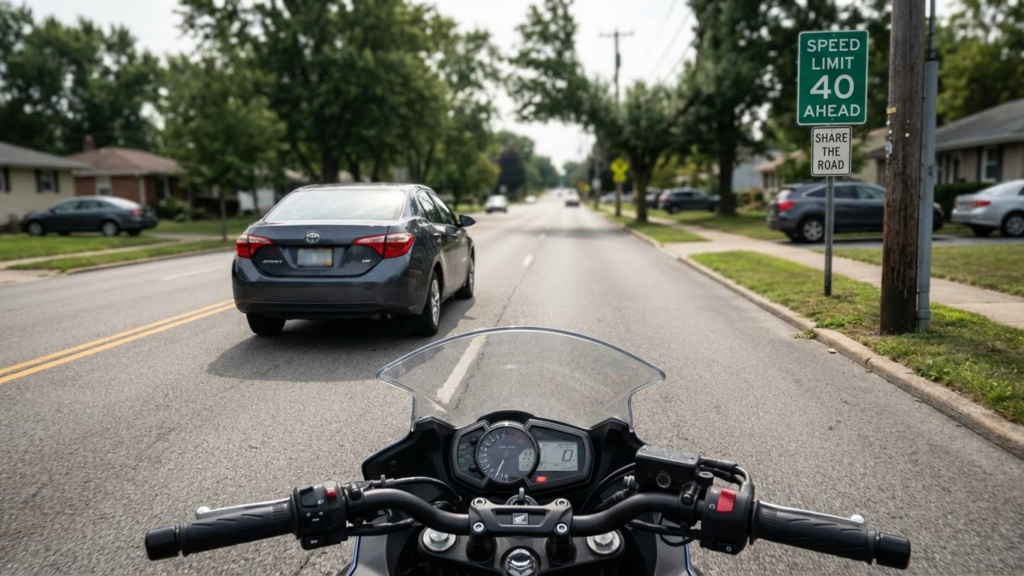
I define the 4-second rule as a time-based following distance method. Count four seconds between the rear of the vehicle ahead passing a fixed point (like a sign or shadow) and your front wheel reaching that same point. If you reach the point in less than four seconds, increase your gap.
This method adapts to speed: the faster you go, the more space you need because your stopping distance and reaction needs grow. I note that environmental factors—rain, gravel, night—should make you add extra seconds. The rule is simple to use and does not require speed math, just steady counting.
Purpose in Motorcycle Riding
I focus on four main benefits for riders: reaction time, braking margin, visibility, and maneuver space. A four-second gap gives me time to see hazards, decide on a response, and use braking or evasive steering without colliding.
Keeping that gap reduces the chance of rear-ending sudden stops and helps me avoid being boxed in by other traffic. It also improves my line of sight to upcoming road conditions and lets me move into an escape path. I stress that the rule is a minimum baseline; I increase distance when road or traffic conditions worsen.
Historical Background
I trace the rule to driver safety research and time-gap recommendations used in traffic safety programs. Early studies on reaction time showed most people take about 1.5–2 seconds to perceive and begin responding to a hazard. Safety educators expanded that into longer time gaps for higher-risk vehicles like motorcycles.
Over time, rider training courses and safety advocates adapted the 4-second idea because motorcycles need extra space to stop and to avoid hazards. It became common advice in motorcycle safety literature and training as a practical, easy-to-teach guideline that riders can use without instruments or calculations.
How to Apply the 4-Second Rule
I will show you exactly how to measure and use a four-second gap, how to change that gap for weather or traffic, and how to check your distance while riding.
Step-by-Step Instructions
I pick a fixed roadside marker, like a sign or a lamp post, and watch the vehicle ahead pass it.
Then I count aloud: “one-thousand-one, one-thousand-two, one-thousand-three, one-thousand-four.” If I reach the marker before I finish, I increase the gap.
Keep speed constant while you count. Use the same marker each time so you build a habit.
If traffic forces you closer, I brake gently and signal my intent to slow. I avoid sudden inputs that could unsettle the bike.
Practice this at low speeds in quiet areas first. I ride with a calm throttle, looking for the marker and counting without rushing. This builds the reflex to keep a safe cushion automatically.
Adjusting for Different Road Conditions
I widen the gap in rain, fog, or at night because braking distance and reaction time increase. In wet conditions I use at least a six-second gap. On slick surfaces I roll off the throttle earlier and use both brakes smoothly.
In heavy traffic or stop-and-go I move to a staggered formation if riding with others, and I leave room to swerve. In high-speed settings like highways I keep more than four seconds when cars are large or towing trailers.
When visibility drops, I lower my speed and increase distance before hazards appear. For guidance on braking distances in wet weather I consult safety resources like the NHTSA or a motorcycle safety training site.
Checking Your Following Distance
I confirm my distance by repeating the marker-count method every few seconds, not just once. If I find myself closing in, I back off immediately by easing the throttle or changing lanes when safe.
I also use visual cues: if the vehicle’s rear tires are obscured by road spray or heat shimmer, my gap is too small. Mirrors help, but I focus mainly on the space ahead and beside me.
If I’m uncertain, I reduce speed until the count matches four or more. For formal training and drills I refer to programs like the Motorcycle Safety Foundation for exercises I can practice with an instructor.
Importance of Safe Following Distance
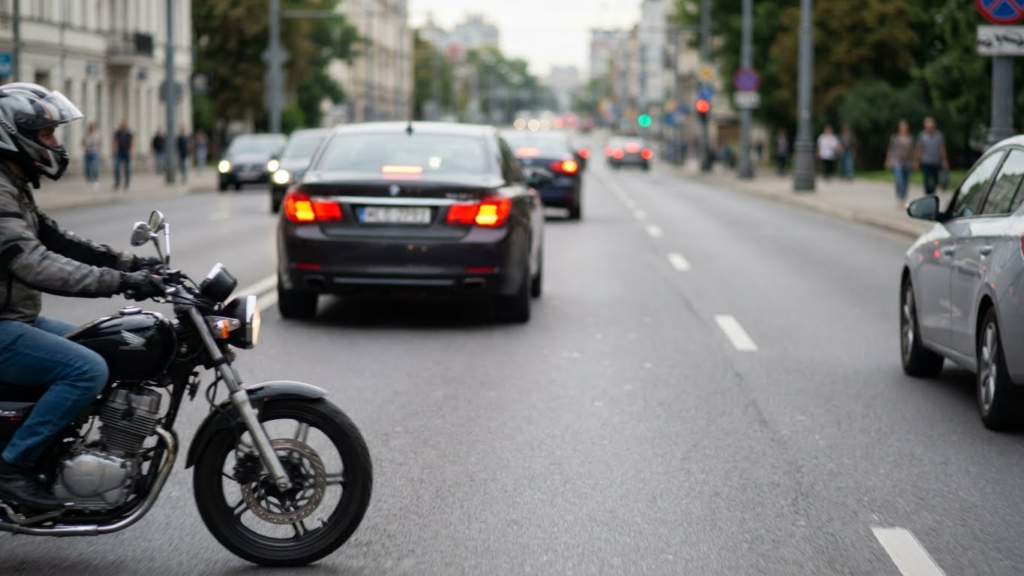
I stress keeping space because it gives time to see hazards, react, and stop safely. Proper distance reduces crash risk, keeps visibility clear, and helps me handle sudden changes in traffic.
Reaction Time for Motorcyclists
I need time to perceive a hazard and move my hands or feet to brake or steer. Human reaction alone often takes about one second, but complex situations—like a car changing lanes or a pothole—can take longer.
The 4-second rule builds in extra time for both my mental processing and physical action. That buffer helps when I ride at highway speeds where stopping distance grows fast. It also gives me room to choose options: brake, swerve, or roll off the throttle.
I watch the vehicle ahead pass a fixed point and count to four. If I reach that point sooner, I ease back. This simple check helps me maintain a margin that covers typical delay and the bike’s braking limit.
Collision Avoidance
I use following distance as my first line of defense against rear-end collisions. A four-second gap gives me space to slow smoothly rather than brake hard and risk locking the wheel.
That gap also lets me see brake lights and turn signals earlier. Early detection lets me adjust speed gradually and pick a safer escape path if the car ahead stops suddenly.
When roads are wet, I add time. When visibility is poor or traffic is heavy, I increase the gap more. I treat the 4-second guideline as a minimum, not a fixed rule, and adjust for conditions.
Impact on Rider Visibility
Keeping distance improves what I can see. With four seconds of space I can see the whole vehicle ahead and the traffic beyond it. That helps me spot brake lights, tire squirm, or a driver looking distracted.
Greater spacing also makes me more visible to drivers behind and to the side. If I need to signal or change lanes, I have room to do it without surprising other drivers.
I avoid riding in blind spots and I shift lanes early if the gap shrinks. Clear sightlines and predictable position on the road reduce sudden moves and keep me safer.
Factors Affecting the 4-Second Rule
I rely on specific cues to decide if four seconds is enough. Weather, road surface, traffic patterns, and how the bike handles all change the time I need to stop or avoid a hazard.
Weather and Road Conditions
Wet or icy surfaces cut traction and lengthen my stopping distance a lot. Rain wets the road film and reduces tire grip; I add several seconds to my following gap. On ice or packed snow, I stop increasing speed and use much larger gaps—four seconds becomes unsafe.
Visibility matters too. Fog, heavy rain, or glare from low sun mean I spot hazards later. If I can’t see the brake lights or road debris early, I increase the gap so I have time to process and brake smoothly.
Road surface texture and debris change things as well. Gravel, oil, and uneven pavement reduce control during braking. On those surfaces I slow down and use a bigger cushion than four seconds to keep a margin for recovery.
Traffic Density
In heavy traffic I expect frequent speed changes and close lane changes. I avoid relying strictly on four seconds when cars bunch up; I aim for a variable buffer based on the flow. If vehicles are weaving, I drop speed and expand the gap to maintain reaction time.
When traffic moves steadily at highway speed, I can maintain a consistent four-second gap more easily. But in stop-and-go or congested lane-split zones, I treat four seconds as a minimum and keep a flexible plan for when gaps close.
I also watch the behavior of drivers ahead. If the lead car is tailgating someone else or shows distracted cues, I increase my distance proactively to avoid getting trapped.
Motorcycle Handling Characteristics
My bike’s braking power, weight, and tire condition change how much time I need. A sport bike with strong brakes can stop faster, but high-performance tires demand precise inputs; I still allow extra margin for human reaction. A heavy touring bike takes longer to slow; I add seconds to the following distance.
Brake system type matters. ABS helps prevent lockup and shortens stopping distance on slippery surfaces, so I may rely on it to reduce margin slightly. Non-ABS bikes require gentler, longer braking, so I expand my gap.
Tire tread, pressure, and load affect traction. Worn tires or heavy luggage raise stopping distance. I check tires and adjust my following time accordingly, since mechanical limits determine how close I can safely ride.
Common Mistakes and How to Avoid Them
I focus on mistakes riders make with following distance, confidence, and changing road conditions. I give clear steps to fix each error so you can keep a safer gap and react in time.
Misjudging Distances
I often see riders sit too close because they misjudge speed or the time gap needed. A proper 4-second gap means starting a mental count when the vehicle ahead passes a fixed point — like a sign — and ensuring it takes at least four seconds before I reach that point. At higher speeds or in poor traction, I add extra seconds.
I use these checks to avoid errors:
- Pick a fixed point and count slowly: “one-thousand-one, one-thousand-two…”
- Increase the gap in rain, heavy traffic, or when towing.
- Re-check after passing landmarks; if the count is under four, I back off.
Overconfidence in Skills
Confidence can mask danger. I remind myself that good reflexes and braking skill don’t replace space. Even with perfect technique, a sudden stop by the car ahead can exceed my bike’s stopping ability.
I set rules to counter overconfidence:
- Treat every following situation as if the vehicle ahead might stop without warning.
- Practice emergency stops in safe areas to know true limits.
- Use conservative lane placement so I can see brake lights and escape routes.
Ignoring Changing Environments
Road and weather changes happen fast. I avoid keeping a fixed gap regardless of conditions. Adjusting the 4-second rule for wind, glare, wet roads, or heavy traffic keeps my stopping distance realistic.
I check and act on cues:
- Increase following time in wet or icy conditions and during strong crosswinds.
- Expand the gap in urban rush hours and near construction zones.
- Move to a different lane if a slower driver or debris forces sudden braking.
Benefits of Following the 4-Second Rule

Keeping four seconds between my bike and the vehicle ahead gives me time to see hazards, react, and choose a safe escape path. It also lowers stress, improves focus, and builds steady riding habits that pay off in traffic and on fast roads.
Enhanced Safety on the Road
Following the 4-second rule gives me a clear time buffer to notice brake lights, road debris, or sudden lane changes. At typical highway speeds, that buffer equals many car lengths, which reduces the chance I get rear-ended or need a hard emergency stop. I can brake progressively instead of grabbing the front brake, which lowers the risk of a skid.
This spacing also helps when a car ahead swerves or slows suddenly. I have room to move left or right and time to judge whether to brake or accelerate slightly to avoid a collision. For more detailed stopping distance guidance, I often check resources like the NHTSA for crash-prevention tips.
Reduced Stress and Fatigue
Keeping four seconds between me and the vehicle ahead cuts down on constant clutch-and-throttle corrections in heavy traffic. I stop making last-second decisions and I use smoother inputs, which saves energy and reduces muscle strain on long rides. That small habit helps me stay alert longer.
Less close-following also means fewer sudden braking events. Each avoided panic stop reduces adrenaline spikes, so I ride with steadier breathing and a clearer mind. For studies and tips on driver fatigue and spacing, I sometimes refer to the AAA Foundation for Traffic Safety.
Improved Riding Confidence
Using the 4-second rule has made my lane choices and speed control more deliberate. I trust my space cushion when merging, passing, or reacting to unpredictable drivers. That confidence helps me focus on scanning ahead and spotting hazards earlier.
When I ride with consistent spacing, other riders and drivers can predict my behavior more easily. This predictability lowers surprises and helps me execute safer maneuvers, like controlled emergency stops or evasive swerves, without hesitation.
Comparing the 4-Second Rule With Other Riding Guidelines
I explain how the 4-second rule stacks up against shorter time gaps and how different countries and groups set riding rules. Read the key points below to see when the 4-second guideline matters most and how local rules change what I do on the road.
2-Second Rule Differences
The 2-second rule asks riders to stay two seconds behind the vehicle ahead. I find it useful in light traffic and dry conditions when I need to keep pace. It gives less braking time, so I only use it at low speeds or when visibility is excellent.
The 4-second rule doubles that gap and gives me more reaction time for sudden stops, debris, or a vehicle cutting over. It matters most at highway speeds and when I carry a passenger or luggage. I also widen the gap in rain, fog, or heavy traffic.
Practical check: pick a fixed point. When the vehicle ahead passes it, I count to two or four. If I reach the point too soon, I increase my distance. I prefer four seconds as a default because it reduces the chance of rear-end collisions.
Global Variations in Motorcycle Safety Rules
Countries and riding groups set different standards. In the U.S. and many parts of Europe, time-gap rules like two or four seconds are common guidelines, not strict laws. I follow local rider schools and club norms, which may recommend longer gaps for groups or faster roads.
Some nations add formal rules: minimum following distances in meters or speed-related laws. For example, a law might require a certain meter gap at specific speeds, which I convert to seconds while riding. Training programs in Asia or Australia sometimes teach three-second gaps as a compromise between agility and safety.
When I ride abroad, I check local traffic codes and guidance from local motorcycle groups. That helps me match legal requirements and cultural riding habits while keeping a safe cushion around my bike.
FAQs
How do I measure four seconds while riding?
Pick a fixed point on the road. When the vehicle ahead passes it, count “one-thousand-one, one-thousand-two…” to four. If I reach the point before I finish counting, I’m too close.
Does the rule replace other safety checks?
No. I still scan mirrors, check blind spots, and watch for brake lights. The 4-second rule is one tool among many to manage risk.
Can I use this rule in heavy traffic or on the highway?
Yes, but I adjust it. On a highway I keep at least four seconds. In heavy stop-and-go traffic I may need less distance but stay ready to react.
What if someone tailgates me?
I increase my space to the vehicle ahead to give more reaction time. I avoid sudden braking and signal early for lane changes.
Is this rule different for new riders?
New riders should add more margin. I recommend beginners start with five or six seconds until they feel confident.
Conclusion
I use the 4-second rule as a simple, reliable guide to keep space between my motorcycle and the vehicle ahead. It gives me time to see hazards, decide, and act without rushing.
I check my timing by picking a fixed point on the road and counting to four after the lead vehicle passes it. If I reach the point sooner, I drop back until the count is four.
I adjust the rule when conditions change. Rain, low light, heavy traffic, or carrying a passenger means I leave more than four seconds. That extra time helps me handle surprises safely.
I practice the rule until it becomes automatic. That habit reduces stress and lowers my risk of a rear-end crash.
Key actions I follow:
- Pick a fixed point.
- Count to four.
- Increase time in poor conditions.
I trust the 4-second rule because it balances safety with practicality. It is not a law, but it is a strong riding habit that improves my control and reaction time.