You want a simple answer: wash your motorcycle at least once or twice a month, and more often if you ride daily, in wet or salty conditions, or store it outside. Washing more frequently protects paint, chrome, and moving parts and helps you spot problems early.
I’ll show you how to pick the right schedule for your riding habits and the signs that mean your bike needs immediate cleaning. You’ll also learn quick tips to wash safely, avoid common mistakes, and stretch the life of your ride.
Key Takeaways
- Wash about once or twice a month, increasing frequency for daily, wet, or coastal riding.
- Let riding conditions and visible dirt guide when to wash immediately.
- Safe, regular washing protects finishes and helps catch maintenance issues early.
Recommended Motorcycle Washing Frequency
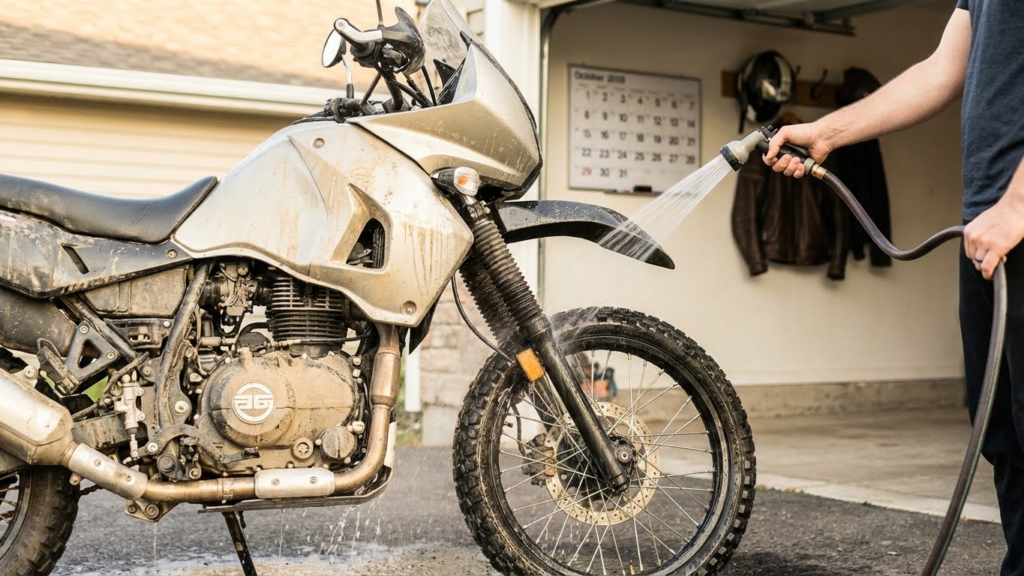
I recommend washing based on use, weather, and storage. Clean more often when I ride daily, through rain, on salted roads, or near the coast.
General Guidelines for Washing
I wash my motorcycle at least once a month if I ride occasionally and store it indoors. For daily riders or those who store bikes outside, I aim for once a week. I avoid using high-pressure washers near seals, bearings, and electrical parts to prevent damage.
I use two buckets—one with soap, one for rinse—to reduce swirl marks. I dry with a microfiber towel and apply wax or protectant to painted and chrome surfaces to slow corrosion and make future washes easier.
Seasonal Considerations
In winter, I wash every 1–2 weeks if roads use salt or grit. Salt speeds corrosion and hides in nooks, so I pay special attention to the underside, chain, and fasteners. I rinse thoroughly and dry to prevent freezing on components.
In spring and summer, I wash every 2–4 weeks, or after muddy rides. I remove bugs quickly from the front fairing and radiator to avoid paint and cooling issues. In fall, I increase frequency if leaves, sap, or wet conditions stick to the bike.
Mileage-Based Recommendations
For short local trips under 50 miles total per week, I wash every 2–4 weeks. For commuting or touring that exceeds 200 miles per week, I wash weekly or after long rides with heavy dirt buildup. Off-road use requires cleaning after every ride to prevent abrasive dirt from damaging bearings and chain.
I check the chain, brakes, and air intake after long trips and clean those areas more often. When I ride through mud or salty water, I wash immediately to protect moving parts and paint.
Factors That Affect How Often to Wash a Motorcycle
I focus on three big things that change how often you should wash a bike: how and where you ride, what kind of motorcycle you own, and where you store it. Each of these affects dirt build-up, corrosion risk, and which parts need extra care.
Riding Conditions
If I ride daily in rain, on salted roads, or on gravel, the bike gets grit and corrosive residue faster. Salt from winter roads eats at metal and fasteners, so I wash after salty rides to prevent rust. Mud and gravel fling into chain links, brakes, and radiators; I clean those areas soon after off-road or rural rides to avoid wear.
City riding drops brake dust and road grime onto wheels and under-fairing areas. I check and wash these spots weekly to keep braking performance and cooling. For long dry highway trips I’ll do a basic rinse and a fuller wash every couple of weeks.
Reliable references on winter corrosion and road salt effects include motorcycle maintenance pages from local transport or maker sites, like government vehicle care guides and manufacturer service advice.
Type of Motorcycle
Different bikes need different care. I clean cruisers and touring bikes more for cosmetic upkeep because chrome and paint show dirt quickly. Sportbikes often have tight bodywork and exposed fasteners; I concentrate on chain, radiator, and brake calipers so performance stays sharp.
Adventure and dual-sport bikes get the toughest treatment. Mud and grit get into bearings, linkage, and suspension seals, so I wash these bikes after each off-road day and lubricate moving parts. Electric motorcycles need water kept away from connectors and display elements; I follow manufacturer wash limits and use gentle, low-pressure rinses. Manufacturer service pages, like those from major OEMs, give model-specific wash do’s and don’ts.
Storage Environment
Where I park the bike changes wash frequency. Outdoor parking exposes the bike to rain, bird droppings, tree sap, and road spray, so I wash more often and use a corrosion inhibitor on exposed metal. Garage-stored bikes stay cleaner longer; I usually wash them monthly unless I ride often.
Humidity and coastal salt air speed up corrosion. Living near the coast means I rinse salt off weekly and apply protective wax or anti-corrosion spray. If I use covers, I still check for trapped moisture and wash before long-term storage to avoid staining and mildew. For best practices on storage and corrosion prevention, I consult reputable maintenance resources and manufacturer recommendations.
Signs Your Motorcycle Needs Washing
I check my bike for visible grime, parts that don’t move smoothly, and any surface rust forming. Those three things tell me when a wash moves from cosmetic to necessary.
Visual Dirt and Debris
I look for layers of road film on paint, plastic, and chrome. If I can scrape dark grime off with a fingertip or see streaks when the sun hits the surface, the bike needs cleaning. Dead insects, tar spots, and bird droppings are priority targets because they can etch paint quickly.
Wheels, chain, and undertray hide the worst buildup. Brake dust and clinging mud reduce appearance and can trap moisture. I also check sealed seams and around badges; dirt packed there shows I’ve left cleaning too long.
Performance Issues
When dirt interferes with function, I wash immediately. A gritty chain or sticky controls (throttle, clutch lever) cause rough shifting and delayed response. I listen for brakes that sound gritty or feel grabby — that indicates debris on pads, rotors, or calipers.
I watch for clogged radiators or oil cooler fins. Even light leaf buildup raises operating temps by several degrees. I also inspect air intake screens; restricted airflow reduces engine power and efficiency. Cleaning these areas restores normal performance.
Noticeable Corrosion Risk
Salt, mud, and road chemicals speed corrosion. I check frame welds, fasteners, and exposed metal for white powder or brown rust spots. If I spot surface rust, I remove grime and treat the metal within days to stop spread.
Paint chips and exposed bare metal are highest risk. I clean chips, dry them, and apply touch-up or rust inhibitor. Electrical connectors and battery terminals show corrosion with green or white buildup; I clean and protect them to prevent failures.
How Regular Washing Impacts Motorcycle Longevity
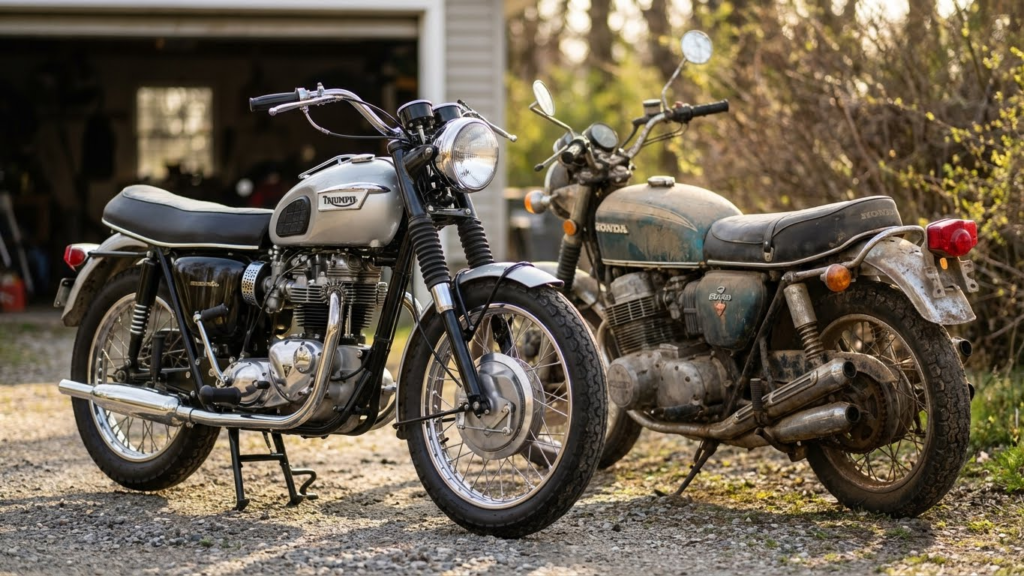
Regular washing removes grit, salt, oil, and road grime that wear parts and eat paint. It helps me spot leaks, loose fasteners, and early corrosion before small problems become costly repairs.
Protection Against Rust
I wash areas where water and salt collect first: under the seat, around the chain, and inside fenders. Salt from winter roads speeds up corrosion on steel and aluminum fasteners. Removing salt within days of exposure cuts the time metal spends in a corrosive environment.
I use fresh water, a mild motorcycle cleaner, and a soft brush on seams and crevices. After cleaning, I dry with a microfiber towel and blow out tight spaces with compressed air when possible. I also apply a thin layer of corrosion inhibitor on exposed bolts and electrical connectors to block moisture.
Routine inspections during washing let me catch surface rust early. I sand and treat small spots, or replace badly corroded fasteners, before they weaken structural or brake components.
Preserving Paint and Finish
I avoid high-pressure washers near seals and electronics because force can lift paint or force water into wiring. Instead, I rinse with low-pressure water, use two buckets (wash and rinse) to prevent reintroducing dirt, and choose a pH-neutral motorcycle shampoo.
I gently wash painted panels with a soft sponge, rinse thoroughly, and dry to prevent water spots. For chrome and polished aluminum, I use a specific metal polish to remove surface oxidation and restore shine without aggressive abrasives.
Applying a quality wax or paint sealant after washing creates a protective barrier. That barrier reduces UV fading, repels grime, and makes future washes easier, which helps the finish last longer.
Best Practices for Washing Your Motorcycle
I focus on using the right soap, tools, and water setup to avoid damage. I also pay attention to how I dry the bike to prevent water spots and corrosion.
Appropriate Cleaning Products
I use a motorcycle-specific cleaner or a mild car shampoo that is pH-balanced. These products remove grime without stripping wax or paint. I avoid household detergents and dish soap because they can dry out seals and strip protective coatings.
I keep separate buckets for rinsing and washing. This two-bucket method reduces grit that can scratch paint. I use a soft sponge or microfiber mitt for painted surfaces and a soft brush for wheels and chain areas.
I protect sensitive parts by covering the air intake, exposed electronics, and chain if I plan to use a pressure washer. For the chain, I clean with a dedicated brush and chain cleaner, then relube with the correct motorcycle chain lube after it’s dry.
Drying Methods
I blot excess water with a clean microfiber towel instead of rubbing hard. Blotting reduces swirl marks and helps remove grit that can scratch surfaces. I change towels when they grow dirty.
I use compressed air or a blower to push water out of tight spaces like around mirrors, footpegs, and the exhaust flange. This prevents trapped moisture that can cause rust or stains.
I finish with a light spray of silicone-free quick detailer or a paint sealant for added water beading. For chrome and metal, I dry and apply a small amount of metal polish to guard against rust.
Common Mistakes to Avoid When Washing
I focus on the two big errors riders make: using too-powerful water and skipping fragile parts that need hand care. Both can cause scratches, seal damage, or electrical problems if you rush.
High-Pressure Water Use
I never use a pressure washer directly on the bike. Spray nozzles over 1000–2000 psi can force water into bearings, seals, and electrical connectors. That leads to rust, sticky wheel bearings, or intermittent wiring faults.
Keep a safe distance of at least 3–5 feet and use a wide fan setting if power-rinsing. For stubborn grime, I soak the area with motorcycle-safe soap first and wipe with a microfiber cloth rather than blasting it. If you must use a pressure washer, use a low-pressure attachment and avoid the chain, wheel hubs, fork seals, and instrument cluster.
For guidance on pressure and safe cleaning products, I consult manufacturer pages like Harley-Davidson’s care tips and general motorcycle washing guides from reputable sources.
Neglecting Delicate Areas
I always hand-clean delicate spots: brake calipers, suspension seals, electrical connectors, and leather or suede gear. These parts can degrade from harsh cleaners, stiff brushes, or too much water.
I use soft brushes and cotton swabs for crevices, and a separate cloth for the chain to avoid contamination. For leather jackets or seats, I follow specific leather-care instructions and avoid machine washing; for technical riding gear, I check the maker’s label. When cleaning electricals, I dry connectors immediately and apply dielectric grease where recommended to prevent corrosion.
For detail techniques and product recommendations, I refer to trusted sources like motorcycle-care guides and manufacturer maintenance pages.
When to Seek Professional Motorcycle Cleaning
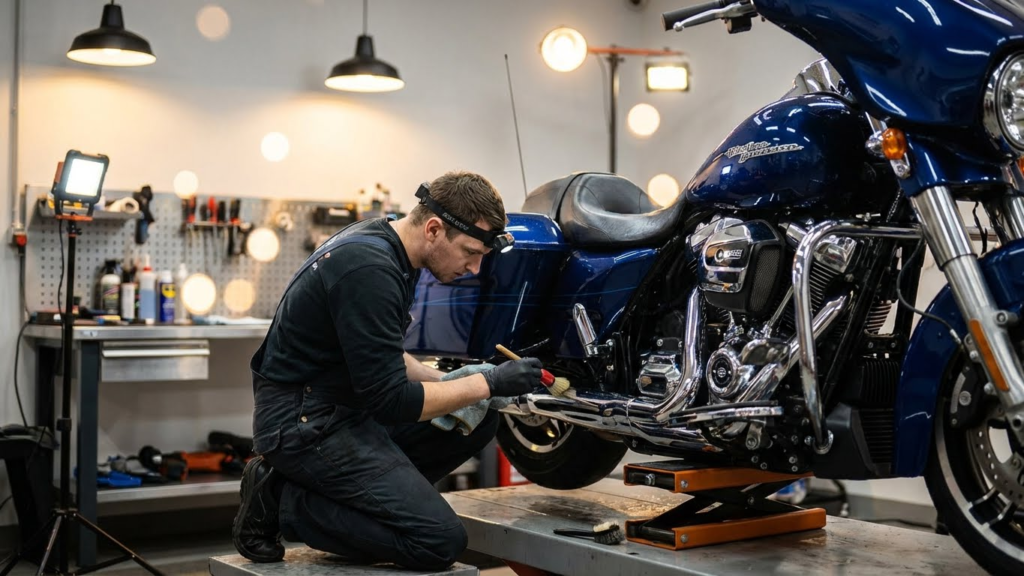
I take my bike to a pro when I spot heavy contamination that I can’t remove safely at home. This includes baked-on road tar, thick brake dust, and layers of salt or grime after winter rides. These substances can damage paint and metal if scrubbed wrong.
I hire a professional after an accident or tip-over. Scratches, bent parts, or oil and grease soaked into seams need careful attention. A shop can disassemble panels, clean hidden areas, and inspect for damage I might miss.
I also choose pro service for complex finishes and aftermarket coatings. Ceramic coatings, matte paint, and chrome demand specific cleaners and tools. Professionals use the right products and skills to avoid streaks, haze, or surface harm.
I seek help when I need deep chain and drivetrain care. Chain degreasing, inspection, and proper relubrication are messy and precise. A shop will clean sprockets, check tension, and protect bearings.
If I’m short on time or want a full detail, professionals save me hours. They offer paint correction, polish, and wax that restore appearance and protect surfaces. I get better results and consistent protection than I usually achieve at home.
Below are quick signs I look for before booking a service:
- Persistent stains after washing
- Corrosion, pitting, or rust spots
- Sticky or noisy drivetrain
- Visible structural damage or misalignment
Routine Maintenance to Combine With Washing
When I wash my motorcycle, I also check basic maintenance items that are quick but important. A clean bike makes it easier to spot leaks, rust, or loose parts.
I inspect the chain for tension and lubrication after the bike is dry. I clean the chain if it’s grimy, then apply chain lube and adjust tension to the manufacturer’s spec.
I look at brake pads and rotors next. I check pad thickness and remove any grit from rotors with a soft cloth to avoid noise and uneven wear.
I check fluid levels—engine oil, coolant, and brake fluid—while the bike is on level ground. Low fluids can point to leaks or needed service, so I top them up or schedule a service if needed.
I test lights, signals, and horn each time I wash the bike. Clean lenses improve visibility, and a quick bulb check keeps me safer on the road.
I examine tires for tread depth, cuts, and correct pressure. Properly inflated tires give better handling and longer life.
A quick torque check of visible fasteners prevents rattles and dropped parts. I use a torque wrench for critical bolts and keep small fasteners snug.
- Clean and lube chain
- Check brakes and rotors
- Top up fluids
- Test lights and horn
- Inspect tires and pressure
- Torque visible fasteners
These small tasks take little time and keep my motorcycle reliable between major services.
Environmental Impact of Motorcycle Washing
I pay attention to how washing a motorcycle affects the environment because small actions add up. Runoff from rinsing can carry oil, brake dust, and detergents into storm drains and local waterways. That pollution harms plants and animals and can make water unsafe.
I choose cleaners labeled biodegradable and low-phosphate when possible. These products break down faster and reduce chemical load. I also use a bucket and sponge instead of a running hose to cut water use.
I try to wash on grass or gravel so the ground can filter water before it reaches drains. If I must wash on pavement, I direct runoff to a drain that feeds a treatment system or use a water reclamation mat. Mobile steam cleaning or professional shops often capture and treat wastewater, which lowers environmental harm.
I keep my bike mechanically well maintained to reduce oil and grease buildup that ends up in wash water. Small steps—less detergent, shorter rinses, and trapping runoff—reduce pollution and save water. Below are quick tips I follow:
- Use biodegradable, low-phosphate soap
- Wash on permeable surfaces or use containment mats
- Limit hose time; use a bucket and rinse sparingly
- Consider steam cleaning or a shop that recycles water
These choices cut pollution and water use without adding hassle to routine bike care.
FAQs
What about polishing and waxing?
I wax painted surfaces a few times a year. Wax cuts down on dirt build-up and gives extra protection against the elements. I avoid wax on tires or brakes.
Can washing hurt the bike?
I say no if you use the right tools and methods. Use mild soap, soft cloths, and low-pressure water to avoid washing off grease seals or forcing water into bearings.
How do I handle chain and electrical parts?
I clean and lubricate the chain separately after heavy use. I cover or avoid spraying direct water on exposed electrical connectors and the air intake to prevent issues.
Is it okay to use a pressure washer?
I avoid high-pressure washers close to bearings, seals, and switches. If I use one, I keep the nozzle at a distance and use lower pressure settings.
What about winter or salty roads?
I wash more often after salty or wet rides to prevent rust. I rinse the underside, brake areas, and chain to remove corrosive salt.
Quick checklist I follow:
- Rinse loose dirt first.
- Use motorcycle-safe soap and soft towels.
- Dry and lube the chain and pivot points.
- Inspect seals and electrical connections after drying.
Conclusion
I recommend washing my motorcycle at least once a month as a baseline. More frequent washes help if I ride in rain, on salted roads, or through mud.
I watch for signs that need immediate cleaning: salt, heavy grime, or oil buildup. Those can cause rust or wear if left on the bike.
I use quick weekly rinses after short dirty rides and a deeper wash every few weeks. I also pay extra attention to chain, brakes, and fasteners during cleaning.
I balance frequency with care. Gentle methods, the right products, and drying prevent scratches and damage.
I keep a simple routine: rinse, soap with a soft brush or sponge, rinse again, dry, and lubricate the chain. This keeps my bike safe, reliable, and looking good.