
You want clear guidance on suspension service so your bike stays safe and rides well. Service most street and adventure motorcycle suspension every 12 months or every 10,000–20,000 km (6,000–12,000 miles), and inspect more often if you ride hard, off-road, or race.
Check seals, damping feel, and oil condition at short, regular intervals so small problems don’t become big failures. I’ll show what to look for, how riding style changes the timeline, and when to get a pro involved versus doing basic checks yourself.
Key Takeaways
- Follow a yearly or mileage-based service schedule and shorten it for heavy use.
- Watch for leaks, poor damping, and unusual handling as signs to service sooner.
- Use simple inspections and logs to track suspension health and extend lifespan.
Recommended Service Intervals
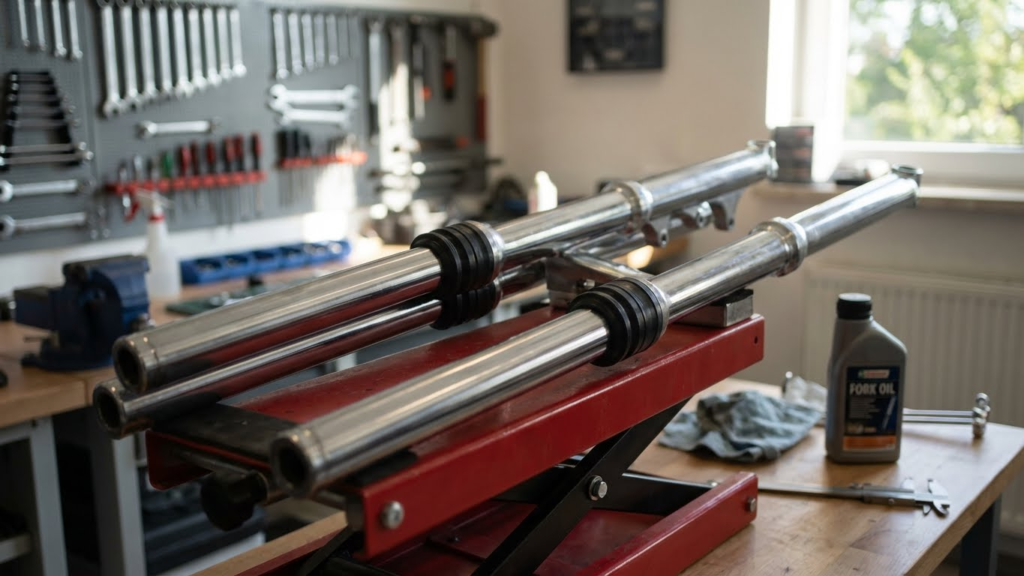
I recommend checking your bike’s manual first, then use mileage and time as practical guides. Service needs change with bike type, riding style, and conditions.
Factory Guidelines for Suspension Maintenance
I follow the factory manual as the primary source for service intervals. Manufacturers often list hours, miles, or months for fork oil changes, shock rebuilds, and seal inspections. Sportbikes commonly call for fork oil changes around 10,000 miles or annually. Off-road and race bikes usually have much shorter hours-based intervals.
If your manual gives a range, I choose the shorter interval when I ride hard, carry luggage, or ride in wet or dusty conditions. I also inspect seals, bushings, and tubes visually at each oil change or service to catch leaks or wear early.
Mileage-Based Suspension Servicing
I use miles or kilometers when my riding is mostly road and predictable. For street bikes, I plan fork oil and basic service every 10,000–15,000 miles, or sooner if the bike feels harsh or leaks appear. Adventure bikes often fit a 15,000–20,000 km (roughly 9,000–12,000 miles) schedule because of heavier loads and long trips.
I treat sport and commuter bikes differently. Sportbikes need closer attention to front-end feel; I shorten intervals if I race or sprint. For commuter bikes with low mileage but daily use, I still inspect annually.
Time-Based Suspension Service Recommendations
I use time-based checks when mileage is low or riding is seasonal. For most riders, an annual inspection and service is wise even under 10,000 miles per year. Fork oil can degrade with age, so I replace oil and check seals every 12 months if I ride regularly.
For intensive use or racing, I shorten service to 15–40 hours of riding or every 3–6 months depending on conditions. If the bike sits unused, I still recommend at least a yearly inspection to spot seal drying, corrosion, or oil breakdown.
Signs That Suspension Needs Servicing
I watch for handling changes, noises, and visible leaks. These are the clearest signs your forks or shock absorbers need attention and often show up before full failure.
Decreased Ride Comfort
I notice reduced comfort first when the suspension wears. The bike may feel harsher over bumps and chatter on rough surfaces. If small bumps transmit directly to my body or the seat, the damping is likely weak or the oil has degraded.
A bike that bottoms out on larger bumps or feels “floaty” in corners usually needs damper tuning or oil replacement. Touring bikes and sportbikes show this differently: touring bikes get heavy and sluggish, while sportbikes lose front-end feel.
Check ride height and sag with the recommended settings in your owner’s manual. If sag changes by more than a few millimeters, springs or preload may be worn. I often compare left and right fork action; uneven travel points to a seal or bushing issue.
Unusual Noises or Performance Changes
I take any new squeaks, clunks, or knocking seriously. These sounds can come from worn bushings, loose mounts, or internal components failing under load. A steady clunk when hitting bumps often means a failing linkage or shock mount.
Inconsistent damping is another warning. If the bike feels bouncy one moment and harsh the next, internal valving or oil condition may be the cause. Engine braking might also unsettle the chassis more than usual when forks aren’t damping correctly.
Ride test at low speed in a safe area. Listen and feel for differences between left and right sides. If you need guidance, sites like Haynes or manufacturer service manuals explain test procedures and specs for common models.
Visible Leaks or Damage
I inspect the fork legs and shock body for oil, grime, or wetness near seals. Any oil on the fork stanchions, lower legs, or around the shock shaft means a leaking seal. Leaks reduce damping and let dirt in, which speeds wear.
Look for pitting, deep scratches, or rust on stanchions and shock shafts. Damage to the sliding surfaces can tear new seals fast. Check mounting bolts and bushings for play or deformation, and measure for bent components after a crash.
If you see oil or damage, avoid long rides. Replace seals or damaged parts promptly and consult official service intervals in your owner’s manual or trusted sources like SAE and OEM service guides for correct repair steps and fluid specs.
Factors Influencing Service Frequency
I focus on the real things that change how often suspension needs service: where you ride, what bike and suspension you own, and how hard you use them. These three points determine most service schedules and signs of wear to watch for.
Riding Conditions and Environment
Riding on paved city streets puts far less stress on suspension than gravel, dirt tracks, or salt-sprayed coastal roads. I check seals and fork oil more often after rides on sand, mud, or rough gravel because grit and water speed up wear and cause seal leaks.
Climate matters. Hot, humid, or salty air accelerates corrosion and can break down oil faster, so I shorten service intervals in those areas. Cold climates can thicken oil and hide small leaks, so I inspect more closely after cold-weather rides.
If I ride off-road or on poorly maintained roads, I plan services by hours ridden (for example, 20–40 hours) rather than mileage. For mainly street use, I follow mileage or annual intervals but still inspect after any hard impact or long rough trip.
Type of Motorcycle and Suspension System
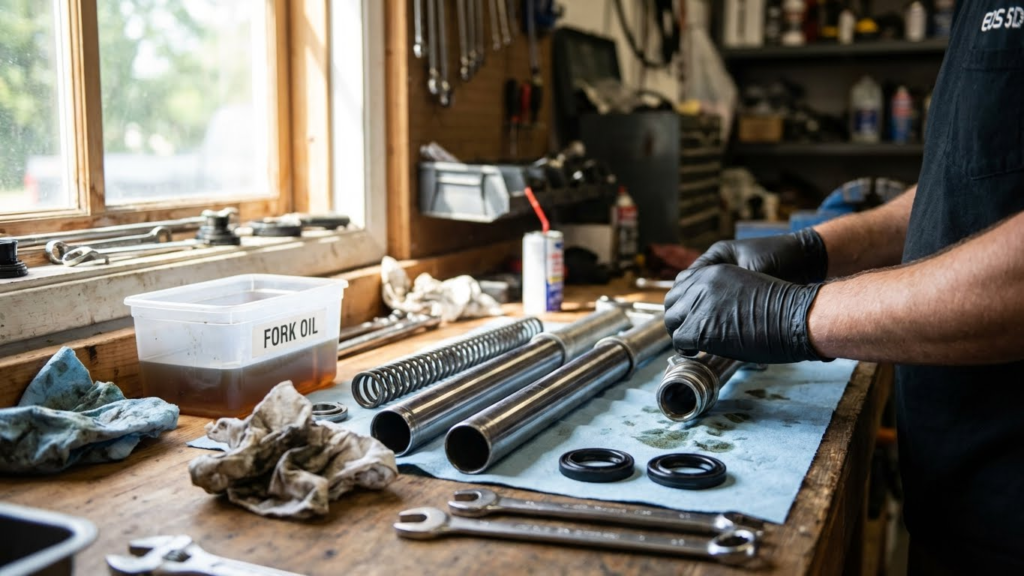
Different bikes use very different suspension parts. I treat sportbikes, adventure bikes, cruisers, and dirt bikes differently because their forks, shocks, and damping systems vary in design and tolerance.
Fully adjustable or cartridge forks and remote-reservoir shocks usually need more frequent checks and oil changes to keep performance in spec. Basic non-adjustable forks can go longer between services but still need seal and oil checks.
Factory service manuals give model-specific intervals. I use those as a baseline, then shorten intervals if I notice leakage, noise, or degraded damping. Upgraded aftermarket suspensions often have separate service guidelines from the original equipment.
Usage Intensity and Load
How hard you ride changes service frequency. I service suspension more often when I race, track-day, or off-road because repeated heavy impacts wear oil and bushings quickly. Aggressive braking and cornering also increase load on forks and shocks.
Carrying heavy loads or a passenger raises spring and damper demands. I check spring sag, preload, and damping settings after sustained heavy loading and schedule earlier oil changes if performance softens.
I track ride hours or mileage and log rough-use events (crashes, big potholes). That log tells me when to pull parts for a rebuild rather than wait for a standard interval.
Types of Suspension Service Tasks
I focus on three core service tasks that keep suspension working: changing fork oil to restore damping, rebuilding shocks to restore spring and damping function, and lubricating moving parts to prevent wear and leaks.
Fork Oil Replacement
I drain and replace fork oil to restore damping feel and control. Old oil loses viscosity and damping additives, which makes forks feel spongy and reduces rebound control. I measure oil level and use the grade the manufacturer specifies, because the wrong weight or level changes ride height and compression.
I inspect fork seals and bushings while the legs are apart. If seals leak or bushings are scored, I replace them to avoid contamination and rapid wear. I also check for chrome pitting on the stanchions; minor corrosion can sometimes be polished, but deep pitting needs tube replacement.
I typically follow intervals based on use: for street bikes that’s often annual or every 10,000–15,000 miles; for track or off-road bikes I service after 20–40 hours of hard use. I document oil type, level, and date so I can track service history.
Shock Rebuilding
I disassemble the shock to inspect the piston, damping circuits, and seals. Rebuilding restores damping valves, replaces worn seals, and often replaces nitrogen charge in gas shocks. I measure spring free length and rate; if the spring has sagged or changed rate, I replace it.
I watch for oil contamination and foaming, which reduce damping consistency. I clean passages, replace internal shims or valve parts if needed, and refill with service-grade shock oil to the correct volume. For monotube units I also check and reset nitrogen pressure to spec.
I recommend rebuilds based on hours and symptoms: sport and off-road riders may need rebuilds every 20–40 hours, while street riders might rebuild every 15,000–20,000 miles or when performance drops.
Component Lubrication
I lubricate moving parts to cut wear and stop squeaks. Key areas include steering head bearings, linkage bearings, swingarm pivots, and fork bushings. I use grease specified for suspension bearings and apply it sparingly to avoid attracting dirt.
I clean old grease and grit before relubricating, inspect bearings for play, and replace any that feel rough. For seals and sliders I use light oil or silicone grease as the maker recommends to keep seals supple and prevent leaks.
I set torque on fasteners after lubrication to factory specs and note any parts that need tighter tolerances later. Regular lubrication extends component life and keeps handling consistent.
Consequences of Neglecting Suspension Maintenance
I expect three main impacts when suspension work is ignored: safety and handling suffer, parts wear faster, and the bike’s resale value drops. Each issue ties directly to how the suspension affects tire contact, ride control, and component life.
Reduced Safety and Handling
I lose important control when forks or shocks are worn or leaking. The bike pitches forward on hard braking and dives in corners, which shortens available steering input and can cause sudden understeer or oversteer. That makes correcting a slide harder and raises crash risk.
Braking distance often grows because tires no longer maintain consistent contact with the road. On wet or rough surfaces, this becomes critical; traction pulses increase and I notice the bike wandering or tramlining.
Suspension that is too soft or too stiff also affects rider confidence. I find it harder to place the bike at the apex of a turn or hold a steady line at speed. Small mistakes become dangerous when the suspension cannot absorb bumps reliably.
Accelerated Component Wear
Neglected suspension transfers loads to other parts, so tires, bearings, and brakes wear faster. I see uneven tire wear from inconsistent damping and increased tire cupping when shocks fail to control rebound. That forces earlier tire replacement.
Wheel bearings and swingarm bushings take extra stress when suspension bottoms out or binds. I often hear creaks or feel looseness before a failure that costs much more than a routine service. Brake pads and rotors can also suffer from the extra movement and added heat during hard braking.
Seals and oil degrade over time. I replace fork oil and seals sooner when I let service intervals slip, because dirt and worn oil accelerate corrosion and scoring inside the fork tubes.
Decreased Motorcycle Value
Buyers inspect suspension parts early during a sale. I lose negotiating power if forks show pitting, leaks, or mismatched damping. That reduces the price I can ask for, often by hundreds or thousands depending on the bike.
Service history matters. A documented recent suspension rebuild or service reassures buyers and helps keep value up. Without records, I may need to accept offers well below market value or pay for repairs to get a fair price.
Visible wear—sagging rear end, oil on the fork legs, or noisy shocks—creates buyer suspicion about overall maintenance. That suspicion often converts into lower offers or longer time on the market.
Professional vs. DIY Suspension Servicing
I compare out-of-pocket cost, tools, and skill needs so you can pick the safest and smartest option for your bike. I also point out clear signs that mean you should stop and take your motorcycle to a shop.
Cost Considerations
I expect a professional fork or shock service to cost anywhere from $150 to $500 per unit depending on parts and labor. High-end bikes or cartridge forks push the price higher because they need special fluids and longer labor times.
If I do it myself, I save on labor but still buy fork oil, seals, bushings, gaskets, and sometimes new springs. Typical DIY parts and fluid run $40–$200 per fork or shock. I also factor in the value of my time and the chance of costly mistakes.
I list costs to compare quickly:
- Professional: labor + parts, usually warranty included.
- DIY: parts + tools + time, no warranty.
I weigh recurring service intervals into budget planning since forks often need work after 30–40 hours of riding or sooner in rough conditions.
Required Tools and Skills
I need basic tools and a clean workspace for simple tasks like inspection, cleaning, and oil changes. For full disassembly I require spring compressors, torque wrenches, seal drivers, proper fluid measuring tools, and a workstand.
Skill matters. If I can read service manuals, measure fluid volume, and set sag and damping to spec, I can handle many jobs. Incorrect assembly, wrong oil volume, or improper torque can cause leaks, poor handling, or safety issues.
If I lack specialized tools or the skill to set damping, I note that a shop has calibrated tools and experience to avoid mistakes. Shops also dispose of old fluid and press-fit seals correctly.
When to Choose a Professional Service
I take my bike to a shop when I lack the right tools or when the job involves internal cartridge work, nitrogen-charged shocks, or hard-to-source parts. Complex rebuilds and valving changes usually need technician experience and test equipment.
I go pro if I see persistent leaks, sudden handling changes, or after a crash. Dealers and suspension specialists can also dyno or test-ride settings and offer warranty protection on work.
I choose professional service when the cost of a mistake — reduced braking control, worse stability, or seal damage — outweighs the labor savings.
How to Track Suspension Service Intervals
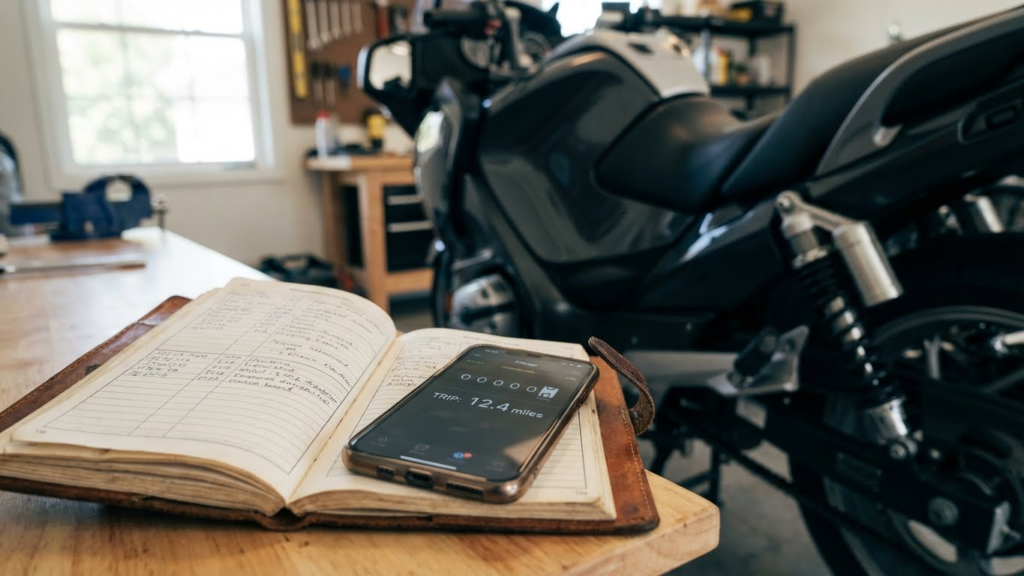
I keep clear records and reminders so I never miss a fork or shock service. Track hours or miles, note the service type, and set alerts tied to time and use.
Using Service Logs
I use a simple paper or digital log to record every suspension service and inspection. For each entry I write: date, odometer hours or miles, parts serviced (fork oil, seals, shock rebuild), oil weight used, and any observations like leaks or changed damping settings. I also note who did the work and attach receipts.
A consistent format makes trends easy to spot. When I see shorter intervals between services or rising mileage at the same service mark, I know wear is accelerating. I keep one log per bike and store scanned copies in the cloud for warranty or resale proof.
Digital Maintenance Reminders
I set digital reminders tied to distance and time so I catch services on schedule. I use my phone calendar for annual reminders and a mileage-based app or the bike’s trip meter for service-by-distance alerts. Many manufacturers list recommended intervals in the owner’s manual; I add those exact figures to my reminders.
For bikes with hours meters, I create reminders at hours intervals (for example, every 35–40 riding hours for fork service). I link to reputable resources like the Motorcycle Safety Foundation or manufacturer pages when I add notes, so I can quickly check official guidance before a service.
Extending the Life of Motorcycle Suspension
I focus on checks you can do often and simple habits that prevent wear. These actions cut repair costs and keep handling steady.
Routine Inspections
I check seals, fork stanchions, and shock bodies every few rides or monthly if I ride a lot. Look for oil trails, pitting, rust, or dents on the fork tubes and shock shaft. Even a small oil drip means a seal needs attention.
I test damping and rebound by compressing the forks and rear shock with the bike on its wheels. The movement should be smooth and return at a steady rate. If it feels sticky, noisy, or returns too fast, note it for service.
I also inspect fasteners and linkage bearings. Torque forks and shock mounts to spec and feel for play in swingarm pivots. Wheel bearings and brake caliper mounts can affect suspension behavior, so I check them too.
Preventative Care Practices
I keep suspension clean and dry after rides, especially in rain or on salty roads. I wipe stanchions and shock shafts with a lint-free cloth to remove grit that wears seals.
I follow manufacturer service intervals for oil and seal replacement rather than waiting for failure. For off-road or aggressive riding, I shorten intervals and inspect after hard days. I also adjust sag and pre-load to match my weight and cargo; improper setup accelerates wear.
I avoid overloading the bike and fix any frame or swingarm damage quickly. I use recommended fluids and replacement parts to keep damping and spring rates within spec.
FAQs
How often should I service my suspension?
I recommend checking your owner’s manual first. For many street bikes I suggest service every 12,000–15,000 miles or once a year, while off‑road or track bikes need service far more often — sometimes every 20–40 hours of use.
What signs show the suspension needs service?
Look for leaking seals, increased bouncing, poor handling, or uneven tire wear. If the bike bottoms out easily or feels unstable, I would inspect suspension parts right away.
Can I do basic checks myself?
Yes. I check fork seals for oil, listen for strange noises, and test rebound and compression feel. For oil changes, damper work, or spring replacement, I leave it to a shop unless I have the right tools and know‑how.
Does riding style change the interval?
Absolutely. Aggressive riding, heavy loads, and off‑road use shorten service intervals. I shorten intervals when I ride hard or carry heavy luggage.
What does a professional service include?
A professional will strip and clean internals, replace seals and oil, inspect bushings and springs, and rebuild dampers as needed. I expect them to test and set sag and damping to suit my bike.
Is suspension service worth the cost?
Yes. Proper service restores handling, safety, and comfort. I treat it as preventive maintenance that keeps the bike predictable and safer to ride.
Conclusion
I recommend a clear schedule: inspect suspension often and service it based on use. For street riding, I aim for a service every 12,000–15,000 miles. For track or off‑road use, I shorten that to every 20–40 hours of riding.
I check seals, oil, and bushings at each service. Worn oil and damaged seals cause poor handling and faster wear. Replacing parts early often saves money and keeps the bike safer.
I weigh signs as well as time and hours. If I feel excessive bounce, poor control, or notice leaks, I act sooner. Those symptoms mean the system isn’t doing its job.
I also adjust service intervals for load and riding style. Heavier riders, luggage, or aggressive riding needs more frequent attention. I treat suspension service as part of safety, not just performance.
Key actions I follow:
- Inspect seals, oil, and bushings regularly.
- Service forks and shocks per use pattern above.
- Replace worn parts promptly to avoid bigger damage.
I keep records of service dates and hours ridden. That helps me spot trends and plan maintenance before problems grow.