
You should change motorcycle oil based on the oil type and how you ride, but a solid rule is: conventional oil every 2,000–3,000 miles, semi‑synthetic every 5,000–6,000 miles, and full synthetic every 8,000–10,000 miles. Change oil sooner if it looks dark, gritty, or before long storage to protect the engine.
I’ll show you how to pick the right interval for your bike, spot warning signs, and avoid costly damage. Follow simple checks and habits that keep your engine running longer and save you time and money.
Key Takeaways
- Change intervals depend on oil type and riding style.
- Watch oil color and particles, not just mileage.
- Regular checks and timely changes prevent engine damage.
What Determines Motorcycle Oil Change Frequency

I look at several clear factors when I decide how often to change oil: the maker’s rules, how and where I ride, the oil’s type, and the bike’s age and engine design. Each factor changes the mileage or time interval I follow.
Manufacturer Recommendations
I always start with the owner’s manual. Manufacturers test engines and set intervals in miles and months that match the bike’s design and tolerances. These numbers account for oil capacity, sump design, and factory break‑in procedures.
If I ride a newer model under warranty, I follow the manual exactly to avoid voiding coverage. For older bikes, I still use the manufacturer’s baseline but adjust for real conditions like frequent short trips or heavy loads. When the manual gives a range, I pick the shorter interval if I use the bike for commuting, track days, or towing.
Riding Conditions
My riding habits change oil life more than anything else. Short trips that don’t warm the engine fully cause condensation and fuel dilution, so I change oil more often. Stop‑and‑go city riding and lots of idling also speed oil breakdown.
High‑stress riding—track, aggressive sport riding, or carrying heavy luggage—raises engine temperatures and shear, which reduces oil effectiveness. I also shorten intervals in extreme climates: very hot weather accelerates oxidation, and very cold weather can thicken oil and trap contaminants. If I ride in dusty or coastal areas, I inspect the oil and filter more often.
Type of Oil Used
I match oil type to my bike and riding. Conventional mineral oil typically needs the most frequent changes—often every 2,000–3,000 miles—because it loses protective additives sooner. Semi‑synthetics extend that to around 5,000–6,000 miles in many cases.
Full synthetic oils resist heat, oxidation, and shear better, so they can often run 8,000–10,000 miles between changes on modern engines. However, I check the manual for approved viscosities and additive specs. I also replace the filter with every oil change; a long‑life oil with a clogged filter won’t protect the engine.
Motorcycle Age and Engine Type
Older engines and high‑mileage bikes usually need more frequent changes. Worn bearings and piston rings allow more blow‑by gas and metal particles into the oil, increasing contamination. I shorten intervals on bikes over 50,000 miles or with known oil consumption issues.
Engine layout matters too. Air‑cooled and high‑revving sport engines run hotter and can stress oil faster. Single‑cylinder and V‑twin engines often run cooler but can have different oil return or sump designs that affect oil life. If the engine shares oil with the gearbox, as on many motorcycles, I follow the stricter interval to protect both systems.
Recommended Oil Change Intervals
I recommend different change intervals depending on oil type and riding style. Follow the bike maker’s manual when it differs from these ranges.
Conventional Oil Intervals
Conventional (mineral) oil breaks down faster than synthetics. I usually advise changing conventional oil every 2,000–3,000 miles (3,200–4,800 km) for street bikes. For older air-cooled engines or bikes with high blow-by, I shorten that to about 1,000–2,000 miles.
Change the oil sooner if it looks dark, gritty, or smells burnt. Always replace the oil filter at the same time. For specific guidance on older engines and oil types, the manufacturer service manual or a Haynes/Clymer manual is a good reference (https://www.clymer.com).
Synthetic Oil Intervals
Full-synthetic oils resist breakdown and handle heat better. I generally recommend 8,000–10,000 miles (12,800–16,000 km) for modern sport and touring bikes using high-quality synthetic oil. Semi-synthetics sit in the middle at roughly 5,000–6,000 miles.
Even with synthetics, change oil before long storage and inspect filter and oil condition regularly. Use the oil spec (viscosity and JASO MA/MA2 rating) your motorcycle maker lists. The AMA and major oil makers provide useful specs and testing info (https://www.americanmotorcyclist.com).
Short Trip vs. Long-Distance Riding
Short, frequent trips are harder on oil than steady highway miles. I shorten intervals by about 25–50% for mainly short rides under 10 miles where the engine and oil don’t reach full operating temperature. Condensation and fuel dilution build up faster in those conditions.
For long-distance or highway riding, oil holds up longer because the engine runs hotter and burns off moisture. Still, check oil color and level every few rides and change filter per the interval. If you tow, ride off-road, or use track days, follow the severe-service schedule and inspect oil more often.
Signs Your Motorcycle Oil Needs Changing
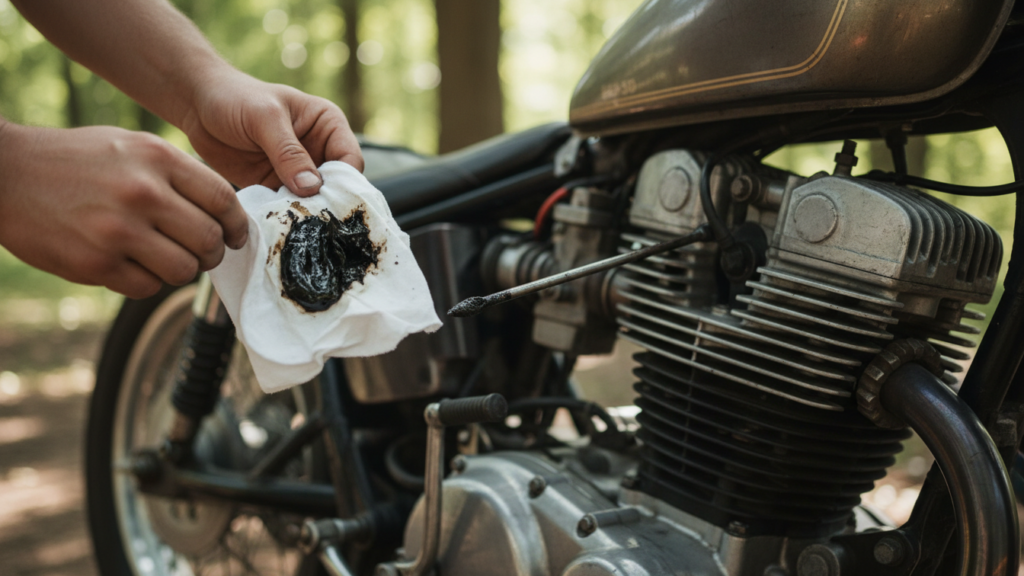
I watch oil appearance, engine sound, and dashboard warnings to decide when an oil change is due. These clues tell me if the oil has lost protection, if the engine parts are running dry, or if contamination is present.
Appearance and Texture of Oil
I check oil color and feel before anything else. Fresh oil looks amber or light brown; old oil turns dark, thick, or gritty. I use the dipstick or sight glass and wipe a bit on a white cloth to see particles or metal flakes.
If the oil feels sticky, sludgy, or sandy between my fingers, it has broken down or picked up dirt. Milky or cloudy oil signals coolant contamination from a blown head gasket and needs immediate attention. Low oil level combined with dark, dirty oil often means the oil is overdue for a change or the bike is burning oil.
I also note smell. A burnt odor can mean the oil has overheated. When I see any of these signs, I plan a change and inspect for leaks or other damage.
Engine Noise and Performance
I listen for unusual sounds and watch how the bike behaves during rides. Ticking, knocking, or louder-than-normal mechanical noise often points to poor lubrication. These noises usually increase when the engine is cold or under load.
If shifting becomes stiff or the clutch slips, old oil or wrong oil viscosity might be the cause. I pay attention to reduced throttle response or rough idling, which can indicate oil contamination affecting valve operation or hydraulic lifters. Hard starting after short rides can also mean oil flow is impaired.
When I detect these symptoms, I check oil level and condition immediately. If topping up doesn’t help, I change the oil and filter and then reassess the noises and performance.
Oil Warning Lights
I take dashboard oil warnings seriously and act fast. A lit oil pressure light or an oil change reminder signals either low pressure, low level, or degraded oil quality.
When the oil pressure light comes on while riding, I stop safely, check the oil level, and look for leaks. If the level is correct but the light stays on, I avoid riding further and get the bike to a shop. For resettable oil change indicators, I still inspect the oil if the engine feels off or the interval seems short for my riding style.
I treat any warning as an immediate cue to inspect and, if needed, change the oil and filter to prevent engine damage.
Potential Risks of Delaying an Oil Change
Delaying an oil change can let contaminants build up, reduce lubrication, and raise engine temperatures. These issues harm internal parts, cut performance, and may affect your warranty coverage.
Engine Wear and Damage
I see metal particles, dirt, and burnt oil accumulate when oil goes too long between changes. Thicker, contaminated oil can’t flow into tight bearings and cam lobes like fresh oil can. That raises friction and causes accelerated wear on the crankshaft, pistons, and valve train.
If the oil breaks down chemically, it loses its ability to protect against heat and corrosion. Over time seals and gaskets dry out and leak, which can lead to low oil pressure and, in severe cases, bearing failure or scored cylinders. Repairs for those parts often cost hundreds to thousands of dollars.
Reduced Performance
Old oil raises engine operating temperatures and increases friction. I notice reduced throttle response, rough idling, and lower fuel economy when oil is degraded.
Deposits from burned oil can foul spark plugs and clog oil passages. That reduces combustion efficiency and can trigger engine lights. Riding with sluggish acceleration or higher fuel use may mean the oil needs changing, not major engine work—if you act quickly.
Void Manufacturer Warranty
Manufacturers require regular maintenance to keep warranty protection valid. I follow the owner’s manual oil change intervals and record each service.
If I delay oil changes and a related failure occurs, the manufacturer or dealer can deny warranty claims. That means I would pay for repairs that might otherwise be covered. Keep receipts and log miles to prove you met the schedule and protect your warranty.
Best Practices for Monitoring Motorcycle Oil

I focus on two simple checks that tell me when oil needs attention: measuring the oil level and inspecting the oil’s color and smell. Both checks take minutes and reveal leaks, contamination, or normal wear.
How to Check Oil Level
I check oil with the bike on level ground and the engine warm or as the manual specifies. For wet-sump bikes I use the dipstick or sight glass; for dry-sump bikes I follow the manufacturer’s procedure. If using a dipstick, wipe it clean, reinsert, then read the level against the marks. For a sight glass, park upright and read at eye level.
I top off only to the “full” mark and avoid overfilling. If I find low oil, I look for leaks or burn-off and recheck after a short ride. I keep the owner’s manual handy for exact capacities and recommended oil grade, or consult the manufacturer website for specs.
How to Inspect Oil Quality
I inspect oil by color, transparency, and smell. Healthy oil is amber to light brown and relatively clear. If the oil looks very dark, gritty, milky, or has a strong burnt smell, I replace it and the filter. Milky oil can indicate coolant contamination from a head gasket issue; I would stop riding and seek repair.
I also check for metal particles on the drain plug or in the oil magnet, which signal abnormal wear. When in doubt, I compare the oil’s condition to the service intervals in the manual and follow guidance from reliable sources like the Motorcycle Safety Foundation or the manufacturer’s service pages for further testing.
Tips for Prolonging Motorcycle Engine Life
I focus on practical steps you can take now: regular checks, the right oil, and smart storage and riding habits will keep the engine running longer and cut repair costs.
Sticking to a Maintenance Schedule
I follow the manufacturer’s service intervals in the owner’s manual first. If I ride daily or tow, I shorten oil-change intervals to every 3,000–5,000 miles or six months, whichever comes first. For occasional riders, I still change oil at least once every 12–24 months because oil degrades even when the bike sits.
I keep a simple log—date, mileage, oil type, filter changed—either a paper note in the glove box or a digital note on my phone. This helps me avoid missed services and shows patterns if the engine starts using oil or burning it.
I also replace the oil filter with every oil change, inspect the air filter, check valve clearances per the manual, and torque fasteners. These small checks prevent bigger failures and keep the engine efficient.
Choosing the Right Oil
I use the oil grade and type the manufacturer recommends first. If the manual allows synthetic or semi-synthetic, I prefer full synthetic for better thermal stability and cleaner operation at higher temps.
I check viscosity (e.g., 10W-40) and JASO or API specs on the bottle. For high-revving or wet-clutch engines, I confirm compatibility with the clutch system to prevent slippage.
When topping off between changes, I use the same oil brand and spec to avoid mixing incompatible additives. I also replace the oil filter with every full change and use a quality, motorcycle-specific filter to keep contaminants out of the oil circuit.
Proper Storage and Usage Habits
I store my bike upright on a firm surface in a dry, covered space. For long storage (over a month) I add fuel stabilizer, run the engine briefly to circulate stabilized fuel, and either remove the battery or keep it on a maintainer.
I avoid long idling periods and short trips where the engine never reaches operating temperature. Those conditions cause fuel dilution and sludge. When I must do short trips, I schedule a longer ride to clear moisture and let the oil heat up properly.
I also rinse salt and road grime after winter rides, check seals for leaks regularly, and ride gently for the first few miles after a cold start to reduce wear. These habits cut corrosion and oil contamination, protecting internal parts.
Environmental Considerations When Changing Motorcycle Oil
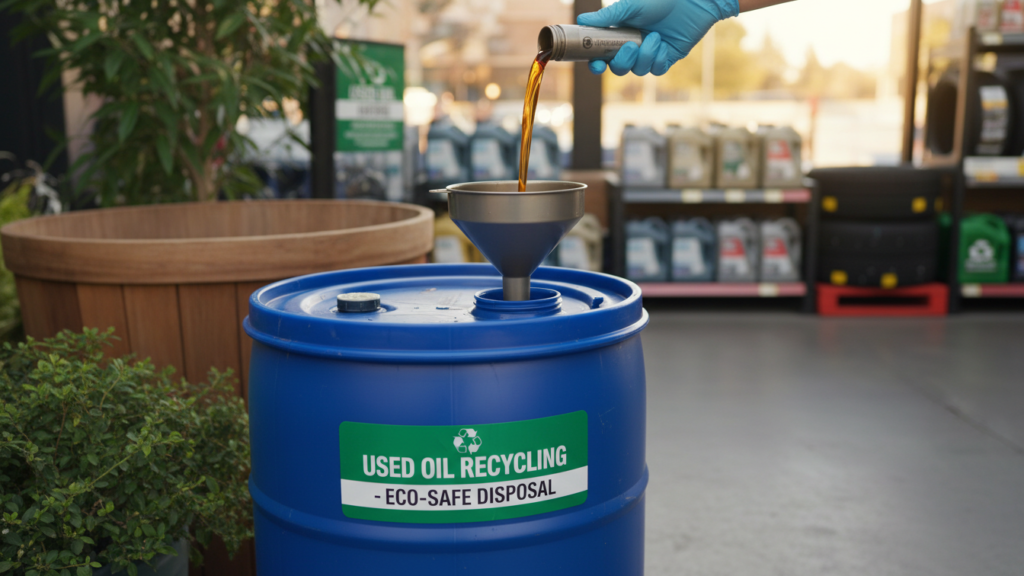
I highlight how to handle used oil safely and ways I cut waste and pollution when I change oil. Proper disposal and simple steps to reduce impact keep my garage and local waterways clean.
Proper Disposal of Used Oil
I always collect used oil in a clean, sealed container labeled with the date and type of oil. I use a funnel and drain into a jug designed for fluids to avoid spills.
Most auto parts stores and municipal waste centers accept used motor oil for free. I call ahead to confirm hours and any limits on quantity.
I never pour oil down drains, onto soil, or into storm drains. One quart can contaminate hundreds of gallons of water. If filters are dirty, I drain them for 24 hours and store them in a sealed bag; many recycling centers take drained filters too.
Keep receipts when you drop off oil. Some local programs give vouchers or record collections for hazardous waste tracking. Proper paperwork helps if regulations require proof of disposal.
Reducing Environmental Impact
I choose high-quality synthetic oil that lasts longer, so I change oil less often and cut waste. Synthetic oils can extend intervals up to 8,000–10,000 miles on many bikes, depending on the manual and my riding style.
When possible, I buy oil in larger containers to lower plastic use. I reuse a clean drain pan and a sturdy funnel rather than disposable parts.
I recycle oil-soaked rags in sealed containers or use commercial absorbents that facilities accept. For small drips, I place absorbent mats in my work area and dispose of them through hazardous-waste channels.
I also follow the owner’s manual for oil type and interval to avoid unnecessary changes. That saves oil, reduces waste, and protects the engine.
FAQs
What about oil condition?
I check oil color and feel. If it looks very dark, gritty, or smells burnt, I change it immediately regardless of mileage. Short trips and stop‑and‑go riding wear oil faster.
Do I need to change the filter each time?
I replace the oil filter with most oil changes. A fresh filter helps the new oil work properly and protects the engine. Some filters last longer, but I follow the manufacturer’s guidance.
How does riding style affect intervals?
If I ride aggressively, tow, or ride in hot or dusty conditions, I shorten intervals. Long steady highway miles are easier on oil than frequent high‑RPM bursts around town.
Should I change oil before storage?
Yes. I change oil and top up antifreeze or fuel stabilizer before long storage. Clean oil prevents sludge and corrosion while the bike sits.
Do I follow the manual or mileage rules?
I always consult my owner’s manual first. It gives the exact interval for my model, and I use the mileage ranges above as practical guidance.
Conclusion
I recommend following your motorcycle maker’s oil-change schedule first. Their guide matches your engine design and warranty needs. Use it as the baseline for all service decisions.
I also check oil type and riding style. I change conventional oil every 2,000–3,000 miles, semi‑synthetic every 5,000–6,000 miles, and full synthetic up to 8,000–10,000 miles, adjusting for hard riding or short trips. I replace oil sooner if it looks dark, gritty, or you plan long storage.
I keep a simple routine to stay on top of maintenance. I mark dates or miles in a log and inspect the oil at each ride season. That small habit often prevents bigger engine problems later.
I choose oil by the owner manual and weather where I ride. Viscosity and quality matter as much as interval. When in doubt, I pick a higher-grade oil and change it a bit earlier rather than later.
Key takeaways I follow:
- Read the owner’s manual first.
- Match oil type to your bike and riding.
- Inspect oil visually between changes.
- Short, hard rides need more frequent changes.
I treat oil changes as simple insurance. They are low cost and high value for engine life and reliable riding.