You’ll know your motorcycle needs maintenance when it starts giving clear signals: strange noises, shaky handling, trouble starting, poor fuel economy, leaking fluids, dim lights, or visible wear on tires, brakes, and the chain. If you notice any of those signs or you’ve hit the service interval in your manual, schedule a check now to avoid bigger repairs and keep riding safely.
I’ll walk you through simple checks you can do at home, what to watch for during rides, and when to call a mechanic so you can spot problems early and keep your bike reliable. Stay with me and you’ll learn quick, practical steps that save time and money.
Key Takeways
- Watch for unusual sounds, performance drops, leaks, and worn parts as immediate warnings.
- Do basic inspections of tires, brakes, chain, fluids, and lights regularly to catch issues early.
- Follow service intervals and get professional checks when problems or uncertainty arise.
Recognizing Signs Your Motorcycle Needs Maintenance
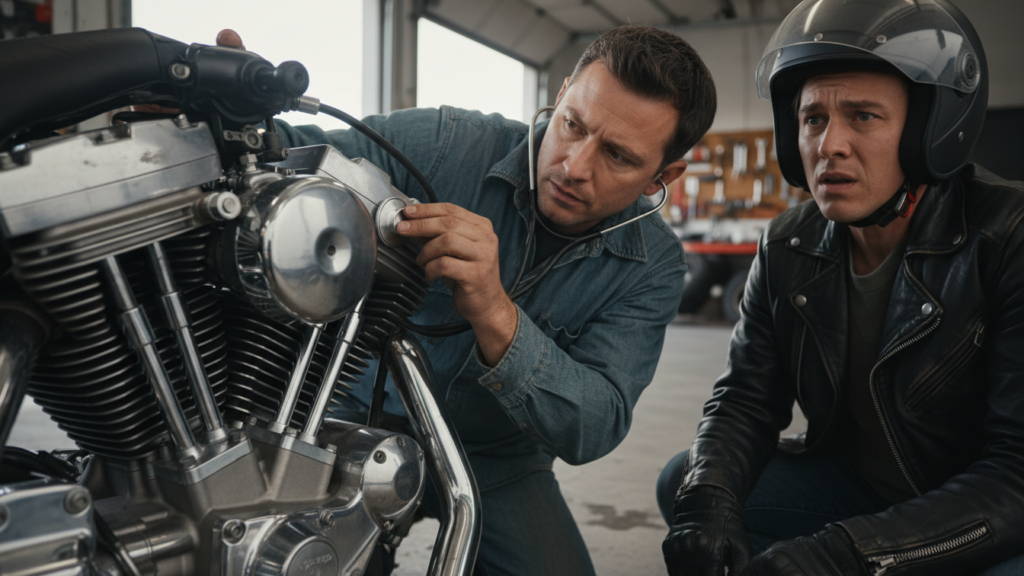
I watch for clear, specific cues that tell me when my bike needs work. Strange sounds, slow starts, heavy vibrations, and dashboard warnings usually point to parts that need inspection or service.
Unusual Engine Noises
I listen closely for noises that change from the bike’s normal sound. A loud knocking or clattering from the engine can mean worn bearings, loose timing components, or detonation. A high-pitched squeal often points to a failing alternator belt or a slipping drive belt on belt-driven cams. If I hear a metallic rattle when accelerating, I suspect loose heat shields, exhaust bolts, or a failing valve train.
I check oil level and color right away when I hear new noises. Low oil or dirty oil can cause knocking. I also note when the noise happens — idle, acceleration, or at speed — because timing helps narrow the problem.
Difficulty Starting the Engine
When my bike struggles to start, I separate electrical from fuel causes. Rapid clicking or a weak crank points to a weak battery, corroded terminals, or a failing starter motor. A slow-turning starter in cold weather usually means low battery charge.
If the engine turns over but won’t fire, I check spark plugs, ignition coil, and fuel delivery. Fouled plugs, a clogged fuel filter, or a failing fuel pump often cause hard starts. I also inspect the choke or EFI system settings and the air filter; restricted airflow can make cold starts difficult.
Vibrations or Shaking
I pay attention to new vibration patterns and when they occur. Handlebar shake at certain speeds often points to tire balance issues, bent rim, or front-end alignment problems. Vibration through the footpegs may signal rear wheel balance, worn chain and sprockets, or bad engine mounts.
I inspect tires, wheel bearings, and spokes first. Then I check chain tension and sprocket wear. If the vibration appears only at certain RPMs, I consider engine mount wear or misfires. I ride at different speeds to isolate whether the issue is wheel- or engine-related.
Warning Lights on the Dashboard
I treat dashboard warnings as immediate priorities. A solid or flashing engine light (check engine) indicates the ECU detected a problem, such as a misfire, sensor fault, or emission control issue. I use an OBD or manufacturer diagnostic tool to read trouble codes and avoid guesswork.
Low oil pressure, ABS, or temperature warnings require prompt action. Low oil pressure can cause engine damage and I stop riding if it appears. ABS or traction control faults affect safety and need inspection. I log the light behavior — steady, flashing, or intermittent — to give accurate details to my mechanic.
Inspecting Essential Motorcycle Components
I check parts that most affect safety and ride quality: tires, brakes, chain, and sprockets. I look for wear, tightness, leaks, and correct settings so problems show up before they become failures.
Checking Tire Condition and Pressure
I inspect tires for tread depth, cuts, bulges, and uneven wear every week or before long rides. Use a tread gauge or the built-in wear bars; replace tires if tread is at or below the maker’s limit or if you see exposed cords. Look for sidewall cracks or bulges that mean internal damage.
I measure pressure with a reliable gauge when tires are cold and follow the pressure listed on the bike’s placard or owner’s manual. Incorrect pressure causes poor handling and faster wear. For more tire safety guidance, I use the Motorcycle Safety Foundation resources and tire maker pages for correct pressures and replacement rules.
Evaluating Brake Performance
I test brakes by checking pad thickness, rotor condition, and fluid level. Brake pads should have at least the minimum thickness specified by the maker; thin pads or a squeal mean replacement. Inspect rotors for deep grooves, cracks, or warping. Light scoring is normal, heavy scoring or heat marks are not.
I check brake fluid color and level in the reservoir; dark fluid or low level calls for a fluid change and leak check. Squeeze the lever and pedal for firm, consistent feel. If brakes pull to one side, grab, or fade under use, I stop riding and have a mechanic inspect ABS and calipers. The National Highway Traffic Safety Administration (NHTSA) and brake manufacturers offer good maintenance guides.
Inspecting Chain and Sprockets
I inspect the chain for correct tension, lubrication, and wear every 500–1,000 miles or after wet rides. Measure slack per the owner’s manual and adjust at the rear axle if it’s too loose or too tight. A tight chain strains bearings; a loose chain can skip or drop.
I check for stiff links, rust, and excessive side play. Lubricate the chain after cleaning and avoid over-lubing. Sprockets should have even, hooked, or pointy teeth—if teeth look sharp or worn, replace the sprockets and chain together. For torque specs and adjustment steps, I refer to the manufacturer’s service manual or trusted how-to guides from reputable repair sites.
Assessing Fluid Levels and Quality
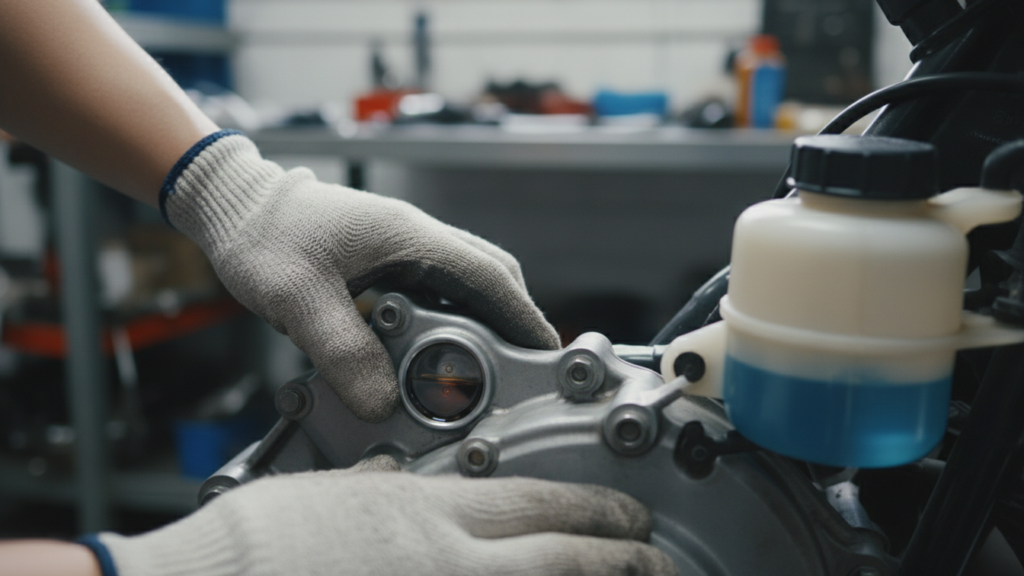
I check each fluid for correct level, clear appearance, and any unusual smell or particles. Low, dark, cloudy, or milky fluids tell me exactly which system needs attention.
Engine Oil Inspection
I check oil when the engine is warm and the bike is on level ground. I use the dipstick or sight glass depending on the model. Oil should sit between the minimum and maximum marks; if it’s below the minimum, I add the correct grade slowly and recheck.
I look at color and texture next. Fresh oil is amber to golden; old oil is dark brown or black. If oil smells strongly of gasoline or smells burnt, the engine may be burning fuel or running too hot.
I also check for metal flakes or grit on the dipstick. Any particles mean internal wear and need a mechanic. Finally, I note the last oil change mileage and follow the manufacturer interval if levels and appearance are normal.
Coolant Level and Condition
I inspect the coolant reservoir with the engine cold and the bike upright. The level must sit between the MIN and MAX marks on the translucent tank. If it’s low, I top with the exact coolant type the manual specifies.
I check color and clarity: most coolants are green, orange, pink, or blue depending on type. Cloudy, rusty, or oily coolant signals contamination or a leak. A milky color suggests oil mixing with coolant, which indicates a possible head gasket or crack.
I never open the radiator cap when hot. If coolant needs frequent top-ups, I look for external leaks, hose cracks, or a failing radiator cap before riding longer distances.
Brake Fluid Assessment
I check the brake fluid reservoirs for level and clarity before every ride. Fluid should sit between the MIN and MAX marks. Low levels often point to worn pads or a leak in the system.
Brake fluid should be clear to light amber. Dark brown or cloudy fluid means moisture has entered the system and reduces boiling point, which harms braking performance. I note any spongy lever feel or longer stopping distance as signs to flush the fluid.
I use the specified DOT rating when topping or changing fluid. I avoid introducing air into the lines and follow a proper bleed procedure or have a technician perform it.
Monitoring Electrical and Lighting Systems
I check the battery, lights, and wiring regularly because they affect starting, visibility, and safety. Small signs like slow cranking or dim lamps tell me when to act.
Battery Health Check
I inspect the battery every month and before long rides. I look for swollen or cracked casing, corrosion on terminals, and secure cable connections. I clean terminals with a baking soda solution and a wire brush when I see white or green buildup.
I measure voltage with a multimeter: a healthy, fully charged 12V battery reads about 12.6–12.8V at rest. If resting voltage is under 12.4V, I charge it and retest. I also perform a load or starter test; if voltage drops below ~10V under load, battery replacement is likely.
I track battery age and riding patterns. Small rides and long idle periods drain a battery faster. If the battery is over 4–5 years old or fails tests, I replace it to avoid being stranded.
Headlights and Turn Signals
I check lights before every ride with a quick 30-second walkaround: low and high beam, both turn signals, tail and brake lights. I test brake lights with the bike on a center stand or ask someone to press the brake while I watch the rear lamp.
For dim or flickering lights I inspect the bulb, socket, and wiring. I replace burned-out bulbs with exact-fit replacements and use dielectric grease on connections to prevent corrosion. If LEDs flicker, I check grounding and the charging system; bad ground or low charging voltage often causes LED issues.
I follow this checklist for lens and reflector care:
- Clean lenses with mild soap and water.
- Replace cracked lenses to stop moisture ingress.
- Tighten loose mounts to prevent wiring strain.
If electrical faults persist, I trace fuses and use a multimeter to find shorts or poor grounds before replacing major components.
Understanding Routine Maintenance Intervals
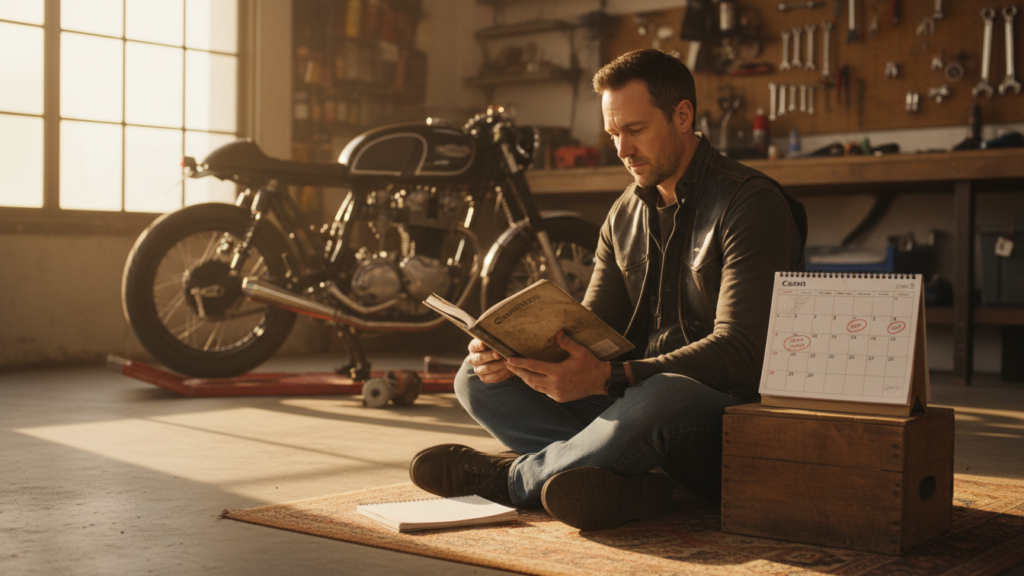
I keep a simple schedule so my bike stays safe and reliable. I focus on the manufacturer’s timetable, mileage checkpoints, and seasonal needs to decide when to inspect, service, or replace parts.
Following Manufacturer’s Recommendations
I always start with the owner’s manual. It lists exact service intervals for oil changes, valve checks, brake fluid, and other items specific to my model. For example, many bikes call for an oil change every 3,000–6,000 miles and a valve inspection every 6,000–12,000 miles, but your manual gives the precise numbers and fluid types for your engine.
I follow the manual for recommended parts and torque specs. If it says to replace the drive chain at a certain interval or to use DOT 4 brake fluid, I do that. When I need clarification, I check factory service bulletins or the manufacturer’s website. For model-specific fixes and recalls, I use the National Highway Traffic Safety Administration (NHTSA) site for authoritative updates.
Mileage-Based Maintenance
I track miles with the trip meter and calendar. I set reminders for key mileage checkpoints: oil and filter at short intervals, spark plugs and coolant at medium intervals, and full inspections at longer intervals. This keeps small problems from becoming expensive repairs.
I inspect wear items by miles: tires, chain and sprockets, and brake pads. For example, I check tire tread and pressure every 500 miles and inspect the chain every 300–500 miles. I also log service dates and parts changed so I can spot trends, like faster tire wear or accelerating oil consumption.
Seasonal Maintenance Considerations
I change my approach with the seasons. Before winter or storage, I stabilize the fuel, top off fluids, and disconnect the battery if needed. I also fog the cylinders and lubricate exposed metal to prevent corrosion during long storage.
In spring and fall I perform a thorough check: battery health, coolant condition, tire age, and brakes. Cold weather may require a different tire pressure and slower warm-up routines. For detailed seasonal steps and safety checks, I reference guides from motorcycle organizations like the American Motorcyclist Association (AMA).
Importance of Professional Inspections
I trust professional inspections because they catch issues I might miss during quick checks. Mechanics use tools and experience to find hidden wear on brakes, suspension, and drivetrains that look fine at a glance.
A trained technician follows a checklist and can spot early signs of failure. This prevents small problems from becoming costly repairs or safety risks.
I value the safety angle most. Pros verify systems like steering, frame integrity, and electrical components where mistakes can cause accidents.
Professional inspections also help maintain resale value. A documented service history shows buyers the bike was cared for, and repairs are done correctly.
What to expect during an inspection:
- Visual checks: tires, lights, and fluid leaks.
- Functional tests: brakes, clutch, and throttle response.
- Diagnostic checks: battery, charging system, and error codes.
I recommend scheduling inspections at least once a year, or more often if I ride a lot or notice odd noises. Routine professional care complements my own quick pre-ride checks and keeps the bike reliable.
Potential Risks of Neglecting Motorcycle Maintenance

I know that skipping basic checks raises the chance of mechanical failure. Worn brakes, old tires, or low fluid levels can stop my bike from responding when I need it most. That increases the risk of collisions and serious injury.
Ignoring maintenance also costs more over time. Small problems like a slow oil leak can become an engine rebuild if I wait too long. Repairs and replacement parts are usually pricier than routine service.
My bike can leave me stranded on the road. A dead battery or loose chain can cause breakdowns far from help. That leads to time lost, towing fees, and unsafe roadside situations.
Neglect shortens the motorcycle’s lifespan. Corrosion, worn bearings, and neglected filters reduce performance and reliability. I get fewer trouble-free miles and may have to replace the bike earlier.
I protect myself by following a simple checklist and doing regular inspections. I check tires, brakes, fluids, lights, and chain before rides. These small steps reduce safety risks and prevent expensive repairs.
- Safety risks: accidents, injury, brake failure
- Financial costs: costly repairs, towing, early replacement
- Convenience impacts: roadside breakdowns, lost time
I keep records of maintenance to spot patterns and fix issues early. That habit keeps my rides safer and my bike running longer.
FAQs
How often should I check my motorcycle?
I check basic items like tires, lights, and fluid levels before every ride. I do full inspections—oil, brakes, chain, and battery—every 1,000–3,000 miles or per my owner’s manual.
What signs mean urgent maintenance?
Strange noises, pulling to one side, leaking fluids, or sudden loss of power mean I stop riding and inspect the bike. Any brake fade or smoke calls for immediate attention.
Can I do maintenance myself?
Yes. I can handle oil changes, chain adjustments, tire pressure, and brake pad checks with simple tools. I leave complex tasks—valve adjustments, major electrical work, and engine diagnostics—to a trained mechanic.
How do I track service history?
I keep a written or digital log with date, mileage, and what I did or had done. This helps me spot patterns and keeps resale value higher.
What routine checks save the most trouble?
Tire pressure and tread, oil level and color, brake pad thickness, chain tension and lube, and battery charge catch most problems early. I inspect these regularly to avoid breakdowns.
Conclusion
I watch my bike the way I would any tool I depend on. Small signs — odd noises, changes in handling, fluid leaks, or warning lights — tell me when to act before a small problem becomes expensive or dangerous.
I use a simple pre-ride checklist and a calendar for scheduled tasks like oil, brakes, and tire checks. Regular checks keep the bike reliable and help me spot wear early. I also count on my senses: feel, sight, and sound often reveal issues faster than a service book alone.
When I find something unusual, I decide: fix it now, monitor it, or get professional help. Some tasks I handle myself, like tire pressure and chain lube. Other jobs, such as complex engine or brake work, I leave to a mechanic.
I keep a short log with dates and work done. It saves time and shows patterns, like how fast tires wear or if leaks return. That record helps me plan costs and avoids surprises.
Bold choices protect my safety: I replace worn tires, fix brakes promptly, and never ignore warning lights. Routine care keeps the bike safer, lasts longer, and makes every ride more enjoyable.