You want a quick, safe ride and fewer surprises on the road. Checking tire pressure takes minutes and keeps your bike handling true, braking sharp, and tires wearing evenly. Use a reliable gauge on cold tires and set pressure to the motorcycle maker’s recommendation to get it right.
I’ll show simple steps, the tools you need, common mistakes to avoid, and when to check pressure so you can ride with confidence. This short guide keeps things practical so you can check pressure correctly every time.
Key Takeaways
- Check pressure with a quality gauge when tires are cold.
- Follow the motorcycle maker’s recommended pressure for best handling.
- Inspect and adjust pressure regularly to avoid uneven wear and safety issues.
Why Checking Motorcycle Tire Pressure Is Important
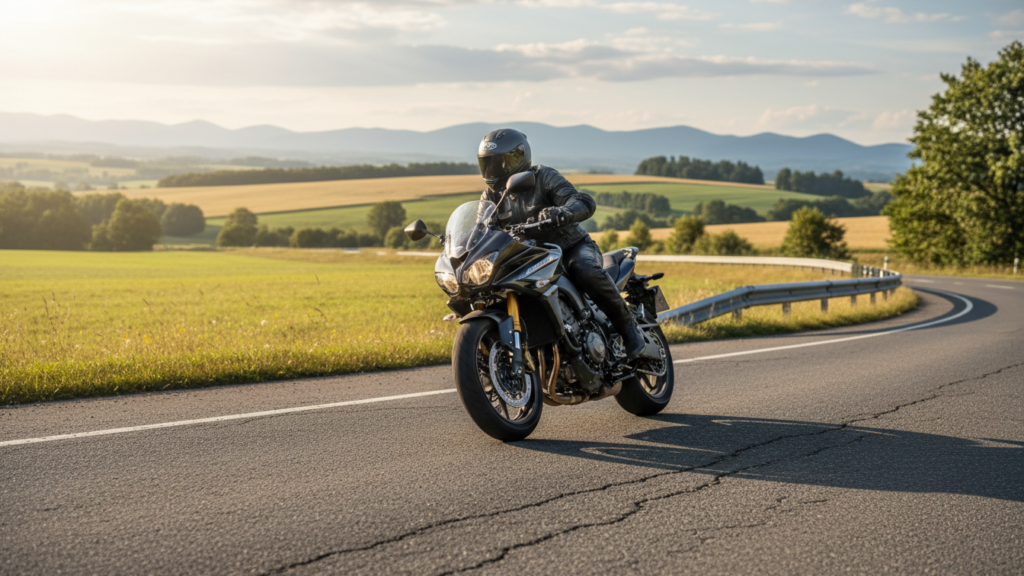
I check tire pressure because it directly affects how the bike handles, how long the tires last, and how much fuel the engine uses. Maintaining the correct pressure helps me ride safer, spend less on replacements, and get better mileage.
Impact on Safety
Underinflated tires feel squishy and slow to respond. I notice reduced steering precision, longer stopping distances, and a higher risk of the tire deforming in a turn. That increases the chance of a slide or loss of control, especially in wet or emergency situations.
Overinflated tires make the contact patch smaller. I feel harsher feedback from bumps and less grip during cornering. This can cause the bike to skip or feel unstable at speed.
I always check pressure when the tires are cold and compare it to the pressure listed on the bike’s placard or owner’s manual. I use a calibrated motorcycle-specific gauge and add or release air in small increments to reach the exact value.
Influence on Tire Longevity
Tire wear patterns tell me a lot about pressure. Underinflation causes the edges of the tread to wear faster. Overinflation causes the center of the tread to wear faster. Both shorten overall tire life.
Consistent checks let me catch a slow leak, a bent rim, or valve issues before they cause uneven wear. I also rotate weight and adjust suspension settings when needed to prevent one tire from wearing out prematurely.
Proper pressure keeps the tire’s internal structure from flexing excessively. That reduces heat buildup and lowers the risk of internal damage. I replace tires when tread depth or damage indicates reduced safety, not just when pressure problems occur.
Effect on Fuel Efficiency
Tire pressure affects rolling resistance, which changes fuel use. I’ve seen that underinflated tires create more drag, so the engine works harder and burns more fuel.
Keeping pressure at the manufacturer’s recommended level reduces drag and improves miles per gallon. Small pressure drops of a few psi can noticeably cut efficiency over long trips.
I check pressure before long rides and during regular maintenance. For touring or carrying extra load, I adjust recommended pressure for the increased weight to keep both fuel efficiency and handling balanced.
Required Tools and Equipment
I keep the basic tools ready so I can check pressure quickly and correctly. The right gauge and knowing the bike maker’s PSI make the job fast and safe.
Tire Pressure Gauge Types
I use a digital gauge for quick, clear readings and a pencil (stick) gauge as a backup. Digital gauges show numbers to one decimal and work well for low-pressure changes. They need new batteries sometimes, so I check them before a long ride.
Pencil gauges are cheap and small. They can bend or wear, so I replace them every few years. Dial (analogue) gauges are easy to read and rugged; I use one if I need a durable tool in the shop.
When I buy a gauge, I check compatibility with Schrader valves, which most motorcycles use. I also look for a gauge with a secure chuck or a clip-on head to avoid air loss while reading.
Finding Your Recommended PSI
I always check the motorcycle owner’s manual first for front and rear PSI values. If I don’t have the manual, I look on the bike’s swingarm, frame, or a sticker under the seat where manufacturers often list cold PSI. Tire sidewalls list minimum and maximum pressure, but they do not give the bike-specific recommended PSI.
If I carry a passenger or luggage, I add the extra load to the recommended rear PSI as the manual advises. I note the cold tire pressure value and measure tires before riding or after at least three hours of no use, so my readings match the manual’s “cold” specification.
How to Check Motorcycle Tire Pressure Step-by-Step
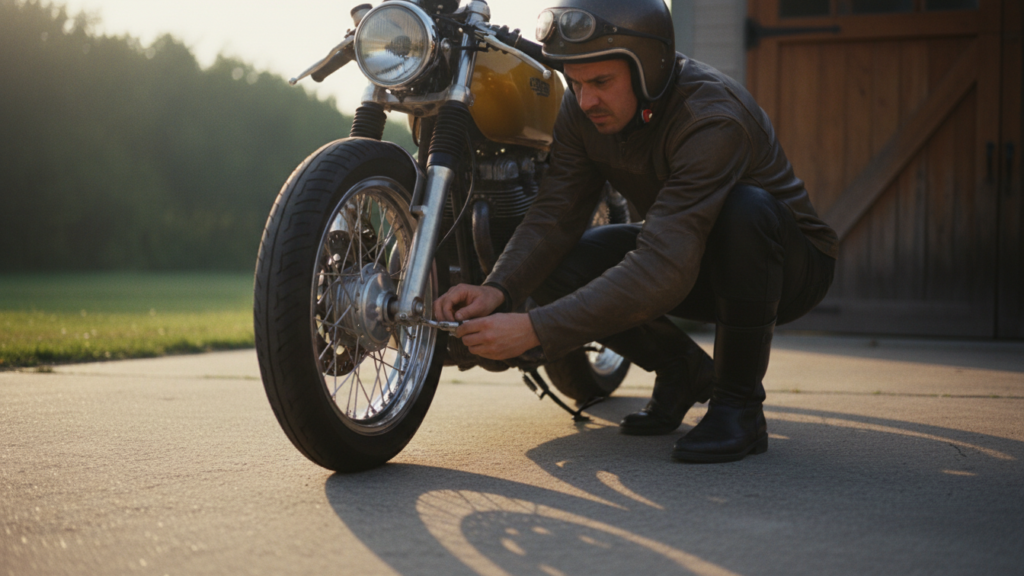
I will show the exact steps I use to check tire pressure, prepare the bike, read the gauge, and match the numbers to the maker’s specs. Follow the steps below with a reliable gauge, the right PSI values, and cold tires for best results.
Preparing Your Motorcycle
I check pressure when the tires are cold, which means the bike has sat for at least three hours or I measure before riding. Cold readings avoid heat-related pressure rise that can add several PSI and give a false high result.
I park on level ground and set the sidestand or center stand so the tires sit evenly. I remove any valve caps and inspect each tire for cuts, embedded objects, or uneven wear before I measure.
I note the load and usual riding conditions, since passenger or luggage can change the target pressure. I keep the owner’s manual or the placard on the swingarm/fork handy to verify exact pressures.
Using a Tire Pressure Gauge
I use a quality digital or dial gauge made for motorcycle tires for the most accurate results. Clip-on gauges work well for Schrader valves; for Presta-style valves I use the correct adapter or a dedicated gauge.
I press the gauge firmly onto the valve stem to get a steady reading; a quick hiss usually means a bad seal and an inaccurate number. I take two readings per tire to confirm consistency and write the values down.
If the pressure is low, I add air in short bursts with a pump or compressor, then re-check. If it’s too high, I release small amounts via the valve core until it matches the target. I always replace the valve caps to keep dirt out.
Comparing Measured PSI With Specifications
I compare my measured PSI to the values in the owner’s manual first, or to the sticker on the motorcycle if the manual is missing. Manufacturers give front and rear PSI for solo and two-up riding, so I pick the correct line.
If the manual is lost, I check the tire sidewall only for maximum pressure limits, not the recommended riding pressure. The sidewall shows maximum inflation — not the bike-specific setting. For manufacturer guidance I consult the OEM manual or a trusted source like Michelin’s tire safety page.
When measured pressure differs by more than about 2–3 PSI from the recommended value, I adjust it. For ongoing issues or quick leaks, I visit a mechanic or a tire shop like your local dealership for inspection and repairs.
How to Inflate or Deflate Motorcycle Tires
I check pressure when tires are cold and use a reliable gauge. I either add air with a compressor or let air out slowly, aiming for the pressure listed in my bike’s manual for my load.
Using an Air Compressor
I position the bike upright and ensure the tire is cold (no riding for 2+ hours or less than 2 miles at low speed). I remove the valve cap and press a quality tire gauge onto the valve stem to read current PSI before inflating.
I attach the compressor hose with a threaded or snap-on chuck, keeping it straight to avoid bending the valve. I add short bursts of air, then remove the hose and re-check with the gauge. I repeat until the tire reaches the exact PSI from the owner’s manual for my riding setup.
I replace the valve cap and repeat for the other tire. If I use a portable compressor, I watch temperature and take breaks to avoid overheating the pump.
How to Release Excess Air
I remove the valve cap and press the center pin in the valve stem gently with a small screwdriver tip, valve tool, or the back of my gauge to let air escape. I tap the pin briefly and check pressure after each short release to avoid letting out too much air.
If I need a small drop (1–3 PSI), I press for only a fraction of a second. For larger drops, I press longer and monitor with the gauge. I never rely on ear or feel alone; I use the gauge for accuracy.
I cap the valve after adjusting and re-check pressure once more before riding.
When to Check Your Motorcycle Tire Pressure
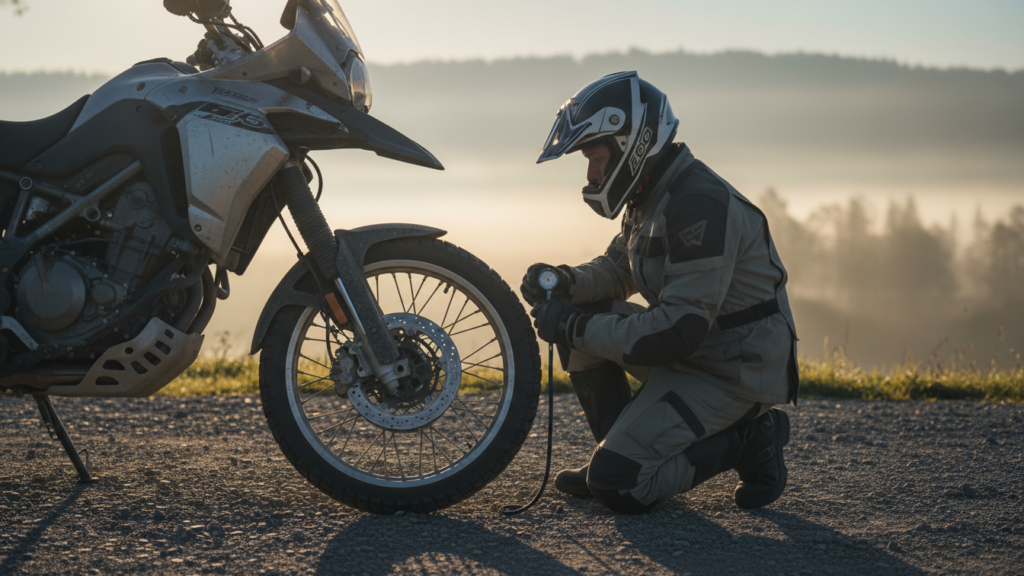
I check tire pressure before rides that could affect handling or load. I also check after temperature shifts, long trips, or any sign of a slow leak.
How Often to Check
I check tire pressure at least once a week when I ride regularly. For daily riders or long trips, I check before every ride. This catches slow leaks and pressure loss from normal use.
I always check pressure when I carry extra weight—like a passenger or luggage. I also check after hitting potholes or curbs, since impacts can reduce pressure or damage the tire.
If a tire shows uneven wear, pulling, or vibration, I check pressure immediately. I use a quality gauge and compare the reading to the motorcycle manufacturer’s recommended cold pressures.
Checking Pressure in Different Weather Conditions
I check pressures more often in cold weather because air pressure falls about 1–2 psi for every 10°F drop. I check tires when they are cold in the morning to get an accurate reading.
In hot weather, pressure can rise during long highway rides. I set tire pressure to the cold spec and avoid adding air to a hot tire unless it reads below the cold spec after cooling.
When weather changes rapidly—seasonal shifts or a cold front—I recheck pressures within a few days. I keep a small gauge in my toolbox and a portable pump for quick adjustments when needed.
Common Tire Pressure Mistakes and How to Avoid Them
I focus on the exact errors riders make and how to fix them so your bike handles safely and your tires last longer.
Overinflating or Underinflating Tires
I see riders push PSI too high or let pressure fall too low. Overinflation causes a smaller contact patch, which reduces traction and makes the ride harsh. Underinflation increases heat and sidewall flex, which shortens tire life and raises the risk of a blowout.
Check the motorcycle’s placard or owner’s manual for the exact cold PSI for front and rear tires. Use a quality digital gauge and record both tires. If you find pressure off by more than 2–3 PSI, add or release air to match the spec. I top off air at a station with a regulated compressor or use a portable pump with an accurate gauge. For long trips or heavy loads, follow the manufacturer’s adjusted pressure chart. For more on recommended pressures and tire care, I trust resources like the Motorcycle Safety Foundation and tire makers’ official guides.
Measuring When Tires Are Hot
Reading tires after a ride gives a false high value because heat raises pressure. I always check pressure when tires are cold — ideally after the bike has been parked for at least three hours or before riding in the morning. Cold readings match the PSI printed on the placard.
If I must check hot tires, I subtract 2–4 PSI from the hot reading as a rough correction, but I treat that as temporary. After heavy use, wait for a cold reading before making final adjustments. Use a gauge that seals well on the valve to avoid slow leaks while measuring. For technical details on temperature effects and accurate measurement steps, I refer to manufacturer tech pages and the U.S. Department of Transportation guidance.
Troubleshooting Tire Pressure Issues
I focus on quick checks you can do at home to find slow leaks and valve problems. I show simple tests and what to replace or tighten so your bike feels safe and predictable on the road.
Detecting Slow Leaks
I inflate the tire to the manufacturer’s recommended PSI and mark the valve stem with a piece of tape so I can spot a fall in pressure later. I recheck pressure after 4–24 hours with a reliable gauge; a drop greater than 2–3 PSI overnight usually means a leak.
I use a soapy water spray on the bead, tread, and around the valve to find bubbles. I rotate the wheel slowly while inspecting to catch small leaks.
If I see bubbles at the bead, the tire may not seat properly. If bubbles appear in the tread, I inspect for embedded nails, glass, or a puncture.
For tiny punctures in the tread I can use a motorcycle tire repair kit or visit a shop for a plug or patch. If the bead or sidewall leaks, I do not ride; I replace the tire or have a professional mount a new one.
Inspecting Tire Valves
I remove the valve cap and press the valve core briefly to release a small burst of air; a strong hiss means the core is loose or damaged. I keep a spare valve core and a small wrench in my toolkit for on-the-spot tightening.
I check the valve stem for cracks, cuts, or excessive rubber aging, especially on older bikes. Bent or cracked stems need replacement because they can leak under load or at speed.
I clean the valve area and replace worn caps. A simple O-ring or cap can prevent slow leaks caused by dirt or corrosion. If tightening or replacing the core doesn’t stop the leak, I replace the entire valve stem or take the wheel to a tire shop.
Understanding Tire Pressure Monitoring Systems
I use Tire Pressure Monitoring Systems (TPMS) to keep tire pressure visible and steady while riding. TPMS has small sensors that sit on or inside the valve stem and send real-time pressure (and sometimes temperature) data to a display on the dash or a handlebar unit.
There are two main types: direct and indirect. Direct TPMS measures air pressure inside each tire with sensors. Indirect TPMS estimates pressure by reading wheel speed or ABS signals and can miss small leaks.
A simple list shows what TPMS does for me:
- Alerts me when pressure drops below set limits.
- Shows pressure for each tire individually (direct systems).
- Can warn about rapid leaks or temperature spikes.
I watch for these practical limits when choosing or using a TPMS:
- Battery life in sensor units varies and may need replacement.
- Direct systems are more accurate but cost more and need sensor care.
- Indirect systems are cheaper but less precise and may need recalibration after tire or wheel changes.
I still check tires manually with a gauge. TPMS helps me ride safer and catch problems early, but it does not replace regular visual checks and using a quality pressure gauge.
Best Practices for Motorcycle Tire Care
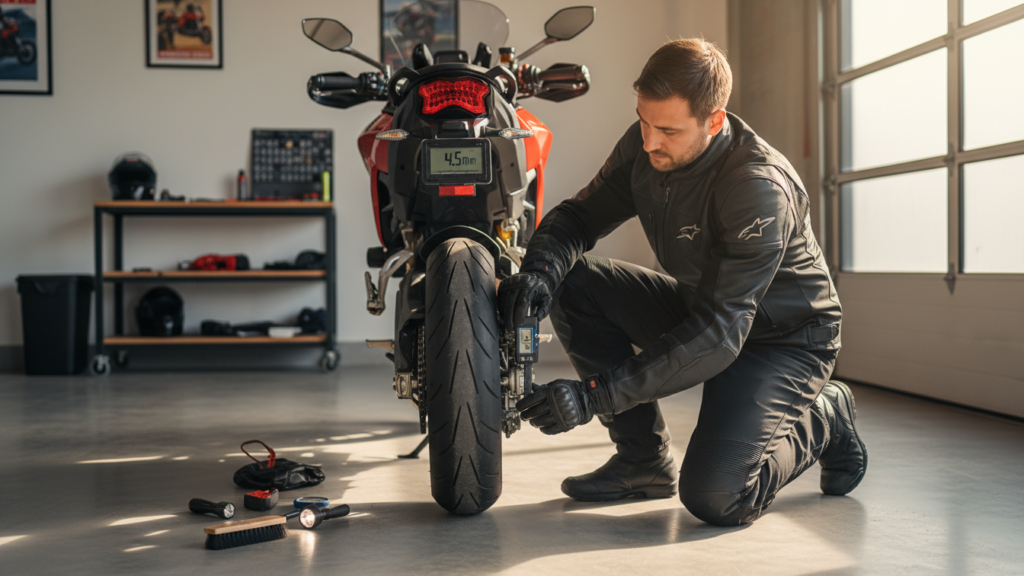
I check tire pressure when the tires are cold, because heat raises pressure and gives a false reading. I use a quality digital gauge for accuracy and record the pressure in a notebook or app for future checks.
I follow the pressure specs in my owner’s manual or on the tire sidewall. I avoid inflating to the tire’s maximum unless I carry the exact load that calls for it.
I inspect tread depth and look for uneven wear every time I check pressure. I use a tread gauge or a common coin test to spot shallow tread and replace tires that show signs of significant wear or damage.
I watch for cuts, bulges, and embedded objects. Any sidewall damage or visible cords means I stop riding and get the tire checked by a professional.
I rotate tire checks into my routine—weekly for high-mileage riding and before long trips. I keep tires free of debris, maintain proper wheel alignment, and balance tires when installing new ones.
Maintenance checklist (quick view):
- Pressure: Check cold, use digital gauge, record values
- Tread: Measure depth, look for uneven wear
- Damage: Inspect sidewalls, patch only as recommended
- Schedule: Weekly checks or before long rides
I replace tires by age as well as condition; most manufacturers recommend replacing tires that are 5–7 years old even if tread looks okay.
FAQs
How often should I check pressure?
I check weekly if I ride daily and at least every two weeks if I ride less. I always check before a long trip and during long rides every few hundred miles.
What pressure should I use?
I follow the motorcycle owner’s manual or the sticker on the frame for recommended front and rear pressures. Tire sidewalls show minimum and maximum values, but I use the bike maker’s numbers for handling and load.
Which gauge is best?
I prefer a digital or quality dial gauge that reads in psi and bar. These give consistent readings and are easier to read than cheap gauges.
What if pressure is low or high?
I add air to reach the recommended pressure and re-check. If pressure keeps dropping, I inspect for punctures, valve leaks, or rim damage and see a mechanic if needed.
Can tire pressure affect safety?
Yes. Incorrect pressure reduces grip, wears tires unevenly, and harms handling. I treat pressure checks as a simple but vital safety step before every ride.
Conclusion
I check my motorcycle tire pressure regularly because it keeps me safer and saves money on tire wear. A quick gauge check before rides tells me if tires are under- or over-inflated.
I use the bike maker’s recommended PSI and test tires when they are cold. If pressure is off, I add or release air until it matches the spec.
I keep a reliable gauge and a small pump in my garage or saddlebag. These tools let me fix most pressure issues at home or on the road.
I also watch tire tread and sidewalls for damage and monitor pressure at least every two weeks. That habit helps me spot slow leaks early.
If I ride two-up or carry heavy loads, I raise pressure to the manufacturer’s higher recommendation. For normal single-rider use, I stick to the standard PSI.
Quick checklist:
- Check when tires are cold.
- Compare to manufacturer PSI.
- Use a good gauge and pump.
- Inspect tread and sidewalls.
Doing these simple steps makes my rides more predictable and reduces the chance of a tire-related problem.