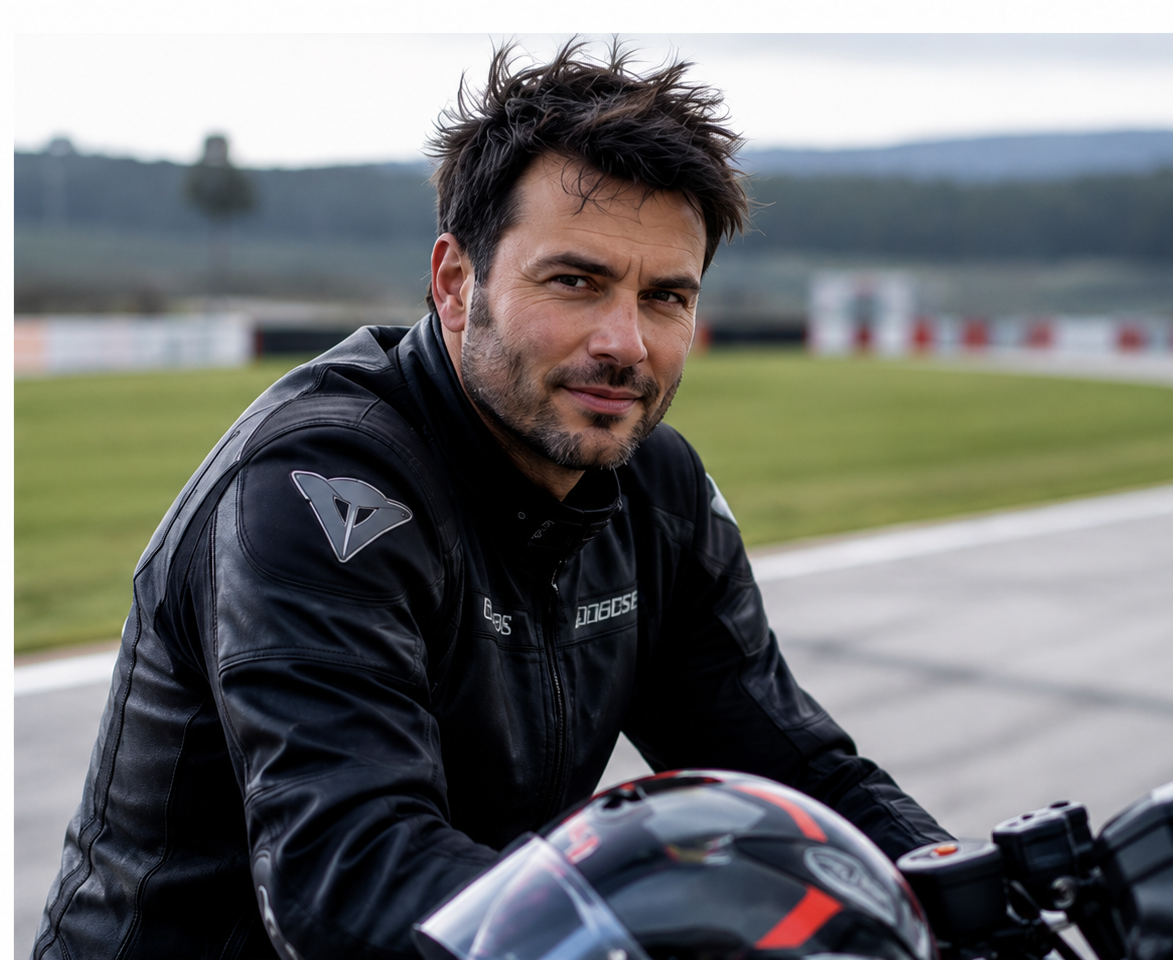
You control more of your safety than most riders realize when you use proper lane discipline. It helps other drivers see you, gives you escape routes, and lowers the chance of crashes. Staying in the right part of the lane at the right time directly cuts your risk on the road.
I’ll show simple, practical reasons lane discipline matters and how small habits can make each ride safer and smoother. Keep reading to learn clear tips you can use right away, whether you ride alone, with a group, or in heavy traffic.
Key Takeaways
- Use lane position to be more visible and to create space for safe reactions.
- Consistent lane choices make your actions predictable to others.
- Small, regular habits in lane discipline reduce long-term crash risk.
Understanding Lane Discipline for Motorcycle Riders
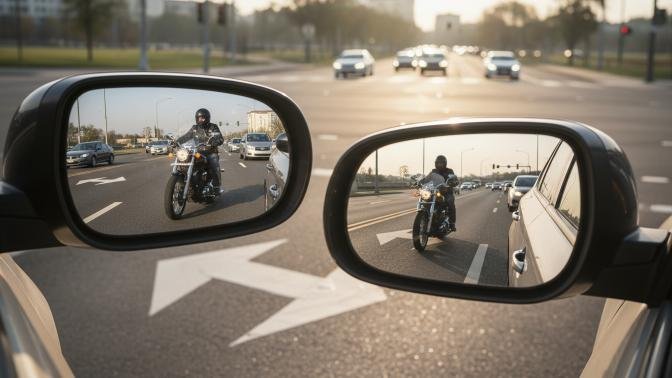
I focus on how a rider should place the bike, why that placement matters for safety and visibility, and how motorcycles behave differently from cars so riders can make better choices on the road.
Definition of Lane Discipline
I define lane discipline as the consistent, lawful use of a single traffic lane while choosing a position that maximizes safety and visibility.
That means riding where other drivers can see you, keeping enough space to react to hazards, and following lane markings and local laws.
Key points I follow:
- Maintain predictable position: avoid sudden moves across the lane.
- Stay visible: use the portion of the lane that places you in other drivers’ sightlines.
- Respect rules: keep within lane lines and obey signs and markings.
I also treat lane discipline as a risk-management tool. It reduces blind-spot time, minimizes need for abrupt evasive maneuvers, and helps other road users judge my speed and distance.
Lane Positioning Principles
I pick lane position based on three things: visibility, space to maneuver, and surface condition.
I scan ahead for hazards like debris, oil, or uneven pavement and choose the lane area that offers the best traction and escape routes.
Use these practical positions:
- Left third — better view through intersections and wider escape to the right.
- Center third — balanced position for general riding with room to swerve both ways.
- Right third — useful for avoiding debris or preparing to turn right, but watch for drivers turning across you.
I adjust position when approaching intersections, parked cars, or heavy traffic. I keep a safe following distance and change lane placement smoothly, signaling when needed to stay predictable.
Differences Between Motorcycles and Other Vehicles
I ride a vehicle that is smaller, less stable at low speeds, and less visible than cars.
My braking distance can be shorter with good tires, but I can also be more easily knocked off balance by road hazards or wind gusts.
Important contrasts I keep in mind:
- Visibility: cars have larger profiles; I must position to be seen.
- Space needs: I need the full lane to avoid obstacles and to have room to swerve.
- Dynamics: lean and countersteer affect how I change lanes compared to a car’s steering.
Because of these differences, I avoid sharing lanes and I do not assume drivers will notice me. I make my intentions obvious with steady lane choice, clear signaling, and predictable speed changes.
Safety Benefits of Lane Discipline
I use steady lane discipline to make myself more visible, predictable, and ready to react. It helps me avoid common crash scenarios, stay out of drivers’ blind spots, and buy extra time to brake or steer.
Reducing Collision Risk
Staying in a consistent lane position reduces surprises for drivers behind and beside me. When I hold a clear line — slightly left or right of center depending on traffic — drivers can predict my path and are less likely to cut across me when turning or changing lanes.
I also watch lane markings and keep a safe following distance. That extra space gives me room to slow or swerve around hazards without being rear-ended. For more on right spacing and stopping distances, I follow guidance from the Motorcycle Safety Foundation (https://www.msf-usa.org).
Proper lane choice keeps me out of risky blind crossings and reduces chances of side-impact crashes at junctions. Small adjustments inside the lane help me avoid road debris and poor pavement that can cause a loss of control.
Minimizing Blind Spot Dangers
I position myself where drivers can see me in mirrors and avoid lingering in others’ blind zones. A common safe spot is the left or right third of the lane, depending on the view and traffic flow. That placement makes me visible to drivers checking lanes before merging.
I avoid riding alongside large vehicles or in the center of two lanes where cars may not notice me. If I must pass, I move quickly and decisively rather than staying beside a truck. The National Highway Traffic Safety Administration (https://www.nhtsa.gov) has useful data showing how visibility affects crash risk.
I also use head and body movements to confirm eye contact when possible. Simple signals and predictable lane placement reduce the chance of a driver changing lanes into me.
Enhancing Reaction Time
Good lane discipline gives me more time to see hazards and act. By keeping a buffer on at least one side, I create an escape route. That extra space lets me brake, change lanes, or swerve without hitting a vehicle beside me.
I constantly scan for brake lights, turn signals, and road surface changes. When I align myself where I can see farther down the road, I spot problems earlier. More lead time equals safer, smoother maneuvers.
I also avoid sudden, last-minute moves. Smooth, planned lane shifts give both me and surrounding drivers time to adjust, which lowers the chance of panic braking or collisions.
Legal and Regulatory Importance
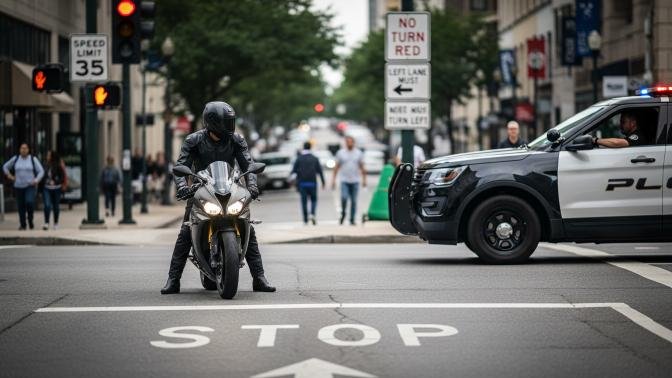
I explain how lane rules affect where and when I can ride, and what laws say about moving between lanes. I also note the legal risks I face if I ignore lane discipline or break lane-use rules.
Traffic Laws Concerning Lane Usage
Lane rules differ by state and country, so I always check local traffic codes before riding.
Many places define where motorcycles must ride within a lane, whether they may split lanes in slow traffic, and how to pass safely. California, for example, allows lane splitting under safe conditions; most other U.S. states either ban it or have no clear law.
Traffic laws typically require me to:
- Stay within a single lane unless signaling and yielding to others,
- Keep a safe speed relative to surrounding vehicles, and
- Use designated lanes (turn, HOV) correctly when signs require them.
I also follow helmet, lighting, and visibility rules that interact with lane use. Violating lane-use rules can be cited as unsafe riding or reckless operation depending on the jurisdiction.
Consequences of Violating Lane Discipline
Breaking lane rules can lead to tickets, fines, and points on my license.
A citation for illegal lane changes or unsafe lane splitting may increase insurance premiums or lead to license suspension in severe cases.
In crashes, violating lane discipline weakens my legal position. If I was weaving or riding outside a lane, police and insurers may find me partially or fully at fault. That affects compensation for injuries and bike damage.
Some jurisdictions treat repeated violations as evidence of reckless behavior, which can bring higher penalties or criminal charges. I document conditions and witnesses when possible to protect myself after an incident.
Improving Visibility and Predictability
I focus on clear signals and steady positioning so other drivers see me and can guess my next move. That reduces surprises and gives me space to react.
Making Intentions Clear to Other Road Users
I use multiple cues to show my next move. I signal early with my turn light, then tap the brake to flash the rear light when slowing. I keep my headlight on and wear a high-visibility jacket or bright helmet to increase contrast against traffic.
I position my bike where drivers can see me in mirrors and through windows — usually the left or right third of my lane, depending on hazards and my next move. When I plan a lane change, I check mirrors, shoulder-check, signal, and move smoothly so drivers can follow my path. If traffic is dense, I make eye contact with relevant drivers when possible.
Avoiding Sudden Maneuvers
I avoid abrupt lane changes or hard braking unless necessary. I scan ahead for brake lights, turn signals, and gap changes so I can adjust speed gradually. A steady throttle and light use of brakes keep my intentions obvious.
When a hazard appears, I give myself a safe escape route by keeping at least one bike-width of space to either side inside my lane. I also avoid lingering in blind spots of larger vehicles and maintain a buffer behind slow-moving cars to prevent last-second swerves.
Lane Discipline in Different Riding Environments
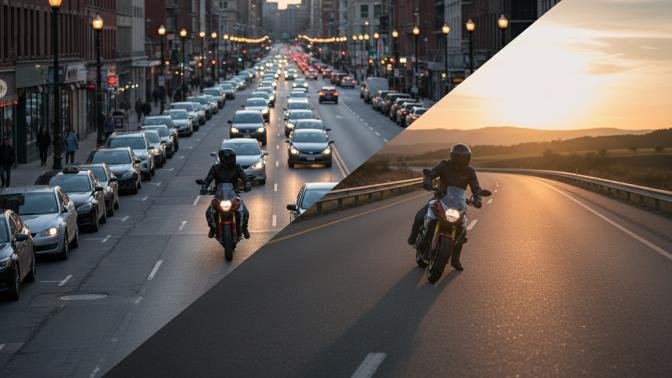
I focus on how lane choices change with traffic, speed, and road layout. I point out the specific risks and the key actions I take in each setting.
Urban Road Challenges
City streets have frequent intersections, parked cars, and sudden stops. I keep a position that gives me clear sightlines and escape space—usually the left third or center of my lane depending on traffic and road width.
I use my mirrors and scan 8–12 seconds ahead for brake lights, turn signals, and pedestrians. I avoid riding in drivers’ blind spots and I ride at a speed that lets me stop within the visible clear distance.
I signal early and make lane changes decisively. When filtering at very low speeds, I stay between motorcycle-width gaps only if local law allows it and the gap is wide enough for safe clearance from car mirrors.
Highway and Rural Road Considerations
On faster roads I emphasize stable lane position and long sight distance. I ride where other drivers can see me — often the left part of the lane on multi-lane highways — and I increase following distance to 3–4 seconds.
I watch for large blind spots from trucks and avoid lingering alongside them. When overtaking, I check mirrors, signal, and move smoothly into the target lane with enough speed to pass quickly.
On rural two-lane roads I slow for curves and use a lane position that maximizes view through the corner. I reduce speed for gravel, potholes, and farm equipment, and I prepare for oncoming traffic that may drift over the center line.
Supporting Group Riding and Shared Roads
I focus on clear lane choices, signaling, and spacing so everyone stays predictable and visible. Proper lane discipline helps me and others see hazards, keep safe gaps, and merge or pass without surprises.
Coordinating With Fellow Riders
I pick and hold a position in the staggered formation unless road width or traffic forces a single-file line. This gives me a 1-2 second following gap to the rider ahead and about a 2-second lateral cushion to the rider beside me. I use hand signals and brake checks to confirm turns and stops, and I call out hazards verbally or with simple gestures so riders behind can react in time.
If the group needs to change lanes, I wait for a clear gap and signal early. I avoid sudden speed changes and I maintain steady throttle so riders behind can follow smoothly. When leading or sweeping, I keep my role consistent and brief others on any planned maneuvers before we start.
Sharing the Road With Larger Vehicles
I assume truck and bus drivers have limited visibility and need extra space. I stay out of large vehicle blind spots and never pass a truck on the right unless there’s a full lane and clear sight. When following, I allow extra stopping distance—about 3 seconds in normal conditions—because larger vehicles block my view of traffic ahead.
When a large vehicle approaches from behind, I move slightly to the left within my lane so the driver can see me. On narrow roads or in high wind, I tighten my position but never crowd the vehicle. I signal lane changes early and avoid weaving between lanes near heavy trucks.
Long-Term Consequences of Poor Lane Discipline
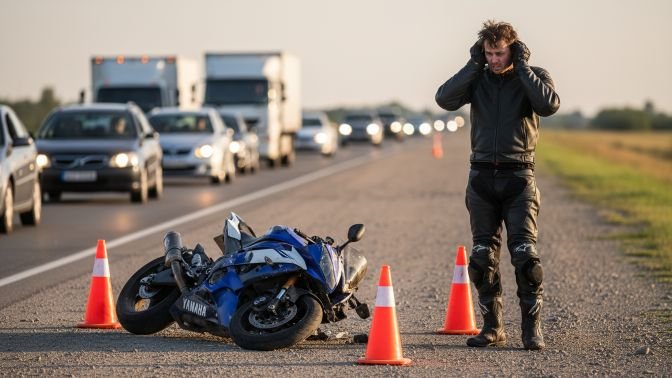
I see two main long-term harms from sloppy lane habits: more crashes and rising costs that follow every claim and violation. Both affect your safety, your wallet, and how others treat you on the road.
Increased Accident Rates
I have ridden and studied crash reports that show lane violations—abrupt lane changes, drifting without signaling, or riding between lanes—raise collision risk. When I fail to hold a steady line, other drivers misjudge my position. That leads to side-swipes, mirror strikes, and being cut off at intersections.
Poor lane discipline also puts me in blind spots longer. Trucks and SUVs have large blind zones; staying unpredictably close increases the chance a larger vehicle will merge into me. Over time, repeated small incidents can escalate into a serious crash that causes injury or bike damage.
I pay attention to spacing and clear signaling because consistent lane behavior gives other road users time to react. That cut reaction time is the core reason accidents climb when riders ignore lane rules.
Higher Insurance Costs
Insurers track accidents, claims, and traffic citations. When I get cited for lane violations or make frequent claims after lane-related crashes, my premiums climb. Each at-fault crash or moving violation becomes a data point insurers use to label me a higher-risk rider.
Higher costs show up in multiple ways: larger annual premiums, steeper deductibles, and fewer insurer options. I may lose access to preferred discounts for safe riding. Repeated claims can also lead to non-renewal or cancellation, forcing me to seek more expensive coverage.
Keeping clean records by following lane discipline helps me avoid these financial penalties. A single avoidable crash can cost hundreds or thousands beyond repair and medical bills, and insurance hikes can last years.
Practical Tips for Maintaining Good Lane Discipline
I focus on small, repeatable actions that keep me centered, visible, and predictable to other road users. Pay attention to mirror checks and lane markings, and make clear, early moves when needed.
Consistent Mirror Checks
I check my mirrors every 5–8 seconds in traffic and before any change of speed or direction. I use my rearview and both side mirrors to spot fast-approaching vehicles, riders planning to pass, or gaps closing in beside me.
When I prepare to change lane position, I follow a quick routine: mirror, signal, shoulder check. The shoulder check confirms what mirrors miss in blind spots. I keep my head movement brief but decisive.
I adjust mirror angles so I can see the lane lines and a small strip of my bike. That helps me judge distance and position without over-rotating my head. On highways I scan farther ahead, while in town I glance more often at mirrors because traffic behavior changes quickly. For more on mirror setup and blind spots see this NHTSA page and a practical mirror-adjust guide from a riding school.
Using Lane Markings Effectively
I use lane markings to place my bike where I’m most visible and where I can react to hazards. On multi-lane roads I ride in the left, center, or right third of my lane depending on wind, road debris, and the speed of surrounding traffic. I avoid riding on the painted line itself because paint can be slippery when wet.
When overtaking, I move to the adjacent lane only when I have a clear view ahead and the lane is free for a safe distance. In slow-moving traffic I use the center lane position to reduce being squeezed by cars opening doors or drifting toward me.
I watch for broken lines that allow passing and solid lines that prohibit it. Respecting these markings keeps my actions predictable. For official guidance on lane positioning and road rules, I reference local highway code resources and a defensive riding course outline.
Conclusion
I focused on clear, practical steps riders can use to stay visible, predictable, and safe. These steps cover lane position, speed matching, signaling, and how to handle trucks and group rides.
FAQs
Why does lane discipline matter for my visibility?
I pick lane positions that keep me in drivers’ sight lines, not tucked in blind spots. Riding near the left third or right third of a lane helps drivers see me in mirrors and through side windows. I avoid lingering along the edges where debris or dooring risks increase.
How does lane discipline reduce collision risk?
I use steady, predictable paths so other road users can judge my speed and intent. Smooth, timely lane changes with signals cut confusion. I also match lane choice to road speed and surface conditions to keep safe stopping distance.
Can lane discipline help in traffic jams or merging?
Yes. I use merging techniques like zipper merges when lanes end, letting vehicles take turns rather than forcing sudden moves. In slow traffic I use a centered, steady position to prevent drivers from squeezing past me. When filtering is legal and safe, I move slowly and watch exit points.
What about riding in groups?
I stagger positions so each rider has space and visibility. We agree on signals and lanes before moving. That reduces sudden moves and keeps the group predictable for other drivers.