You might hit a sign that makes no sense. Slow down, scan the scene, and use clear judgment before you move. If a traffic sign confuses you, pick the safest option: slow, signal, and yield to others while you confirm the rule.
I’ll show ways to spot unclear signs, simple steps you can take right away, and how to get reliable info without guessing. These tips keep you calm and reduce crash risk when road signs fail to help.
I’ll also cover how to report bad signs and ways to stay prepared so you face fewer surprises on future rides.
Key Takeaways
- Slow down and choose the safest action when a sign confuses you.
- Use visible clues and common rules to interpret unclear signs.
- Report and learn to reduce future confusion and risk.
Identifying Confusing Traffic Signs
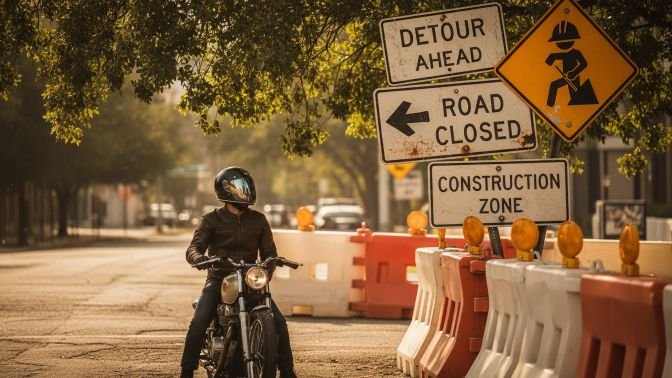
I focus on how signs can trick your eye, what details to scan first, and how to tell if a sign is temporary or permanent. This helps you react safely and follow the right rule on the road.
Common Causes of Confusion
I see drivers get confused when signs use uncommon symbols, outdated wording, or layered messages. A speed limit sign paired with a different advisory sign nearby can leave you unsure which number to follow. Multiple arrows or overlapping pictograms also slow reaction time.
Placement and visibility matter. Signs partly blocked by trees, parked trucks, or road work become ambiguous. Lighting and glare at dawn or dusk can hide colors and shapes. Familiar signs with small added plates—like “Unless Bus” or “Except Right Turn”—change meaning but are easy to miss.
Local variations add trouble. Municipalities sometimes use nonstandard icons or mix metric and imperial units. I check authority and context: whether the sign matches nearby markings or typical rules for that area.
Visual Clues to Look For
I first read the sign’s shape and color. Regulatory signs are usually rectangular or square with black on white; warning signs are often yellow diamonds; construction signs are orange. This gives a quick clue about the sign’s intent.
Next I scan for modifiers: small plates under the main sign, arrows, time-of-day limits, or vehicle-type restrictions. Those details change who the rule applies to. I look at surrounding pavement markings too—arrows, crosswalks, and lane lines often confirm the sign’s message.
If type or size makes text hard to read, I slow down safely or pull over when allowed. I also note the sign’s height and angle; a tilted or low sign may be temporary or damaged and worth extra caution.
Recognizing Temporary Versus Permanent Signs
I check color and material first. Temporary signs are usually orange and made of lighter, often portable materials. Permanent signs are metal with reflective sheeting and bolted to posts.
Context reveals intent. If I see cones, barriers, work crews, or portable message boards nearby, the sign likely reflects short-term conditions. If the sign is placed behind concrete curbs, on a fixed pole, or matches other permanent signs in the area, it’s meant to be permanent.
I also watch for quick changes: temporary speed reductions or detours often come with advance warning or variable message signs. When unsure, I follow the most restrictive instruction that keeps me and others safe until I can confirm the correct rule.
Immediate Actions for Riders
I focus on slow, steady choices, check the scene, and make my moves clear to others. These steps cut risk and keep traffic flowing while I sort out confusing signs.
Reducing Speed Safely
I ease off the throttle and downshift smoothly to reduce speed. Slowing gives me time to read signs, spot hazards, and decide without sudden moves that surprise drivers behind me.
I keep both hands on the controls and cover the brakes so I can stop if needed. I avoid hard braking unless required; instead I use engine braking and gentle rear and front brake inputs to stay stable.
When traffic is heavy, I drop to a speed that matches the flow but leaves me room to maneuver. I tap my horn briefly only if a driver looks likely to cross my path. Slower speed also helps me maintain balance if the road surface is uneven or wet.
Scanning for Additional Context
I scan the whole scene—signs, signals, lane markings, and nearby vehicles—to find clues the confusing sign missed. I look for traffic lights, pavement arrows, crosswalks, and construction cones that clarify intent.
I check for temporary signs or flaggers that may override permanent signs. I also watch other riders and drivers to see how they respond; their position and speed often reveal the intended lane or turn.
I use mirrors and quick head checks before committing to a lane change or turn. If the road layout still makes no sense, I prepare to stop at a safe spot and re-evaluate rather than guessing.
Communicating Intentions to Other Road Users
I use turn signals early and hold them long enough for others to register my intent. Signals give predictable information; flashing left or right tells drivers and cyclists what I plan.
I add brake light taps or a gentle hand signal when visibility is poor. If I must slow suddenly, I light the brake, hold the position, and place my bike where approaching drivers can see me.
When confusion continues, I make eye contact with nearby drivers or a flagger if possible. A simple nod, wave, or hand gesture helps confirm that they see me and reduces the chance of conflicting moves.
External resources:
- For sign meanings and examples, I check the DMV guide at https://www.dmv.org.
- For safe motorcycle techniques and scanning tips, I refer to the Motorcycle Safety Foundation: https://www.msf-usa.org.
Interpreting Ambiguous Traffic Signs
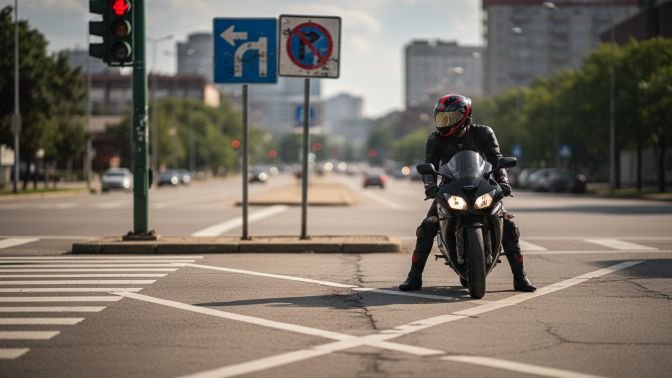
I focus on clear actions you can take when a sign seems unclear. Use basic rules, look at road markings, and decide who has the right-of-way before you move.
Applying General Road Rules
I treat unclear signs as if standard traffic laws apply. If I am at an intersection with no clear sign, I assume the posted speed limit still applies and drive at a safe, reduced speed until I understand the layout.
I follow common rules: yield to the right at uncontrolled intersections, stop fully at any stop line or crosswalk, and never assume others will yield. I check for pedestrians and cyclists first, then scan for approaching vehicles. If I must choose between proceeding and waiting, I wait. Choosing caution reduces crash risk and helps me avoid legal trouble.
I use signals early and clearly. Signaling tells other road users my intent when signs don’t. If a police officer or traffic controller is present, I follow their directions over any sign.
Relying on Road Markings
I read lane lines, arrows, and crosswalks as the primary guide when signs confuse me. Solid lines mean do not cross; dashed lines mean lane changes allowed. Turn arrows painted on the pavement usually override ambiguous overhead signs.
I watch for bike lanes and shared-lane markings. These show where cyclists will be and where I must give space. I also check edge lines to confirm travel lanes and curb markings for no-parking or loading zones.
If markings are faded, I slow and use visual cues like curb placement and intersection shape. When in doubt, I choose the lane that matches my planned destination and stay predictable for other drivers.
Prioritizing Right-of-Way
I decide who goes first using visible cues and common right-of-way rules. At intersections without clear control, I yield to traffic already in the intersection and to vehicles approaching from my right.
When turning, I yield to oncoming traffic and to pedestrians in crosswalks. At multi-lane approaches, I watch for vehicles signaling lane changes; I yield if they have a clear path. If another driver acts aggressively or unsure, I yield and let them pass rather than create a conflict.
I also rely on eye contact and brief gestures when safe. A nod or hand wave can confirm intentions and prevent hesitation. If uncertainty remains, I stop and wait until the situation is clear.
Seeking Clarification on the Road
I focus on safe, practical steps you can use when signs are unclear. Watch how others behave, use reliable navigation, and contact authorities when you can.
Observing Local Traffic Behavior
I watch nearby drivers and cyclists first. If most drivers slow, yield, or follow a certain lane, that often shows the safe action. I check pedestrian crossings and bike lanes to avoid cutting someone off.
I pay attention to traffic signals, road markings, and temporary cones that may override confusing signs. Blinkers and brake lights tell me if others plan to turn or stop. I keep a safe following distance so I can react.
I avoid copying risky moves. If drivers act unpredictably, I slow down, signal my intentions clearly, and wait for a safe gap before proceeding.
Using Navigation Tools
I use an up-to-date GPS or navigation app to confirm lane assignments and turn instructions. Apps often show lane guidance and upcoming exits, which helps when signs conflict or are missing.
I enable voice directions so I can keep my eyes on the road. If the app shows a different rule than the sign, I treat the navigation as a supplement—not a substitute—for what I see on the road.
I download offline maps for areas with poor cell service. If the route seems wrong, I pull into a safe spot to re-check the map and adjust my route calmly.
Contacting Local Authorities When Possible
I report dangerous or unclear signs to local traffic authorities or non-emergency police when I’m safely stopped. Many agencies accept reports by phone, email, or online forms with a photo and location.
I give clear details: exact location, sign description, and why it’s confusing. If the sign poses an immediate hazard, I call emergency services so they can respond fast.
I avoid calling while driving. I pull over or wait until I reach my destination to make reports, preserving safety for myself and others.
Minimizing Risk and Ensuring Safety
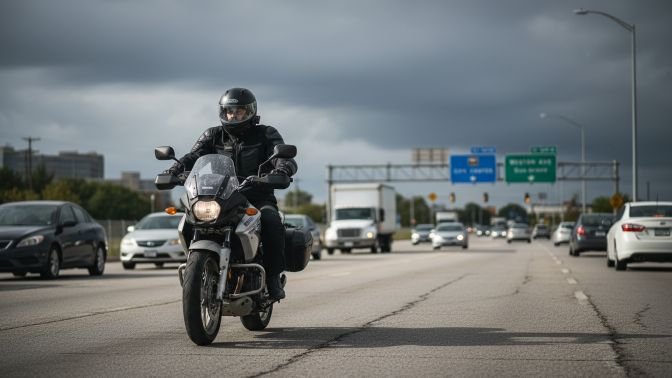
I focus on reducing immediate danger and making clear, safe choices when road signs confuse me. I slow down, look for extra cues, and put safety above convenience.
Making Cautious Decisions
I slow my speed first. Riding slower gives me more time to read signs, spot lane markings, and react to other drivers. I move to a position where I can see the sign without blocking traffic, usually slightly left in my lane if safe.
I scan for road markings, signals, and other signs that confirm direction or restriction. If signals conflict, I follow traffic lights and officers first, then posted signs. I use my mirrors often and make eye contact with nearby drivers when possible to confirm intentions.
I plan my next move before I change position. I signal early and clearly. If I must stop, I do so in a visible place off the flow of traffic or in a lane designated for stopping, not in the middle of an active lane.
Choosing to Yield When Unsure
I yield when the sign message is unclear or if multiple vehicles approach an intersection. Yielding reduces the chance of collisions and gives me time to interpret the scene. I treat confusing intersections like a four-way stop if no rules are clear.
I watch other drivers’ behavior to gauge intent, but I do not assume they see me. If another driver looks uncertain, I let them go first. I prefer to give up my right-of-way rather than force a risky merge or turn.
If I must make a last‑minute decision, I pick the option that minimizes speed differentials and crossing paths with traffic. That usually means waiting, signaling my intent, and choosing a slower, safer route through the intersection.
Avoiding Distractions Near Confusing Signs
I eliminate distractions the moment I notice a confusing sign. That means putting devices away, steadying my grip, and keeping both eyes on the road. Reading a map or checking navigation should happen only after I’m stopped safely.
I do not rely on a phone while moving to clarify a sign. If my GPS seems to contradict a sign, I pull over to a safe spot before checking. I also avoid excess gestures or looking back and forth between multiple things; focused observation reduces errors.
I keep passengers from sudden movements that could shift my balance or attention. I use simple verbal cues if someone points out a sign, but I handle decisions myself. Staying focused and calm helps me interpret the situation correctly and act without creating new hazards.
Reporting Confusing Traffic Signs
I recommend reporting confusing or damaged signs quickly and clearly. Provide exact locations, what’s wrong, and how the sign affects riders or drivers.
How to Notify Local Authorities
I call or use the city or county’s online reporting tool to file a complaint. I give the exact location (street names, nearest intersection, or GPS coordinates), describe the problem (missing sign, faded lettering, obstructed view, or contradictory signs), and note the risk (near a school, on a bike route, or on a busy turn).
I include a photo when possible. Photos show the issue and help staff prioritize repairs. If an immediate danger exists, I call the non-emergency police line or 311 rather than waiting for an online form.
I keep a copy of my report number or confirmation. That lets me follow up if nothing changes within a few weeks.
The Importance of Community Feedback
I join neighbors or local rider groups to report recurring problems together. Multiple reports raise the priority for maintenance crews and transportation planners. A group email or petition can include repeated incident dates or pictures to show a pattern.
I attend or send comments to city traffic meetings or public works hearings when a sign change is planned. I explain how the sign affects my route, safety, and travel decisions. Policymakers respond better to specific examples from local riders than to vague complaints.
I track responses and share updates with others who use the route. That creates a record and motivates officials to act.
Staying Informed and Prepared
I keep my riding safe by staying updated on laws and by taking regular training. Knowing exact rules and practicing skills helps me act confidently when signs or signals are unclear.
Regularly Reviewing Traffic Laws
I review my state’s motorcycle handbook and the latest traffic code at least once a year. I focus on sections about right-of-way, lane use, and signal meanings so I can interpret ambiguous signs on the road. When a sign looks outdated or damaged, I note its location and report it to local transportation authorities. Many states post manuals and updates online — for example, I use the DMV or state DOT website to confirm changes. Keeping a short checklist on my phone helps me recall key rules before long rides: speed limits, turning rules, and pedestrian right-of-way.
Participating in Rider Education Programs
I take an advanced rider course every couple of years to refresh skills and learn new techniques. These classes teach defensive riding, intersection scanning, and how to handle unexpected signage or temporary traffic controls. Instructors often cover local law changes and show real-world scenarios that mirror confusing signs I might face. I also join group rides and local rider clubs to hear experiences from other riders and learn practical tips. Many programs are run by state motorcycle safety programs or organizations like the Motorcycle Safety Foundation, which I use to find courses near me.
FAQs
What if the sign is missing or blocked?
I treat the area as if rules are unclear and proceed with caution. I yield to other drivers, stop if needed, and avoid sudden moves.
Can I rely on GPS?
I use GPS as a guide but not a law. GPS can be wrong or delayed, so I follow the most visible and legal road controls instead.
Should I report a confusing sign?
Yes. I report missing, damaged, or misleading signs to local authorities. Reporting helps fix hazards for everyone.
Am I liable if an accident happens because of a confusing sign?
Fault depends on the crash details. I document what I saw, take photos, and get witness info. This helps if I need to explain the situation later.
How do I learn tricky signs?
I study common and local signs before driving in new areas. Practice and brief research make me more confident and safer on unfamiliar roads.
Conclusion
I stay calm and slow down when signs confuse me. Slowing gives me time to read signs, check mirrors, and spot hazards.
I use road rules I know and follow common sense. If a sign seems wrong or missing, I yield to others and avoid risky moves.
I look for extra clues like lane markings, signals, and crosswalks. These clues often tell me what a confusing sign means without guessing.
I use my phone only when stopped and safe to check maps or report bad signage. Calling for help or reporting hazards helps other riders and drivers.
I practice defensive riding to prepare for unclear signs. Training and practice make me more confident when I must make quick choices.
I report confusing or missing signs to local authorities when I can. That simple step can prevent accidents and improve the road for everyone.
I keep learning and review traffic rules regularly. The more I know, the better I read signs and avoid mistakes.