Are open face motorcycle helmets safe? This guide explores their safety features, benefits, and risks compared to other types. You’ll learn how to choose the right open face helmet and stay protected on the road.
Key Takeaways
- Open face helmets protect the top and sides of the head: but leave the face exposed, which affects overall safety.
- They offer better visibility and airflow: which enhances comfort during longer rides and in warm weather.
- Facial protection is limited: so additional accessories like face shields or goggles are recommended.
- Choosing a high-quality, certified helmet is crucial: to ensure maximum safety and durability.
- Proper fit and secure fastening: are essential to get the best protection from any helmet.
- Open face helmets are safer than no helmet but less protective than full face helmets: understanding this helps make informed decisions.
- Riding style and environment impact safety: so choose a helmet that matches your needs and riding habits.
Are Open Face Motorcycle Helmets Safe?
If you’re wondering about open face motorcycle helmets and their safety, you’re in the right place. This guide will help you understand what makes open face helmets safe, their pros and cons, and how to choose one that suits your riding style. By the end, you’ll know how to ride smart and stay protected.
Understanding Open Face Motorcycle Helmets
Open face helmets, also called 3/4 helmets, cover your head’s top, sides, and back but leave your face exposed. Unlike full face helmets, they don’t have a chin bar, so your face is vulnerable in a crash. However, they provide better airflow and a wider field of vision, which many riders appreciate.
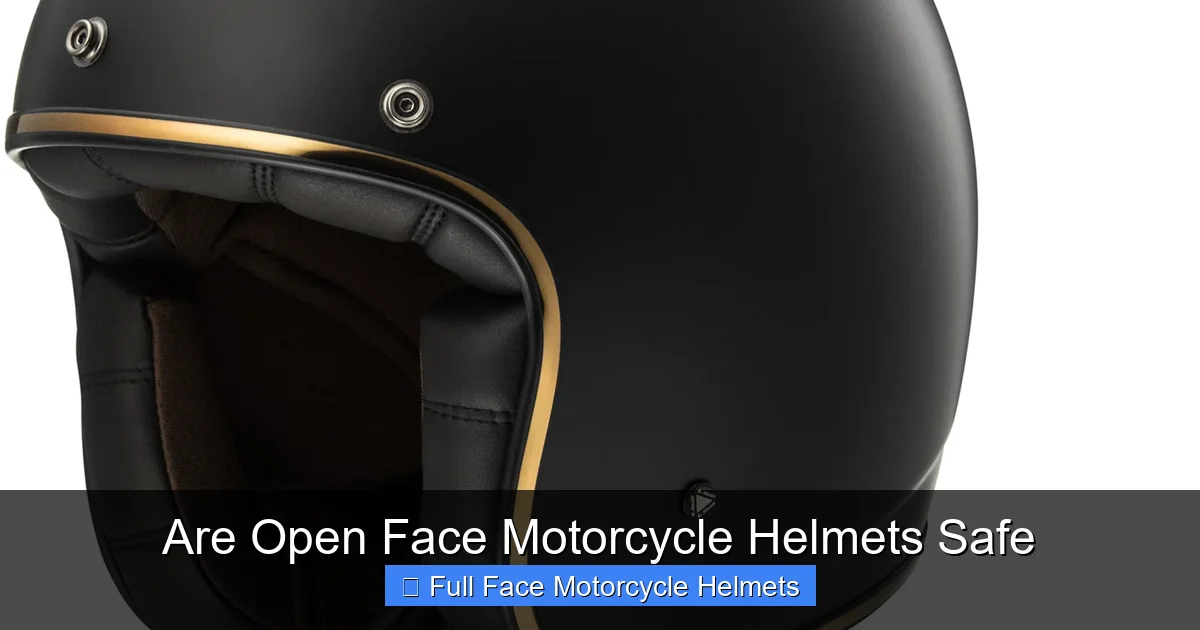
Visual guide about Are Open Face Motorcycle Helmets Safe
Image source: images.esellerpro.com
What Parts Do They Protect?
- Top of the head: The shell covers the skull’s upper part.
- Sides and back: Protection extends to the sides and back of the head.
- Face and chin: These remain exposed unless you add a face shield or goggles.
Step 1: Know the Safety Standards
Before buying an open face helmet, check if it meets safety certifications. In 2025, these are the most common:
- DOT (Department of Transportation): Required in the U.S., ensures basic impact protection.
- E-Mark (ECE 22.06): European standard with strict testing for impact and retention.
- Snell Certification: Voluntary but highly respected for rigorous safety tests.
Tip: Always buy helmets with one or more of these certifications. They guarantee the helmet can withstand real-world crashes.
Step 2: Understand the Pros and Cons of Open Face Helmets
Pros
- Better Visibility: The open design gives you a wider field of view compared to full face helmets.
- Improved Ventilation: Air flows freely, reducing heat buildup on warm days.
- Easier Communication: Talking to fellow riders or hearing ambient sounds is simpler.
- Lighter Weight: Usually lighter than full face helmets, reducing neck strain.
Cons
- Less Face Protection: Your chin, jaw, and face are vulnerable in accidents.
- Exposure to Weather: Rain, wind, dust, and insects can hit your face directly.
- Noise Levels: More wind noise compared to full face helmets.
Step 3: Choose the Right Open Face Helmet
Fit is Everything
Measure your head circumference and try on helmets to find a snug but comfortable fit. The helmet shouldn’t move around when you shake your head.
Material Matters
- Polycarbonate shells: Affordable and durable for casual riders.
- Fiberglass composite: Lightweight and absorbs impact well.
- Carbon fiber: Premium option; extremely strong and light but pricey.
Look for Additional Features
- Face Shields: Many open face helmets come with drop-down or attachable shields for face protection.
- Removable Liners: For easy cleaning and comfort.
- Bluetooth Compatibility: For hands-free communication and music.
Tip: If you ride at high speeds or on highways, consider adding a face shield or goggles to protect your eyes and face.
Step 4: Use Accessories to Boost Safety
Since open face helmets leave your face exposed, consider these accessories:
- Face Shields: Protect from wind, debris, and insects while improving aerodynamics.
- Goggles: A good alternative to shields; keep dust and bugs out of your eyes.
- Neck Curtains or Balaclavas: Help reduce cold wind and dust.
Step 5: Maintain Your Helmet Properly
Proper care ensures your helmet stays protective over time.
Cleaning
- Use mild soap and water to clean the shell.
- Remove and wash liners gently as per manufacturer’s instructions.
Storage
- Store in a cool, dry place away from sunlight.
- Avoid dropping or throwing your helmet to prevent unnoticed damage.
Troubleshooting Common Concerns
Is My Open Face Helmet Still Safe After a Crash?
If your helmet has taken a significant impact, replace it immediately. Even if it looks fine, internal damage can compromise protection.
What If My Helmet Feels Too Noisy?
Wind noise is normal with open face helmets. Wearing earplugs or adding a face shield can reduce noise levels significantly.
How to Handle Fogging Issues?
Fogging can occur on face shields or goggles. Use anti-fog sprays or choose helmets with ventilation systems designed to minimize fog.
Conclusion: Are Open Face Motorcycle Helmets Safe?
Open face motorcycle helmets provide good protection for the top, sides, and back of your head, but they leave your face exposed. They are safer than riding without a helmet but offer less protection than full face helmets. Choosing a certified, well-fitting helmet and using additional face protection can greatly improve your safety. Ultimately, the best helmet is the one you wear consistently and properly. Ride smart, stay safe, and enjoy the freedom of the road with the right helmet choice.
🎥 Related Video: Risky Business: Is an Open Face Helmet Safe?
📺 Riderz Planet
When it comes to safety on the road, an open face helmet isn’t the best option. Protect your face from dust, mud and other insects …
