You want your motorcycle to run strong and last longer. Use the octane rating your owner’s manual calls for—no higher unless the engine knocks or the manufacturer recommends it. Choosing the right gas keeps power steady and cuts the risk of engine damage.
I’ll walk you through how octane, engine design, and additives affect performance and fuel life so you can pick the best option for your bike and riding style. Keep reading to make smarter fuel choices and avoid common mistakes that shorten engine life.
Key Takeaways
- Match the fuel to the bike’s recommended octane for best performance.
- Understand when additives help and when they are unnecessary.
- Pick fuel based on engine needs, not just price or marketing.
Understanding Motorcycle Fuel Types
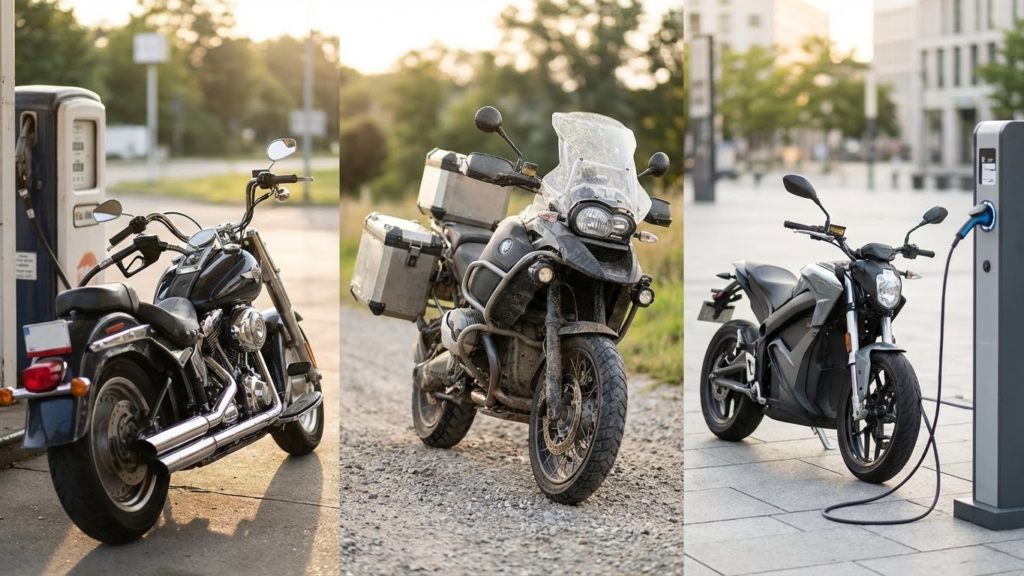
I explain the main fuel choices for motorcycles and what each does to performance, maintenance, and cost. Read the details so you can pick the right fuel for your bike and riding style.
Gasoline
I often recommend gasoline for most street motorcycles because it matches how almost all engines are built. Choose the octane your bike’s manual specifies; using lower octane in a high-compression engine can cause knocking, which reduces power and may damage the engine over time. For many modern bikes, regular 87 AKI works fine, but some sport and turbocharged models need 91–93 AKI (premium).
Pay attention to ethanol content. E10 (10% ethanol) is common and usually safe for newer bikes, but ethanol can attract water and corrode fuel system parts in older or rarely ridden motorcycles. If your bike sits for months, use a stabilizer or run ethanol-free gas when possible.
Use fresh fuel. Gas older than three months can oxidize and gum up carburetors or injectors. For carbureted bikes I recommend draining or stabilizing fuel before long storage.
Diesel
I rarely see diesel motorcycles, but they exist and serve niche needs. Diesel engines deliver strong low-end torque and excellent fuel economy. They run cooler at cruising speeds and often last longer due to robust construction.
Diesel fuel is heavier and less volatile than gasoline, so diesel bikes need different injectors and glow plugs for cold starts. You’ll find diesel motorcycles mainly in touring or utility roles where mileage and durability matter more than light weight or high revs. Be aware diesel fuel can gel in cold weather, so winter additives or block heaters may be necessary in cold climates.
Maintenance intervals differ: expect longer engine life but heavier components and possibly higher initial cost.
Electric Power
I view electric motorcycles as a separate fuel category: they use stored electrical energy rather than a liquid fuel. Charging at home or public stations replaces trips to the pump. Electric bikes deliver instant torque, quiet operation, and lower day-to-day maintenance because they have fewer moving parts.
Key limits include range and charging time. Typical urban electric bikes offer 40–150 miles per charge depending on battery size and riding style. Fast chargers can cut charging time, but public fast-charging networks are less dense than gasoline stations in many areas. Battery replacement cost is the biggest long-term expense.
If you commute short distances or want low running costs and low emissions, electric can be the best choice. For long touring or remote riding, gasoline still wins for range and refueling speed.
Alternative Fuels
I cover biofuels, ethanol blends above E10, LPG, and hydrogen here because they appear in some markets. Higher ethanol blends like E15+ can harm older engines and certain seals, so follow your manual before using them. Biodiesel works well in diesel engines and can reduce some emissions, but it may affect rubber parts in older fuel systems.
LPG (autogas) offers cleaner combustion and lower fuel costs in some regions, but conversion costs and reduced fuel station availability limit its practicality for most riders. Hydrogen motorcycles are experimental; they emit only water vapor but require specialized storage and fueling infrastructure that is nearly nonexistent for private riders.
When considering alternatives, check compatibility with your engine, the local fueling network, and long-term costs for conversions or maintenance.
Comparing Fuel Options for Motorcycles
I lay out how different fuels affect power, range, and emissions so you can pick the right option for your bike and riding style.
Performance Differences
I test engine response and knocking risk when choosing between regular (87–89 AKI), midgrade (90–92 AKI), and premium (93+ AKI) gasoline. Higher octane resists knock in high-compression or turbocharged engines, so a sportbike with compression above 10:1 often runs best on 91–93 AKI. Lower-octane fuel in those engines can cause pinging, reduced throttle response, and long-term wear.
For most low- to mid-compression street bikes, I use regular or midgrade without loss of peak power. Ethanol blends (E10) burn cleaner but can reduce power slightly and attract water in older fuel systems. I check the owner’s manual first and follow manufacturer octane recommendations.
Efficiency and Mileage
I compare fuel types by miles per gallon and how additives affect consumption. Higher-octane fuel does not automatically give better mileage in engines designed for regular gas. In bikes tuned for premium, efficiency can improve with higher octane because timing can advance safely.
Ethanol content lowers energy density. E10 typically reduces fuel economy by about 2–3% compared with pure gasoline. For long trips, I prefer stations with fresh, ethanol-blend fuel or look for ethanol-free options at marinas or major brands. The EPA and many rider forums offer data on real-world MPG for specific models if you need model-specific figures. (See EPA fuel economy and manufacturer manuals for details.)
Environmental Impact
I weigh tailpipe emissions and fuel production effects when choosing fuel. Unleaded gas with cleaner-burning additives can reduce CO and HC emissions versus older formulations. Ethanol blends like E10 cut some lifecycle greenhouse gases but can increase evaporative emissions and require more frequent fuel system maintenance.
If you want lower emissions, I recommend considering newer models with fuel injection and catalytic converters; they handle various fuels cleaner. For more on fuel standards and emissions, I refer to the EPA’s guidance on fuel and emissions testing and manufacturer emissions statements to confirm what your motorcycle meets.
Choosing the Right Fuel for Your Motorcycle
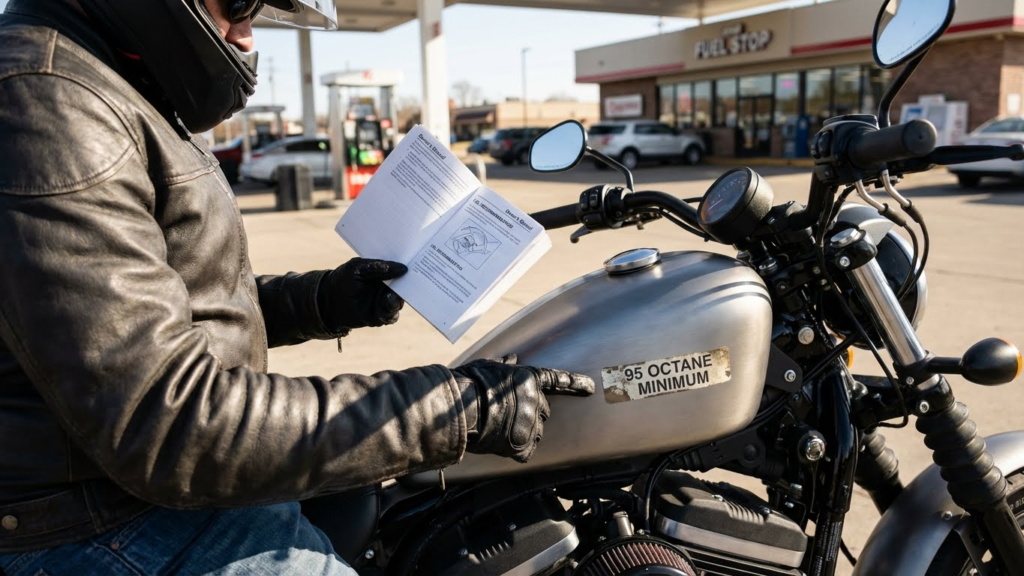
I focus on the fuel types your bike needs, how the engine handles different blends, and the conditions that change fuel choice. Pick the correct octane and ethanol level, and check how weather and riding style affect performance.
Manufacturer Recommendations
I always start with the owner’s manual and any tank stickers. The manufacturer lists the minimum octane rating (for example, 87, 89, or 91+) and whether the engine tolerates ethanol blends like E10 or E15. Follow that guidance to avoid pinging, loss of power, or warranty problems.
If the manual says “premium” or 91+, use it. If it allows regular 87, using higher octane rarely gives measurable gains on non-turbo bikes. I also check service bulletins or dealer advice for tuning changes or recommended additives.
Engine Compatibility
High-compression, turbocharged, or modern fuel-injected engines usually need higher octane to prevent knock. Carbureted and low-compression single-cylinder bikes often run fine on regular 87 octane. I inspect the engine type and compression ratio when choosing fuel.
Ethanol in fuel attracts water and can harm older seals or fuel systems not rated for E10/E15. I avoid higher-ethanol blends in classic bikes and store bikes with a stabilizer if ethanol fuel is used. For fuel-injected bikes, ethanol is less of an issue, but I still follow the manual.
Riding Conditions
Hot climates, high altitudes, and heavy loads change how fuel performs. In hot, low-altitude areas I stick to the recommended octane; heat can worsen knock. At high altitude, engines make less power and tolerate lower octane, but I still follow the manual to be safe.
If I ride hard—track days, long steep climbs, or heavy touring—I lean toward the higher octane the manufacturer permits to keep timing and power stable. For short city trips or casual rides, regular fuel that meets specs usually works fine.
Premium vs Regular Gasoline
I compare octane, engine needs, and long-term effects so you can pick the right fuel for your bike. I focus on when premium makes a real difference and when regular gives the same performance.
Octane Ratings
Octane rating measures how resistant fuel is to knocking under compression. Regular gasoline in the U.S. is usually 87 AKI, mid-grade 89, and premium 91–93. Higher octane lets engines run higher compression or more advanced ignition timing without pre-ignition.
If your motorcycle’s owner manual calls for 91+ octane, use premium. Running lower octane in a high-compression engine can cause knock, reduced power, and possible long-term stress. If the manual says 87, I won’t expect measurable gains from premium in power or fuel economy for stock engines.
Quick reference:
- 87 (Regular): Suitable for most standard bikes.
- 89 (Mid): Occasional benefit for tuned engines.
- 91–93 (Premium): Needed for many high-performance or turbo engines.
Effects on Engine Health
Octane itself doesn’t clean the engine; detergent additives do. Premium sometimes comes from “top tier” brands with stronger detergents, which help keep injectors and intake valves cleaner. That can reduce deposit buildup and maintain performance over time.
Using the wrong octane can cause knock, which I treat seriously because repeated knock can damage pistons, valves, and bearings. Modern bikes with knock sensors may adjust timing to protect the engine, but that lowers power and efficiency. For older carbureted bikes, using too-low octane increases the risk of permanent damage.
Practical steps I use:
- Follow the owner’s manual first.
- If I see pinging under load, I switch to higher octane.
- I prefer name-brand stations for cleaner fuel and consistent additives.
Fuel Additives and Their Benefits
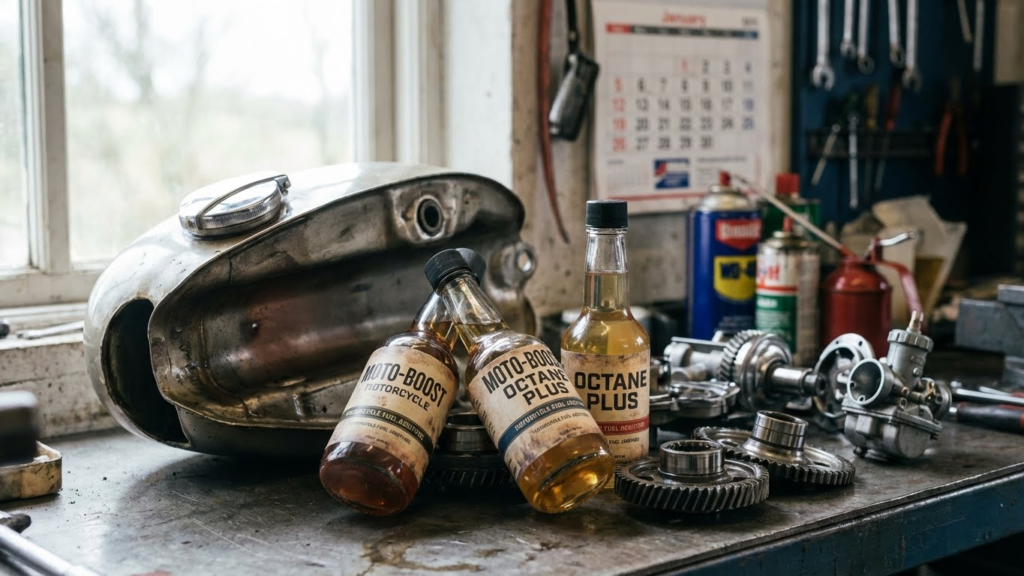
I focus on two main types of additives that matter for motorcycle riders: those that clean the fuel system and those that boost performance. Both can protect parts, improve starting, and help when storing a bike.
Cleaning Agents
I use cleaning agents to remove varnish, gum, and carbon deposits from carburetors, injectors, and intake valves. These products often contain detergents and solvents that dissolve buildup and restore proper spray patterns. Regular use can reduce rough idling, hard starting, and poor throttle response.
Apply cleaning agents as directed: pour into a full tank for fuel-system cleaners or use a concentrated bottle for one-time injector treatments. For long-term storage, I choose stabilizers with corrosion inhibitors to protect metal parts. For trustworthy guidance and product choices, I check technical notes from motorcycle makers and resources like the Motorcycle Safety Foundation or manufacturer service pages.
Performance Boosters
I add performance boosters when I need higher octane, smoother throttle response, or protection from ethanol. Octane boosters help prevent knocking in high-compression engines. Ethanol treatments bind water and restore fuel lubricity, which matters for small pumps and carburetors.
Use boosters sparingly and match them to your engine. Overuse can change fuel chemistry or harm sensors. I prefer products that list ingredients and mileage recommendations, and I consult official sources such as EPA fuel regulations or OEM manuals when available.
Future Trends in Motorcycle Fuels
I see two clear paths shaping motorcycle fuels: renewable liquid fuels that drop into current engines, and gases or energy carriers that need new bike designs and refueling systems.
Biofuels
I expect biofuels to be the easiest drop-in option for many riders. Advanced ethanol blends and biodiesel can cut lifecycle CO2 and often work with modest engine tuning. For fuel-injected bikes, I recommend checking manufacturer guidance before switching blends over E10; higher ethanol like E85 needs fuel-system upgrades and frequent fuel trims.
Using biofuels can change maintenance intervals. Ethanol attracts water and can corrode older fuel lines or carburetors, so I advise replacing rubber parts with ethanol-compatible materials. Also watch for lower energy density: some blends reduce range, so plan refueling stops on long trips.
Hydrogen Technology
Hydrogen offers near-zero tailpipe emissions when used in fuel cells, and it has fast refuel times compared with batteries. I see two approaches: hydrogen combustion in modified piston engines, and hydrogen fuel cells powering electric drivetrains. Combustion needs robust storage and engine cooling changes; fuel cells need high-pressure tanks and a complete drivetrain redesign.
The main barriers are infrastructure and cost. I expect early adoption in fleet or urban delivery bikes where centralized refueling makes sense. For private riders, hydrogen will become viable once public refueling networks grow and tank costs fall.
FAQs
I get asked which octane to use most often.
Use the octane rating your owner’s manual recommends. Higher octane does not improve power unless your engine is designed for it.
I hear a lot about ethanol in pump gas.
Ethanol blends like E10 can be fine for modern bikes, but older or small-engine bikes may suffer from corrosion or fuel system damage. I recommend checking the manual and using ethanol-free fuel for storage.
Can I use car gasoline in my motorcycle?
Yes, if it matches the required octane and ethanol limits. Avoid fuels with additives meant for cars that may harm motorcycle engines or emission systems.
What about fuel stabilizers and additives?
I use a stabilizer for long-term storage to prevent varnish and phase separation. Use fuel-system cleaners sparingly and only if you have symptoms like rough idle or deposits.
How should I store extra fuel?
Store in approved containers, keep them cool and away from direct sunlight, and rotate fuel within 6–12 months. Label containers with date and ethanol content.
Is premium fuel always better?
No. Premium only helps if the engine needs higher octane. Using premium in a low-compression engine wastes money and offers no real benefit.
If you want, I can write a short table comparing common fuels and their pros and cons.
Conclusion
I recommend using the fuel your motorcycle maker specifies. That choice balances performance, fuel economy, and engine life. Using the recommended octane helps prevent knocking and keeps tuning stable.
If your bike calls for high-octane or premium gas, I advise sticking with 90+ octane. For most modern fuel-injected bikes, unleaded regular with the correct octane works fine. Ethanol blends like E10 are usually safe, but I avoid higher ethanol mixes unless the manual allows them.
I follow simple rules when choosing fuel:
- Use the manufacturer’s octane rating.
- Prefer fresh, reputable pump gas.
- Avoid fuels with high ethanol if the bike is old or carbureted.
I add that fuel additives can help in specific cases. I only use stabilizers for long storage and fuel-system cleaners when I notice buildup or carbon issues. Routine maintenance and correct fuel make the biggest difference.
If you ride a high-compression or performance bike, choose premium fuel. For everyday commuting bikes, standard unleaded at the right octane usually provides the best value and reliability.
