Choosing the right motorcycle safety course starts with what you need and how you learn. Pick a course that matches your skill level, offers the hands-on practice you need, and fits your schedule and budget. Choose a program that combines practical riding time with clear instruction so you leave safer and more confident on the road.
Think about course type, location, and instructor credentials, and scan reviews to confirm quality. Prioritize courses that offer beginner basics if you’re new, or advanced drills if you want to sharpen skills, and check whether an online eCourse pairs with on-bike training for flexible learning.
Key Takeaways
- Match course content and format to your skill level and learning style.
- Check location, schedule, cost, and instructor credentials before enrolling.
- Look for hands-on practice plus clear instruction to boost real-world riding skills.
Understanding Motorcycle Safety Training Courses
You will learn what these courses teach and why they matter for your riding skills, license options, and crash risk. Expect practical skills, classroom basics, and clear benefits you can measure.
What Is a Motorcycle Safety Training Course?
A motorcycle safety training course is a mix of classroom lessons and on-bike practice. In class, you study rules of the road, gear choices, and risk awareness. On the range, you practice slow-speed control, emergency stops, swerves, and cornering in a controlled area.
Courses come in levels. A Basic RiderCourse teaches clutch, throttle, braking, and low-speed maneuvers for new riders. Intermediate or advanced courses add high-speed braking, lane positioning, and group-ride skills. Some programs include an online module you complete before riding practice.
Many courses let you use a training bike. Others require your own motorcycle. Successful completion can waive a skills test in some states and may lower insurance costs. Check course length, instructor credentials, and whether the program issues a completion card.
Why Safety Training Is Essential
Training cuts the learning curve and reduces common rider errors. You learn how to avoid hazards like gravel, sudden stops, and cars turning into your lane. Practicing emergency techniques builds automatic responses you can use in real traffic.
Courses teach risk management, not just riding tricks. You learn to scan, choose safe lane positions, and judge gaps in traffic. That helps you make safer decisions on busy streets and highways.
Formal training also builds confidence. Gaining skill in a safe setting lowers anxiety and helps you control the bike under stress. For many riders, this leads to fewer close calls and a safer riding record.
Key Factors to Consider When Choosing a Course

Focus on what the course teaches, who teaches it, and whether the program is officially recognized. These details affect how quickly you learn, how safe you ride, and whether the course meets licensing or insurance requirements.
Course Curriculum and Content
Look for courses that combine classroom theory with hands-on riding drills. The classroom portion should cover traffic laws, defensive riding, and risk awareness. Ask for a detailed syllabus so you know if emergency braking, slow-speed control, cornering, and hazard avoidance are included.
Check how much time the course devotes to on-bike practice. More practice time means faster skill build and safer habits. Also confirm bike types used, rider-to-bike ratios, and whether the course provides bikes or allows you to use your own.
Find courses that adapt to skill levels. If you’re a beginner, choose a program that starts with basics and progresses to real-world scenarios. Advanced or refresher modules should cover higher-speed maneuvers and group-ride tactics.
Certification and Accreditation
Make sure the course issues a certificate that state licensing agencies or insurance companies accept. Some programs meet state motorcycle endorsement requirements; others offer nationally recognized credentials like those from the Motorcycle Safety Foundation (MSF). Check your state DMV website to confirm accepted providers.
Accredited courses usually follow set safety standards and use approved curricula. This reduces the chance of gaps in training. Accreditation also means instructors must meet minimum qualifications and courses are reviewed regularly.
Verify whether completion can earn you license testing waivers or insurance discounts. These tangible benefits save time and money. Ask the school for written proof or a link to the DMV or insurer policy that lists accepted certifications.
Instructor Qualifications
The instructor’s experience directly affects your learning speed and safety. Ask about each instructor’s years of teaching, riding background, and any formal instructor certifications. Instructors certified by recognized bodies like the MSF or state training programs tend to follow safer, tested methods.
Good instructors give clear, step-by-step feedback and use controlled drills to build confidence. Watch a class if possible, or read student reviews that mention instructor clarity, patience, and correction style. Also confirm instructor-to-student ratios; smaller groups let instructors provide one-on-one coaching.
Make sure instructors are current with local traffic laws and ride techniques. Ongoing training for instructors keeps teaching methods up to date. For more on recognized standards, check the Motorcycle Safety Foundation and your state DMV site for local requirements.
Types of Motorcycle Safety Training Courses
You will find courses for total beginners, riders who want to move beyond basics, and those who need to refresh skills. Each course has clear goals, different time commitments, and specific skill drills.
Beginner Courses
Beginner courses teach control basics and safe riding habits. Expect classroom lessons on rules, gear, and risk awareness plus range drills for slow-speed balance, clutch and throttle control, braking, and straight-line riding. Many beginner programs use small, low-power motorcycles supplied by the school.
A common structure:
- Short classroom sessions (1–3 hours) for laws and safety.
- Multiple on-range drills to practice stopping, turning, and emergency braking.
- A low-speed skills test or final ride evaluation.
Completion often helps you skip the licensing test in some states and can lower insurance costs. You should look for certified instructors, clear student-to-instructor ratios, and a course that lets you repeat ridden exercises until comfortable.
Advanced Rider Training
Advanced courses focus on hazard avoidance, high-speed braking, and cornering technique. You will practice controlled swerves, trail braking, throttle control through turns, and choosing safe lines. Instructors often use video review and one-on-one coaching to refine posture, sighting, and weight transfer.
Expect higher speeds and more complex scenarios than beginner classes. Skills taught usually include:
- Emergency maneuvering at speed
- Advanced cornering and exit control
- Group-ride dynamics and risk assessment
Choose advanced training when you ride regularly, commute in traffic, or want to race or tour. Check that the course offers progressive drills, clear safety briefings, and helmet/gear checks.
Refresher Courses
Refresher courses target riders returning after a break or those who feel rusty. They focus on rebuilding confidence, re-learning clutch and brake timing, and updating you on law or equipment changes. Sessions typically start with a skills assessment to tailor drills to your needs.
You will re-practice slow-speed control, emergency stops, and intersection scanning in controlled settings. Some refresher programs offer modular lessons so you pay only for the skills that need work. Look for short, focused classes that provide immediate feedback and allow multiple practice runs.
Evaluating Course Format and Structure
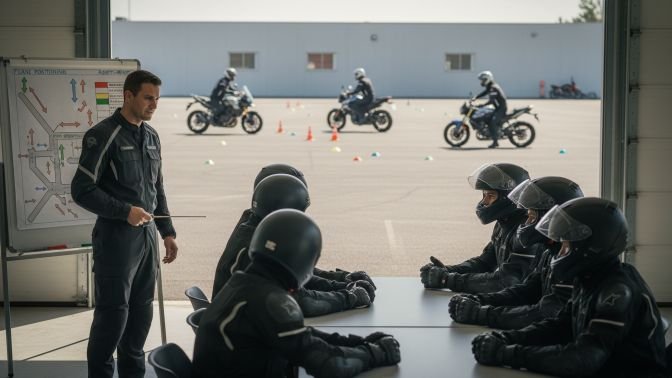
Check how the course splits time between talking and riding, how long each session lasts, and whether the skills you need get hands-on practice. Look for clear schedules, required gear lists, and any testing or certification steps that affect what you will learn.
Classroom vs. On-Range Training
Classroom time should cover rules, risk awareness, and decision-making. Look for courses that use short slides, real crash data, and quick discussions rather than long lectures. You should leave classroom sessions knowing why maneuvers matter and how to spot hazards.
On-range training must give you repeated, supervised practice on key skills: braking, cornering, slow-speed control, and emergency stops. Check that drills are progressive and that you ride live, not just watch demos. Ask whether the range uses cones or lane exercises, total range hours, and whether they provide motorcycles or require you to bring yours.
Class Size and Student-to-Instructor Ratio
Small class sizes matter because you get more feedback. Aim for no more than 8–10 students per instructor for on-range work. That ratio gives instructors time to watch each rider, correct form, and run one-on-one drills when needed.
Also check whether the course assigns the same instructor through the whole day. Consistent coaching helps you apply corrections immediately. If the program lists multiple instructors, confirm how they divide time and whether extra staff handle bike setup, which keeps instruction focused.
Assessing Location, Schedule, and Accessibility
Check where classes run, how often they meet, and whether the site and schedule fit your physical needs and daily life. Pick a course that minimizes travel time, matches your free days, and offers facilities that make learning safe and comfortable.
Course Locations and Facilities
Look for courses within a 30–60 minute drive from your home or work to reduce fatigue on training days. Visit the site if you can. Safe pavement, clear markings, and a large practice area matter more than fancy classrooms.
Check that the training bikes are the right size for you and that helmets and gear are well-maintained. Confirm restrooms, shade or indoor waiting areas, and secure bike parking. If instruction happens at a community college or public range, ask about surface quality and traffic flow during drills.
Also verify instructor-to-student ratios. Smaller groups (8–12 students) give you more riding time and one-on-one feedback. If you need night or wet-weather practice, ask whether the facility supports those conditions.
Scheduling Options
Choose a schedule that matches your energy and availability. Weekend formats condense training into two or three long days. Weeknight formats spread sessions across several evenings. Full-day formats give continuous practice but can be tiring.
Ask about make-up classes and cancellations before you register. Good programs allow you to switch dates or retake missed modules without large fees. Check start times too — early morning sessions avoid heat, while late-afternoon slots work if you handle evening traffic well.
Look for courses that offer multiple start dates per month. That flexibility makes it easier to balance work, family, and training. Confirm how long each riding block lasts so you know when breaks and briefing sessions occur.
Accessibility for Different Riders
Confirm physical accessibility if you use mobility aids or have limited strength. Ask whether instructors provide modified exercises, lower-seat bikes, or step-through models. A good course adapts drills so you can learn safely.
Check language support and learning accommodations. Some programs offer bilingual instructors, written materials in plain language, or extra coaching time for nervous riders. If you’re a new rider, find courses that start with basic balance drills and helmet-to-handlebar familiarization.
If you ride a larger or heavier bike, ask whether the school allows you to practice on your own machine or offers similar-weight training bikes. Also verify parking for trailered bikes and whether the site has ramps, low-curb entries, and covered areas for gear adjustments.
Understanding Costs and Financial Considerations

You will weigh direct course costs, what the fee covers, and any discounts or insurance savings that lower your net expense. Knowing these specifics helps you pick a course that fits your budget and needs.
Tuition and Fees
Course tuition typically ranges from about $100 to $400 for basic programs like the Motorcycle Safety Foundation (MSF) Basic RiderCourse. Higher-level or private courses can cost $400–$800 or more. Check whether the listed price is per rider or per session when comparing schools.
Look for extra mandatory fees such as registration, state testing, or licensing endorsements. Ask the school if payment plans, credit-card payments, or refunds for missed classes are available. Confirm the cancellation policy and any hidden charges before you enroll.
If your state offers a motorcycle endorsement waiver after course completion, confirm that the school’s certification meets state licensing requirements. The state DMV website (for example, your state’s DMV or the MSF will list approved providers and fee rules.
Included Materials and Equipment
Many courses include a helmet, protective jacket, and a training bike in the tuition, but some require you to bring your own gear. Verify which items the school supplies and which you must provide to avoid unexpected purchases on the training day.
Ask about helmet quality and fit standards. If the school rents helmets, confirm they sanitize and size them properly. Also check bike types used in training; modern, low-horsepower dual-control bikes are safer for beginners than older or high-power machines.
Request a written list of included items before you pay. If you must buy gear, compare local motorcycle shops and online retailers for prices, and look for certified helmets (DOT, ECE) to ensure safety and value.
Potential Discounts or Insurance Incentives
You may find discounts for students, military members, veterans, or group registrations. Some schools offer early-bird rates, referral credits, or lower prices for weekday sessions. Always ask which discounts apply to you.
Completing an approved safety course can lower your motorcycle insurance premium. Insurance companies often give a discount after you show proof of course completion; check with your insurer first to confirm the percent reduction and any needed documentation. The National Association of Insurance Commissioners (NAIC) and your insurer’s site will have guidance on these incentives.
Also check for employer or community grants that fund training for commuting or workforce programs. These can cover part or all of your tuition and make higher-level courses accessible.
Reading Reviews and Testimonials
Look for specific details about instructor skill, course structure, equipment condition, and pass-rate or license-waiver outcomes. Pay attention to dates, location, and whether the reviewer was a beginner or advanced rider.
Online Ratings and Feedback
Check ratings on multiple sites like Google, Yelp, and local motorcycling forums. Focus on recent reviews (past 12–24 months) that mention instructor names, bike models used, and safety drills taught.
Use a quick checklist when reading:
- Star rating and number of reviews.
- Mentions of hands-on time vs. classroom time.
- Reports of well-maintained bikes and proper safety gear.
If you see repeated notes about poor organization, canceled sessions, or unclear instruction, treat those as red flags. Positive trends to value include clear communication before class, small student-to-instructor ratios, and instructors who adjust drills for different skill levels.
Success Stories from Past Participants
Read testimonials that describe what participants learned and how they applied it afterward. Look for concrete outcomes like “passed the state riding test on first attempt” or “could ride confidently in traffic after two sessions.”
Pay attention to who the reviewer was — a new rider, returning rider, or someone upgrading skills — and match that to your own level.
Also note mentions of real-world scenarios covered, such as emergency braking, lane positioning, or low-speed maneuvering. Those specifics show the course teaches usable skills, not just theory.
Making the Final Decision
Review your priorities first. List what matters most: price, schedule, instructor experience, certification, and range of skills taught. This keeps choices clear when courses feel similar.
Compare at least three programs side by side. Use a simple checklist with rows like “on-road practice,” “class size,” and “instructor credentials.” Mark yes/no and note costs to spot the best value quickly.
Contact the schools and ask direct questions. Ask how much riding time you’ll get, what safety gear is required, and how skills are assessed. Clear answers show professionalism and help you judge quality.
Read recent student reviews, but weigh them with care. Look for repeated praise or recurring problems. Small sample sizes or very old comments matter less.
Think about logistics and comfort. Choose a course you can reach without stress and that fits your schedule. Being relaxed helps you learn faster and ride safer.
Trust your gut on the first impression. If instructors seem patient and organized, that’s a good sign. If something feels off—unclear answers, rushed sessions—keep looking.
Make your booking and prepare to practice. Bring required gear, arrive early, and be ready to ask questions. Commit to practicing what you learn after the course to build real confidence.
FAQs
Do courses help me get a license?
If you are new, choose a Basic Rider Course (BRC) or a beginner program. These teach bike controls, balance, and low-speed maneuvers.
How long do courses usually last?
Most basic courses run 2–3 days with classroom and on-bike drills. Advanced or specialty courses can be one day or several weekends.
Will I learn on my own bike?
Some programs provide training bikes; others let you use your bike if it meets safety and insurance rules. Ask the provider before the first class.
Are courses safe for beginners?
Instructors teach safety gear, emergency stops, and collision avoidance in controlled settings. Training lowers risk by building skills and confidence.
How much do courses cost?
Costs vary by type and region. Expect a basic course to be low to moderate cost; advanced courses usually cost more.
Can experienced riders benefit?
Yes. Advanced courses refine braking, cornering, and hazard recognition. They also teach group riding and tactical skills.
What should you bring?
Bring a DOT-approved helmet, sturdy jacket, gloves, long pants, and boots. Providers typically list required gear and paperwork.
Conclusion
Choosing the right motorcycle safety course helps you ride smarter and stay safer. Pick a program that matches your experience, learning style, and schedule.
Look for accredited courses, qualified instructors, and a clear curriculum. Practical riding time matters most, so prioritize hands-on training over long lectures.
Balance cost with value. A cheaper class may skip key skills, while a well-run course can save you money on insurance and reduce risk on the road.
Bring proper gear and a willing attitude. You learn fastest when you practice, ask questions, and repeat drills until they feel natural.
Use this checklist to decide quickly:
- Course level matches your skill
- Hands-on riding time included
- Good instructor-to-student ratio
- Positive reviews and accreditation
- Clear date, location, and refund policy
Take action and sign up for the course that fits you. Regular training keeps your skills sharp and makes every ride safer.
