You want a clear answer: most riders spend about $900 to $2,000 per year on motorcycle maintenance, though costs can climb much higher if you own a premium bike or need big repairs. Plan for roughly $1,000 a year as a safe baseline, while expecting occasional years that cost several times that if tires, valves, or major parts need replacing.
I’ll walk you through what drives those numbers, what routine tasks cost, and which repairs hit your wallet hardest so you can plan and cut surprises. Keep reading to learn where your money goes and how to lower yearly upkeep without risking safety.
Key Takeaways
- Expect around $900–$2,000 per year as a typical maintenance range.
- Routine oil, brakes, tires, and chain work make up most yearly costs.
- Riding style, bike type, and DIY skills strongly affect your total spend.
Average Yearly Motorcycle Maintenance Cost
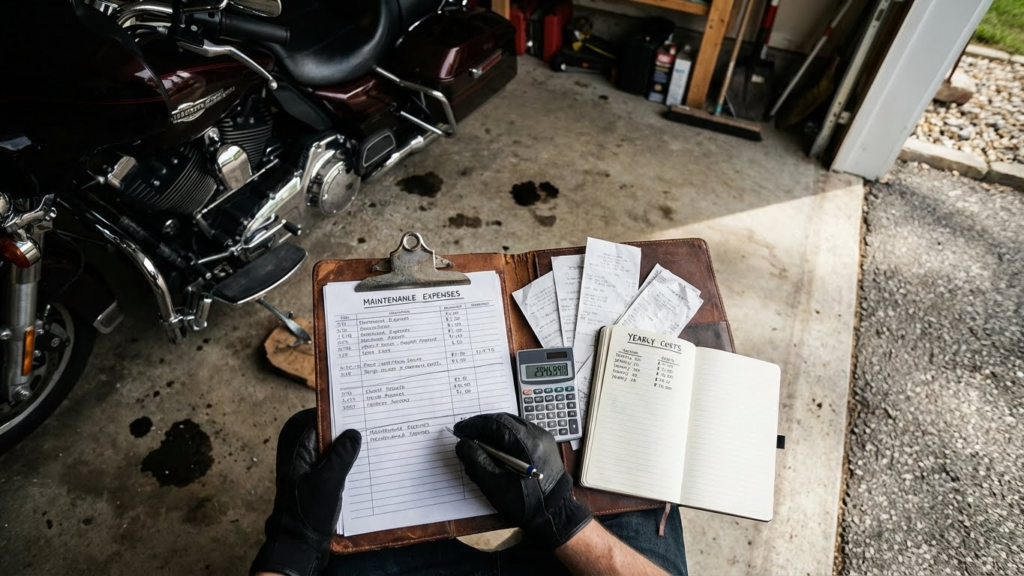
I break down what a typical rider can expect to pay each year, which parts of the bike drive those costs, and how age and model change the totals.
Typical Annual Spending Ranges
I usually see riders spend between $500 and $2,000 per year on routine maintenance and minor repairs.
At the low end ($500–$900) are riders with simple, reliable bikes who do most basic tasks themselves—oil, chain lube, minor parts.
Mid-range ($900–$1,500) covers regular shop-serviced oil changes, tires every few years, brake pad swaps, and occasional small repairs.
High end ($1,500–$3,000+) applies to high-mileage riders, sport and premium bikes, or when you need valve adjustments, major tire replacements, or frequent parts swaps.
Common line items I track:
- Oil and filter: $60–$150 per service
- Tires: $300–$700 per set
- Brake pads/rotors: $40–$130 per item
- Chain and sprockets: $200–$400
Factors Affecting Total Cost
Bike type changes costs fast. Japanese standard bikes cost less to maintain than exotic or high-performance models.
Mileage matters: 5,000–10,000 miles per year tends to fall in the $500–$1,500 range. Exceed 15,000 miles and expect $2,500+.
Other cost drivers I watch:
- Maintenance schedule frequency (valve checks every 8k–20k miles)
- Labor rates in your area ($60–$150+ per hour)
- Whether I do my own work or use a shop
- Parts availability and aftermarket vs OEM choices
- Riding style: aggressive riding wears tires and brakes faster
New vs. Used Motorcycle Maintenance Expenses
New bikes often need less unexpected work early on. I budget lower routine costs in the first 1–3 years because major components are fresh and often under warranty.
However, new bikes can have higher dealer service prices and higher insurance.
Used bikes can be cheaper to buy but carry variable maintenance risk. I inspect service history, look for worn tires, chains, and overdue major services like valve adjustments.
For used bikes, I budget a larger contingency—often an extra $500–$1,000 the first year—to cover needed repairs or deferred maintenance.
Essential Maintenance Tasks
I focus on the jobs that most directly affect safety, performance, and yearly cost: oil and filter changes, keeping brakes in top shape, and keeping tires inspected and replaced on schedule. Each task has clear intervals, parts to check, and cost ranges that I use to plan maintenance.
Oil and Filter Changes
I change oil on most bikes every 3,000–5,000 miles for conventional oil and 5,000–8,000 miles for many synthetics, but I always follow the owner’s manual for exact intervals. Fresh oil protects the engine and helps avoid costly repairs; a typical shop service costs $60–$120, parts and oil included. I replace the oil filter with every oil change; filters usually cost $5–$20.
If I do the job myself, I buy the correct oil grade and a quality filter, reuse the drain plug washer if it’s in good shape, and properly dispose of used oil at a recycling center. For quick reference on recommended oil types and intervals, I consult the manufacturer’s service guide or reliable sources like the Motorcycle Safety Foundation.
Brake System Upkeep
I inspect brake pads, lines, fluid, and rotors at least once every season or at 3,000–6,000 miles, whichever comes first. Pads often wear out every 5,000–15,000 miles depending on riding style; pad replacement costs $40–$120 per axle. Rotors last longer but can warp or score; resurfacing or replacement can range from $90–$300 each.
I flush brake fluid every 1–2 years because old fluid absorbs moisture and lowers performance. A brake fluid change at a shop runs about $40–$100. I check for soft lever feel, reduced stopping power, or visible leaks as signs of trouble and address them immediately to avoid higher repair costs.
Tire Maintenance
I check tire pressure and tread before each ride and inspect for cuts, punctures, or uneven wear weekly. Proper pressure improves handling and extends life; motorcycle tire pressure typically falls between 28–42 psi depending on the bike and load. Tires usually need replacement every 3,000–8,000 miles for sport bikes and up to 15,000 miles for touring tires.
Tire replacement costs vary by size and compound: expect $150–$400 per tire plus mounting and balancing fees of $20–$60. I factor wheel alignment, valve stems, and balancing when budgeting. For exact pressure and tire model recommendations, I look at the owner’s manual and trusted sources like the Tire and Rim Association or manufacturer tech bulletins.
Routine Service Intervals
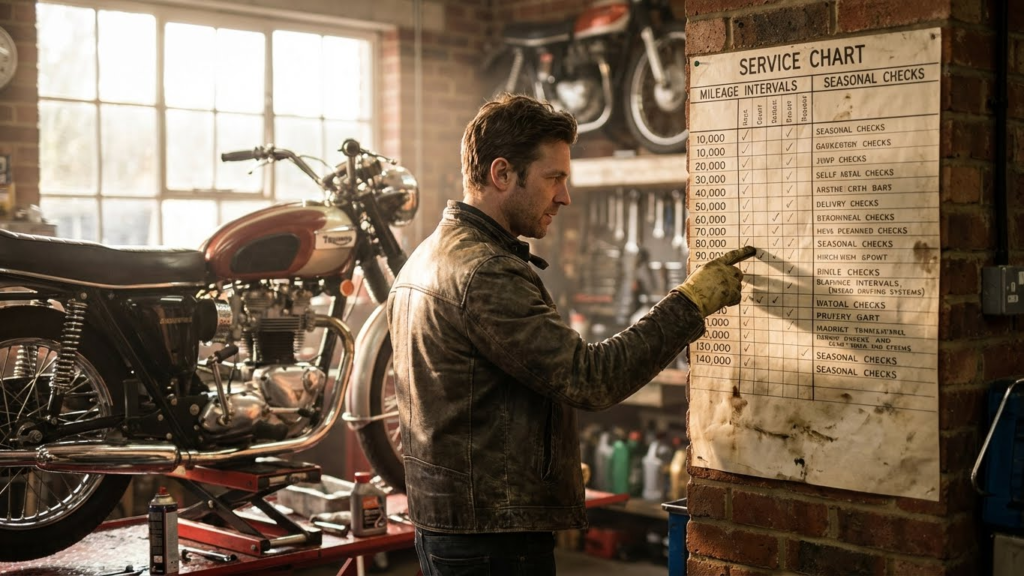
I track service by miles, calendar time, and the seasons. Each approach keeps different parts healthy and helps spread costs over the year.
Mileage-Based Maintenance
I follow the manufacturer miles checklist because moving parts wear with distance. Common mile-based items include oil and filter changes every 3,000–6,000 miles for many bikes, spark plug checks around 8,000–12,000 miles, and valve clearance checks near 10,000–20,000 miles depending on engine type.
I inspect chain or belt condition and tension every 500–1,000 miles, and replace drive chains typically at 20,000–30,000 miles. Tires wear depends on riding style, but expect front/rear replacement between 8,000–20,000 miles. Brake pads often need replacing every 5,000–15,000 miles.
Checklist (typical):
- Oil & filter: 3,000–6,000 mi
- Chain/belt: inspect 500–1,000 mi
- Spark plugs: 8,000–12,000 mi
- Valves: 10,000–20,000 mi
- Tires: 8,000–20,000 mi
- Brake pads: 5,000–15,000 mi
Time-Based Maintenance
I schedule calendar checks to catch issues that don’t show up by mileage. Oil degrades and seals dry out, so I change oil at least once a year if mileage is low. I replace coolant and brake fluid on a 1–2 year cycle to avoid corrosion and loss of braking performance.
I also check battery health every 3–6 months in storage and replace it every 3–5 years. Rubber parts like hoses and tires age with time; I inspect for cracks or flat spots annually. Even if I ride less than recommendations, time-based service prevents mechanical failures and expensive repairs.
Seasonal Preparation
I prepare for riding season and storage with focused tasks. Before spring I perform a full safety check: battery charge, tire pressure and condition, brake function, fluid levels, lights, and chain lubrication. I also check for rodent damage if the bike stayed in a garage.
For winter storage I add fuel stabilizer, top off oil, disconnect or maintain the battery with a tender, and lift or move the bike occasionally to avoid flat spots. I document dates and actions so I know when to reverse the steps and what parts need attention when I bring the bike back into service.
Parts and Labor Costs Breakdown
I list typical parts that wear out most and show how shop labor changes the final price. Expect to pay a mix of part cost plus hourly labor for most jobs.
OEM vs. Aftermarket Parts
I prefer OEM parts when fit and warranty matter, but aftermarket parts can save money.
Common part costs I see: brake pads $30–$70, rotors $90–$130, chains $200–$300, and tires $300–$700 per axle. OEM parts usually sit at the higher end of those ranges.
Aftermarket parts vary widely. Low-cost options cut initial spend by 20–50%, but quality varies. Mid-tier aftermarket parts often match OEM performance at a lower price. I check reviews and warranty terms before choosing aftermarket pieces.
Use a short checklist when deciding:
- Fit and compatibility
- Manufacturer warranty
- Expected lifespan
- Price difference vs. OEM
Labor Rate Differences
Labor adds significantly to repair costs. I typically see shop rates from $60 to $150 per hour depending on region and shop type. Dealer service bays often charge at the top of that range; independent shops usually charge less.
Labor time depends on the task. An oil change might take 0.5–1 hour, while brake jobs or tire swaps take 1–2 hours. Complex jobs like valve adjustments or engine work can take several hours to a full day.
I recommend asking for an itemized estimate showing hours and hourly rate. That helps compare quotes and spot upcharges like diagnostic fees or test rides.
Long-Term Ownership and Wear Items
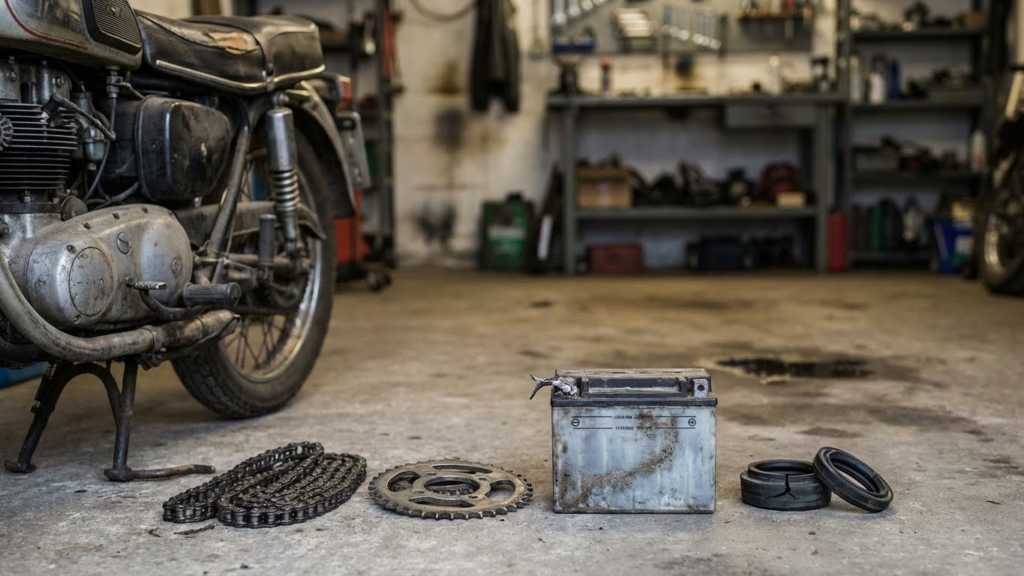
I track the parts that most often need replacing and the costs that add up over years of use. Expect periodic battery swaps, chain and sprocket wear, and occasional suspension service or rebuilds.
Battery Replacement
Batteries usually last 2–5 years depending on climate, riding frequency, and charging habits. I replace sealed lead-acid (AGM) or lithium batteries when voltage and cranking performance drop. A typical AGM battery costs $60–$150; lithium units run $120–$350. Installation at a shop adds $20–$50, though many riders install batteries themselves.
Cold weather shortens battery life. I keep voltage around 12.6–13.0 V when parked and use a smart charger or tender if the bike sits for weeks. For more detail on battery care and testing, I consult resources like Battery University and manufacturer guides for correct voltage ranges and charging routines.
Chain and Sprocket Wear
Chains and sprockets wear as a matched set and usually last 10,000–25,000 miles on street bikes. I measure chain stretch and look for hooked sprocket teeth to decide replacement. A typical replacement kit (chain + front/rear sprockets) costs $120–$350 for common street bikes; labor adds $60–$150.
Regular lubrication and correct chain tension extend life. I clean the chain every 300–600 miles and lube it after wet rides. Hard use, track days, or dirt riding shortens intervals. For torque specs, maintenance schedules, and chain type comparisons, I refer to OEM manuals and motorcycle maintenance sites.
Suspension Components
Fork seals, bushings, and rear shocks wear over time and affect handling and comfort. Fork seals may leak after 20,000–40,000 miles, and basic seal replacement runs $80–$200 per fork if I do it, or $200–$500 including shop labor. Re-valving or a shock rebuild with new fluid and seals costs $200–$600, while high-end shock replacements can exceed $1,000.
I watch for symptoms like fork oil on the stanchions, reduced damping, or a harsh ride. Regular inspection and periodic service preserve ride quality and safety. For service intervals and upgrade options, I check the bike’s service manual and trusted suspension specialists like Öhlins or local suspension shops.
DIY vs. Professional Maintenance
I break down the cost trade-offs, time involved, and safety risks so you can decide when to wrench and when to pay a shop.
Potential Savings from DIY
I save money by doing routine tasks myself. Oil changes, chain cleaning and lubrication, air filter swaps, and brake pad checks are common DIY jobs that cut annual costs. For many mid-size bikes, parts and oil for an oil change often run $30–$80, versus $60–$150 at a shop. Over a season, that can add up to a few hundred dollars.
I also lower costs by buying basic tools once and using them repeatedly. Simple items — torque wrench, sockets, chain breaker, and basic consumables — usually pay off within a year or two. If I ride few miles and handle scheduled items, my yearly maintenance can fall toward the low end of typical ranges.
Risks and Limitations of DIY Maintenance
I face real risks when I tackle complex jobs. Tasks like valve adjustments, fork rebuilds, clutch work, and electrical diagnostics require special tools and experience. A mistake can cause poor performance, extra repairs, or unsafe riding.
I also consider warranty and liability issues. Dealer or shop invoices often matter for warranty claims or resale value. Time is a factor too: complicated repairs can take many hours, and I must decide if my time is worth the savings. When in doubt, I weigh the cost of a professional service against the risk and my confidence level.
How Usage and Riding Style Influence Costs
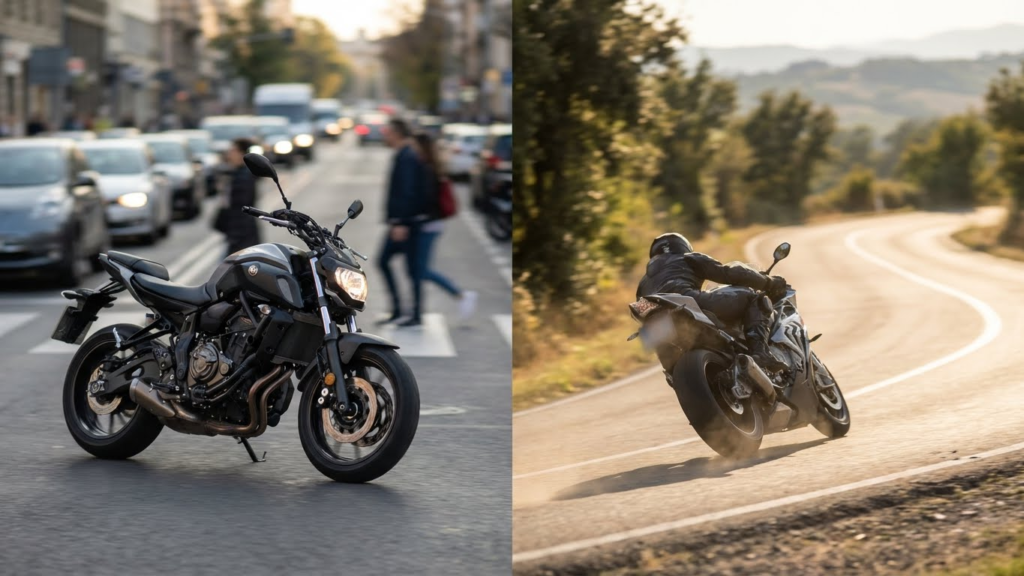
My riding distance and how I ride change what I pay for maintenance. Longer miles raise wear on tires, chain, and engine fluids. Aggressive riding speeds up throttle, brake, and tire wear, and can lead to higher repair bills.
High-Mileage vs. Occasional Riding
If I ride 10,000+ miles a year, I budget more for consumables. Tires may need replacing every 3,000–6,000 miles on sport bikes, so that could mean two or more sets a year. Chains and sprockets wear faster too; I might replace them every 10,000–20,000 miles depending on care. Oil changes become frequent — every 3,000–5,000 miles for many bikes — so oil and filter costs add up.
I also watch scheduled services like valve checks and coolant changes. High miles can move big-ticket services earlier, such as belt or clutch work. For riding under 3,000 miles a year, I can stretch intervals and delay some parts, but I still factor in age-related maintenance like battery and rubber seals.
Impact of Aggressive Riding
I push costs higher when I ride hard. Hard acceleration and late braking heat tires and brake pads, cutting their life in half compared with gentle commuting. If I ride aggressively on track days, tire life can drop to a few hundred miles and brake pads may need replacement after just a few sessions.
Aggressive riding raises the chance of mechanical strain and crashes, which means more frequent fork oil changes, brake fluid flushes, and occasional repairs. I offset some costs by using performance-grade tires and fluids, but those parts are pricier. Regular inspections help catch fast-wearing items before they fail.
Hidden and Unexpected Expenses
I list common surprise costs and show where money usually goes, so you can plan a buffer. Expect repairs that come without warning and parts or upgrades you decide on after owning the bike.
Emergency Repairs
I’ve learned emergency repairs hit hardest when you ride often or store your bike outdoors. Typical sudden problems include clutch failures, stator or charging-system faults, seized calipers from corrosion, and punctures that need new tires and tubes. Labor for a roadside tow plus shop diagnosis often runs $100–$200, and a moderate mechanical fix can cost $300–$1,000 depending on parts and labor rates.
I keep an emergency fund that covers at least one major repair or multiple small fixes. If you ride a high-displacement sport bike, expect higher parts and labor costs. Older bikes can be cheaper for parts but pricier in labor if mechanics must do custom fixes.
Upgrades and Customizations
I budget for upgrades because I often swap parts for comfort, safety, or performance. Common upgrades include tires ($150–$400 per set), aftermarket exhausts ($300+), brake upgrades ($200–$800), and suspension tuning ($200–$900). Small items like heated grips, tail bags, or LED lighting add $50–$300 each.
I track costs in a simple list so upgrades don’t sneak past my budget. Custom work such as paint, electrical mods, or frame changes raises costs quickly due to specialized labor. If I finance or insure modified bikes, premiums and loan terms can change, so I always check those before starting big projects.
Ways to Reduce Annual Maintenance Expenses
I focus on real actions that cut costs: routine checks that stop big repairs, and picking the right shop or mechanic so I don’t overpay. Small habits and smart choices save money without risking safety.
Preventive Maintenance Tips
I check oil and tire pressure every week. Fresh oil and correct tire pressure improve fuel economy and extend engine and tire life. I change oil at the interval my manual recommends, not sooner, to avoid extra costs.
I clean and lube the chain every 300–600 miles or after wet rides. That prevents premature sprocket and chain replacement, which can be expensive. I also inspect brake pads, lights, and coolant level monthly to catch wear early.
I keep basic tools and do items like air filter swaps, bulb changes, and battery care myself. Doing simple tasks saves shop labor costs. I log maintenance dates and mileage so I don’t miss scheduled services.
Choosing Cost-Effective Service Providers
I compare at least three quotes for major jobs like tires, brake work, or valve adjustments. Parts and labor vary a lot between dealers, independent shops, and mobile mechanics. I ask for written estimates and parts receipts.
I use a mix of dealer service for warranty work and trusted independents for routine repairs. Dealers handle recalls and warranty items; independents often charge lower labor rates. I verify certifications, read recent reviews, and ask for references.
I buy common parts (filters, bulbs) online or from local suppliers when the shop allows it. That cuts parts markups. I also learn which repairs are safe for me to do and which need a pro, so I don’t waste time or money.
FAQs
How much do I usually spend per year?
I typically expect between $500 and $1,500 a year for regular maintenance on a common street bike. High-performance or European brands can push annual costs higher.
What routine items should I budget for?
I plan for oil changes, brake pads, chain service, and tires. These items recur at different intervals, so I spread the cost across the year.
What causes big spikes in costs?
Major repairs like valve adjustments, engine work, or replacing a full set of tires and rotors cause spikes. If multiple items wear out at once, one year can be much pricier.
Can I lower my maintenance bill?
Yes. I save by doing basic tasks myself, following the service schedule, and choosing quality yet affordable parts. Regular checks catch problems early and cost less than big repairs.
How does riding style affect costs?
I ride aggressively or commute daily, and that raises wear on brakes, tires, and chain. Gentle riding and moderate miles keep routine costs lower.
Do insurance and registration count as maintenance?
I separate those as ownership costs, not maintenance. Still, they add to the total yearly cost of owning a bike.
How should I budget for surprises?
I keep an emergency fund equal to one to three months of my typical maintenance spend. That helps cover unexpected repairs without stress.
Conclusion
I recommend budgeting at least $500 to $1,500 per year for routine motorcycle maintenance if you ride moderately. That range covers oil, filters, basic tune-ups, and occasional brake or chain work for most bikes.
If I ride a lot or own a high-performance machine, I plan for $2,500 to $4,000 yearly. Higher mileage, track use, or complex repairs push costs into that bracket.
I keep an emergency fund equal to one month’s riding budget for unexpected repairs. Small parts and labor add up quickly when things fail at once.
I track maintenance tasks and receipts in a simple spreadsheet. That helps me spot patterns and decide whether DIY work or a shop saves money.
Key numbers at a glance:
- Typical rider: $500–$1,500 / year
- High-mileage or performance: $2,500–$4,000 / year
- Emergency fund: ~1 month of expected maintenance
I use these figures to set a realistic budget before buying a bike. That keeps riding fun and lowers the chance of being surprised by repair bills.
