
You should change your motorcycle oil based on the oil type and how you ride, but a reliable rule is to swap conventional oil every 2,000–3,000 miles, semi‑synthetic every 5,000–6,000 miles, and full synthetic every 8,000–10,000 miles. Change the oil before long storage and whenever the oil looks dark or gritty, regardless of mileage. I’ll show you how to pick the right oil and adjust intervals for your bike and conditions.
If you ride hard, short trips, or in hot or dusty weather, plan on more frequent changes; if you track mileage closely and use full synthetic, you can extend intervals safely. I’ll walk you through factors that matter, simple checks to do at home, and a maintenance plan that keeps your engine running longer.
Key Takeaways
- Match oil type to riding style and change intervals for best engine protection.
- Watch oil color and contaminants, and change before long storage.
- Keep simple records and adjust intervals for heat, riding intensity, and bike design.
How Often Should I Change My Motorcycle Oil?
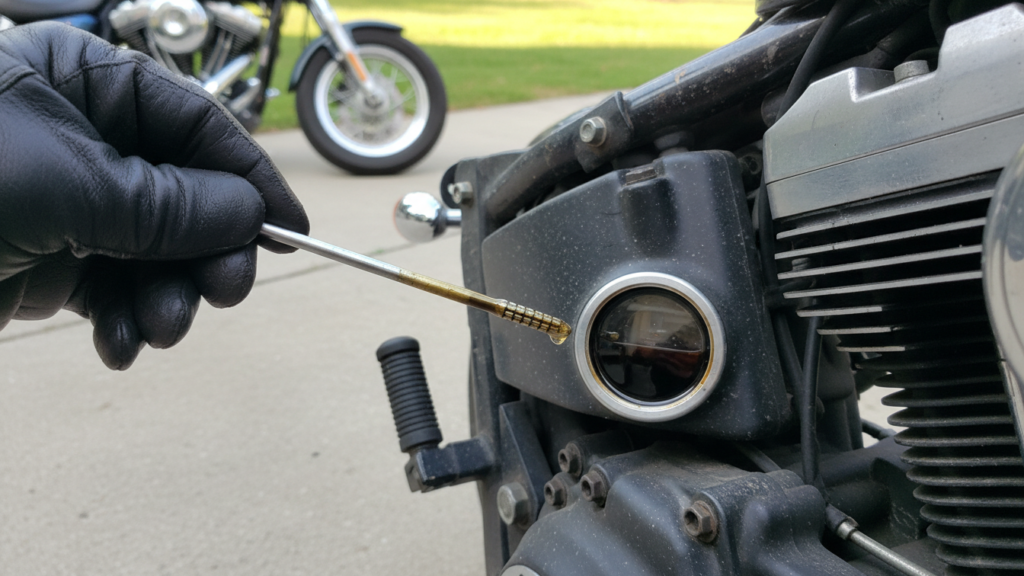
I focus on oil type, mileage, riding style, and time. These determine how often you should change the oil and the filter.
Recommended Oil Change Intervals
I recommend changing oil based on the oil formulation. For mineral oil, I change it every 2,000–3,000 miles. For semi‑synthetic oil, I use a 5,000–6,000 mile interval. For full synthetic, I stretch changes to about 8,000–10,000 miles when riding normally.
I always replace the oil filter at every oil change unless the service manual says otherwise. For air‑cooled cruisers or bikes that run hot, I shorten intervals by about 20–30%. For high‑performance or track bikes, I change oil more often — sometimes every 1,000–2,000 miles.
Mileage Versus Time-Based Changes
I track both miles and months. If I ride frequently, I follow the mileage intervals above. If I ride rarely, I change oil every 6–12 months even if miles are low.
Store bikes need oil changes at least once a year because oil degrades and absorbs moisture. Humid climates or short trips that don’t fully warm the engine also call for more frequent time-based changes. Consult the owner’s manual; manufacturer intervals can differ from general rules.
Signs Your Motorcycle Needs an Oil Change
I watch for these clear signs:
- Dark, gritty oil on the dipstick or in the sight glass.
- Engine runs hotter than normal or develops knocking.
- Decreased engine performance, rough idling, or poor throttle response.
I also note excessive exhaust smoke or a strong oil smell. If the oil level drops quickly, I inspect for leaks and change oil sooner. When in doubt, a fresh oil change and filter prevent bigger engine problems.
Factors Affecting Oil Change Frequency
I focus on the biggest, real-world reasons oil life changes: how you ride, what bike you own, and the engine design under the tank. These three things usually decide whether I swap oil every 2,000 miles or wait 6,000+ miles.
Riding Conditions
Riding in stop-and-go city traffic, short trips under 10 miles, or frequent cold starts breaks oil down faster. Heat and long idling increase oil oxidation; dust and dirt from unpaved roads contaminate oil and the filter. If I ride off-road, tow a trailer, or do many short commute trips, I shorten the interval.
Temperature matters. Hot climates and long highway runs cause oil thinning and additive depletion, while cold climates increase fuel dilution from short trips. I check oil level and color every few rides and change sooner if it looks dark, gritty, or smells of fuel.
For local guidelines, I often compare my schedule to recommendations from manufacturers and sites like the Motorcycle Safety Foundation and SAE International for oil-grade advice.
Type of Motorcycle
Cruisers, sportbikes, standards, and adventure bikes all stress oil differently. High-revving sportbikes run oil hotter and need more frequent changes. Cruisers with large-displacement V-twins may live longer between services if ridden steadily, but low RPM torque can load the oil with soot and require closer attention.
Older bikes with higher mileage often need more frequent oil swaps because worn rings and valve guides let more blow-by and fuel into the crankcase. For bikes with integrated oil and transmission systems — common on many sport and standard models — I change oil on a set schedule because the gear oil and engine oil share contaminants.
I use my owner’s manual as the baseline and adjust based on riding style and mileage patterns.
Engine Type
Four-stroke engines dominate modern bikes, but variations matter. Air-cooled engines run hotter and often need earlier changes than liquid-cooled engines because oil faces greater temperature swings. Single-cylinder engines create more vibration and residue, so I inspect oil more often.
Two-stroke engines use oil mixed with fuel; maintenance focuses on correct mix ratio and spark arrestor checks rather than conventional oil changes. For liquid-cooled four-strokes, the cooling system helps preserve oil life, though high-performance or racing-tuned engines still demand short intervals.
For technical specs and recommended viscosities, I consult OEM guides and trusted resources like the AMA or manufacturer service manuals to match oil type and change frequency to the engine design.
Choosing the Right Motorcycle Oil
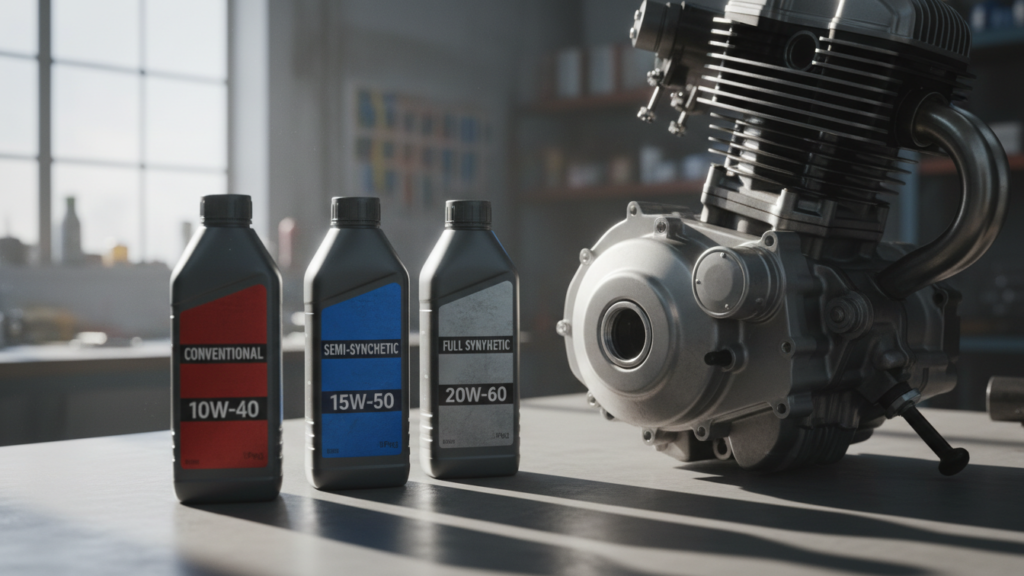
I focus on oil type, viscosity, and manufacturer rules because these decide protection, drain intervals, and when to change the oil.
Synthetic vs Conventional Oil
I pick full synthetic when I want longer drain intervals, better high‑temperature stability, and stronger protection against breakdown. Synthetics resist thermal stress and shearing, so they can safely go 6,000–10,000 miles on many bikes, depending on the oil brand and my riding style.
Conventional (mineral) oil costs less but breaks down faster. I change mineral oil around 2,000–3,000 miles for reliable protection. Semi‑synthetics sit between those two: better than mineral, not as long‑lasting as full synthetic.
When choosing, I check the oil’s motorcycle-specific ratings (JASO MA/MA2) and viscosity (e.g., 10W‑40). Those specs matter more than marketing claims. I also match oil to my engine type — air‑cooled, liquid‑cooled, or high‑revving sport engines may need different formulations.
Manufacturer Recommendations
I always read the owner’s manual first. The manufacturer gives the exact viscosity grade and specification for my engine and often lists a recommended drain interval. Following those numbers keeps my warranty valid and the engine running as designed.
If the manual allows options, I choose an oil that meets the listed specs (API, JASO) and suits my ride habits. For heavy town riding or frequent short trips, I shorten intervals even if the manual lists a long interval. For long highway trips on a modern engine, I follow the higher synthetic intervals the manufacturer permits.
The Impact of Oil Quality on Engine Health
High-quality oil reduces wear, keeps parts clean, and resists breakdown under heat. Poor oil or old oil raises engine friction, clogs passages, and speeds up part failure.
Consequences of Delayed Oil Changes
I see metal wear rise when oil ages. Oil loses its ability to lubricate and thins or thickens depending on contamination and temperature. That makes bearings, camshafts, and piston rings rub harder against each other, which increases friction and lowers engine power.
Heat control fails next. Fresh oil carries heat away from bearings and cylinder walls. Old oil breaks down and can’t absorb heat well, raising operating temperature and risking warped parts or seized pistons.
Fuel economy and emissions change too. Sludgy oil forces the engine to work harder, so I notice worse gas mileage and higher exhaust pollutants. Replacing oil on time prevents these problems and keeps repair costs down.
Oil Contamination Issues
I treat contamination as a main enemy of oil performance. Dirt, metal particles, water, and unburned fuel all enter oil during use. These contaminants abrade surfaces, block oil passages, and shorten filter life.
Chemical breakdown also matters. Additives in oil deplete over time, so the oil stops preventing corrosion and neutralizing acids from combustion. I find acids can pit metal and accelerate wear if oil isn’t changed.
Different oils resist contamination differently. Synthetic oils typically handle heat and contaminants better than conventional oil, and high-quality filters trap more particles. I replace both oil and filter to restore clean flow and protect tight engine tolerances.
Best Practices for Changing Motorcycle Oil
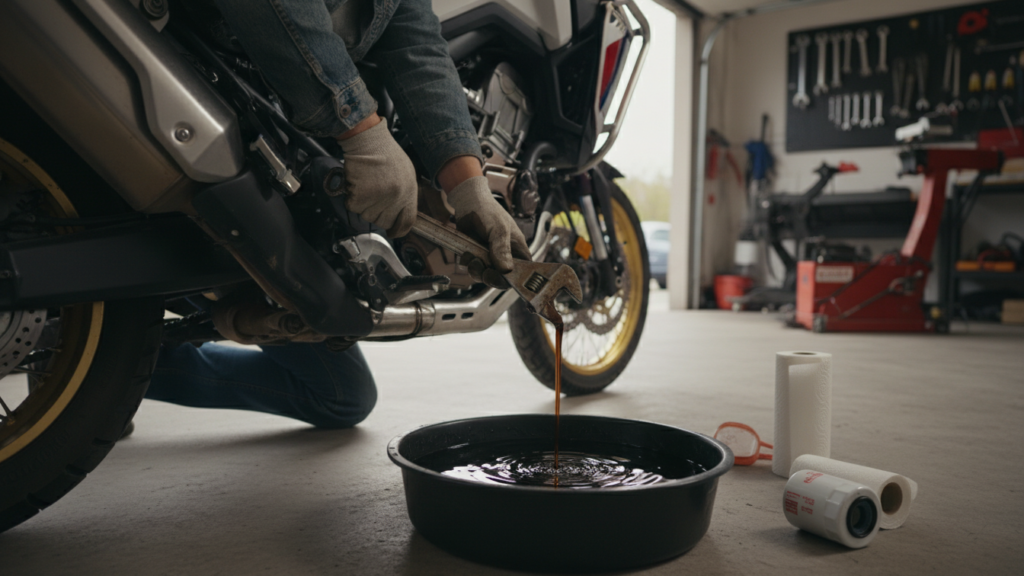
I focus on preparing the bike, gathering the right tools and oil, and following a safe step-by-step process so the job is quick and clean.
Preparing for an Oil Change
I check the owner’s manual for the correct oil grade, capacity, and filter part number before I start. I open the manual or the manufacturer’s website (for example, Yamaha or Honda service pages) to confirm specs and torque values. I pick the oil type—mineral, semi-synthetic, or full synthetic—based on the manual and my riding habits.
I gather supplies: correct oil, new oil filter, filter wrench, drain pan, funnel, socket set, new crush washer, rags, and gloves. I warm the engine with a short ride for 5–10 minutes to thin the oil, which helps faster drainage. Then I park the bike on level ground using the center stand or paddock stand so the oil drains fully.
I wear nitrile gloves and eye protection. I place cardboard or plastic under the bike to catch spills and position the drain pan under the drain plug. I check local disposal rules and find a recycling center (many auto parts stores accept used oil).
Steps for Safe Oil Change
I let the warmed engine cool for a few minutes so oil is warm but not hot. I remove the drain plug with the correct socket, keeping my hand clear of hot metal. I let the oil drain completely into the pan—this usually takes 3–5 minutes.
I remove the old oil filter with a filter wrench, draining any trapped oil into the pan. I lightly oil the new filter’s rubber seal with fresh oil and hand-tighten it to the torque spec in the manual. I replace the drain plug with a new crush washer and tighten to the specified torque.
I refill through the fill cap with the correct amount and grade of oil using a funnel to avoid spills. I run the engine for 30–60 seconds, then shut it off and wait three minutes. I check the oil level with the dipstick or sight glass and top to the correct mark. Finally, I inspect for leaks, dispose of used oil and filter at a recycling center, and record the date and mileage for the next change.
Proper Record-Keeping and Maintenance Scheduling
I keep clear records of every oil change and set reminders tied to mileage and dates. That helps me avoid missed services and track oil type, filter changes, and engine performance notes.
Tracking Oil Changes
I record each oil change in a single, dedicated log. I note the date, odometer reading, oil brand and weight, filter part number, and any observations like dark oil or metal particles. A simple table works well:
| Date | Odometer | Oil (brand/weight) | Filter | Notes |
|---|---|---|---|---|
| 2025-06-10 | 8,420 mi | Motul 7100 10W-40 | K&N KN-204 | Slight discoloration |
I keep this log in two places: a paper booklet in my bike’s glove box and a digital copy (spreadsheet or app). The paper is handy at the shop; the digital copy gives search and backup. When I sell the bike, this record proves regular care.
Setting Maintenance Reminders
I set reminders based on both time and mileage. For typical street bikes, I set oil-change reminders every 3,000–4,000 miles or every 6 months, whichever comes first. For synthetic oil, I extend to 5,000–7,000 miles but still schedule a 12-month check.
I use three reminder methods at once:
- Phone calendar event with odometer noted.
- Maintenance app (shows past service and upcoming tasks).
- Sticker on the swingarm with next service mileage.
When a reminder hits, I check the log and inspect the oil before changing. If I ride hard or in dust, I shorten the interval.
Environmental Considerations for Oil Disposal
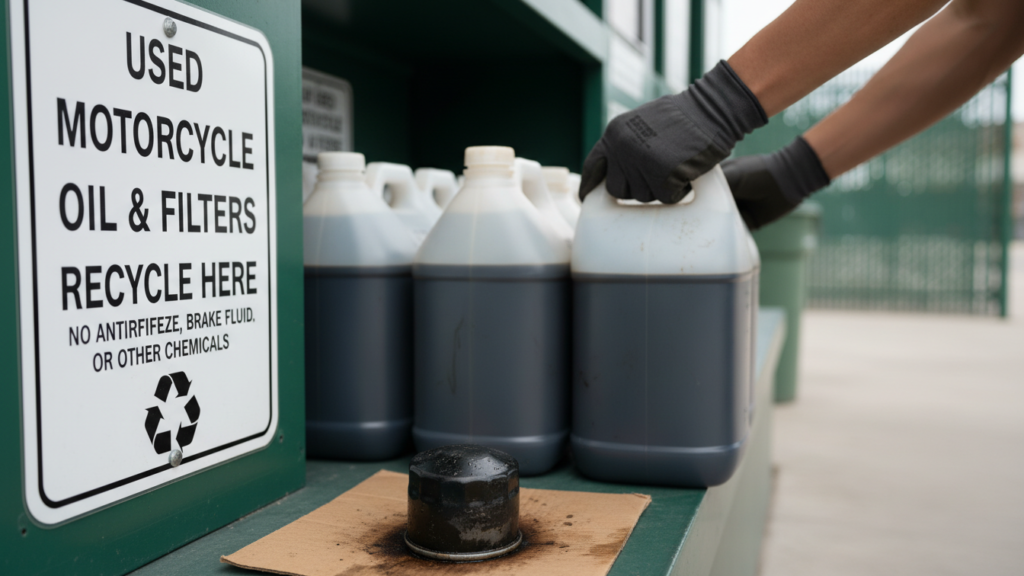
I treat used oil as a hazardous material and handle it so it never reaches soil, storm drains, or waterways. I use sealed containers and take oil and filters to approved recycling or drop-off sites.
Safe Disposal Methods
I drain oil into a clean, leak-proof container with a tight cap. I avoid mixing oil with solvents, coolant, gasoline, or brake fluid because mixed waste often becomes non-recyclable and harder to manage.
I bring used oil and oil filters to one of these options:
- Auto parts stores that accept used oil.
- Household hazardous waste (HHW) facilities run by my city or county.
- Certified recycling centers or service stations that accept motorcycle oil.
For filters, I squeeze or puncture and drain them into the oil container, then place the filter in a sealed bag or a labeled metal can. I never pour oil on the ground, into drains, or into trash bins. I keep receipts or records when required for professional or legal reasons.
Local Regulations
I check local and state rules before disposal because laws differ by place. Many states require recycling and ban dumping oil and used filters. Some municipalities offer free drop-off days or curbside HHW pickup; others require appointment-based drop-off.
I contact my state environmental agency or use websites like city waste pages to find approved sites and any limits on amounts. Businesses may need different handling — commercial shops often use licensed waste haulers and manifest paperwork. I follow posted rules for container labeling, storage time limits, and transport amounts to avoid fines.
FAQs
I get asked the same questions about oil changes a lot. Below I answer the common ones in plain terms.
How often should I change oil?
It depends on oil type and riding. I use mineral oil at about every 2,000 miles, semi-synthetic at 5,000–6,000 miles, and full synthetic up to 10,000 miles. Check your owner’s manual and adjust for hard riding or hot climates.
Can I ride longer between changes if I check oil level?
Checking level helps but doesn’t stop oil breakdown. I top off often, but I still replace oil on the interval suited to the oil and riding conditions.
What if I ride mostly short trips?
Short trips cause more moisture and contaminants to build up. I shorten the interval in that case and change oil more often than normal highway use.
Is brake-in or high-performance riding different?
Yes. I change oil sooner after a break-in, and I shorten intervals after track days or aggressive riding. Heat and high RPMs wear oil faster.
Should I change the filter every time?
Always change the oil filter with the oil. The filter traps contaminants; replacing it keeps new oil cleaner
Any quick checks between changes?
I check level, color, and smell. If oil looks very dark, gritty, or smells burnt, I change it soone
- Pro tip: follow the manual, and use oil that meets the bike maker’s specs.
Conclusion
I recommend checking your owner’s manual first and using it as my baseline for oil change intervals. Manufacturer guidance matches your bike’s design and gives the safest schedule to follow.
I change oil more often when I ride hard, in hot weather, or in stop-and-go traffic. For light, steady riding I use the longer intervals listed for semi- or full-synthetic oils.
I watch oil color, level, and smell between services. A quick visual check can tell me if oil needs changing sooner than the mileage suggests.
Use this simple checklist to decide:
- Follow the manual first.
- Adjust for oil type: mineral < semi-synthetic < full synthetic.
- Consider riding style, climate, and engine type.
- Check oil regularly between changes.
If I want the best protection with less fuss, I pick a quality full-synthetic oil and follow a conservative interval. If cost matters and my riding is mild, I may use semi-synthetic and service it more often.
Keep records of each oil change and note any engine changes or problems. That log helps me spot trends and keep maintenance predictable.
