You want a quick, reliable answer: clean and lube your motorcycle chain about every 300–600 miles (500–1,000 km), and always after wet, dusty, or off-road rides. This routine keeps power delivery smooth, reduces wear on sprockets, and prevents rust that can strand you.
I’ll show why chain care matters, how to spot when it needs attention, the factors that change your schedule, and simple, safe techniques to clean and lube like a pro. Follow my practical steps and you’ll save money, avoid surprises on the road, and keep your bike performing at its best.
Why Cleaning Your Motorcycle Chain Is Essential
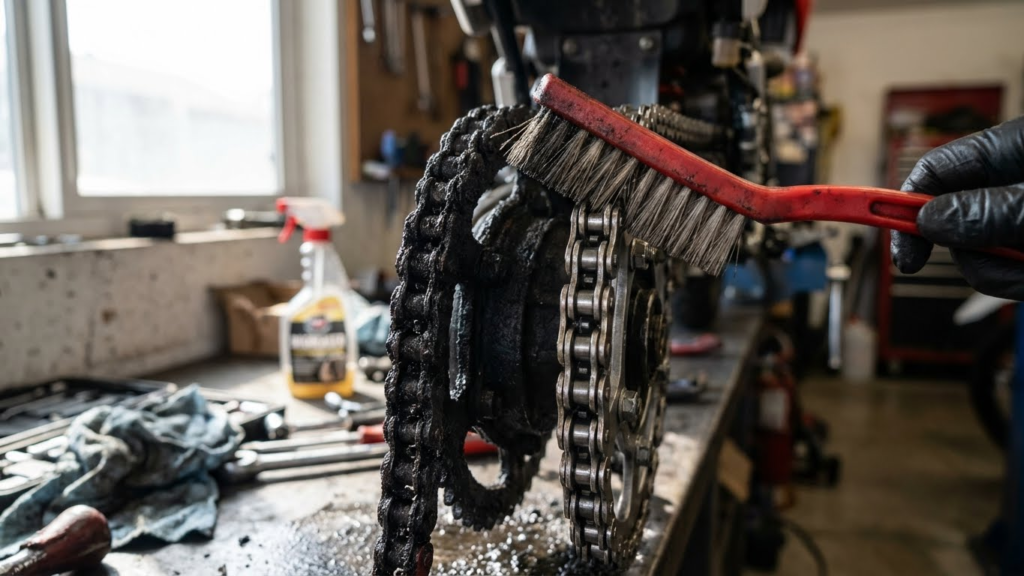
I keep my chain clean because it directly affects how the bike feels, how long parts last, and how safe I am on the road. Regular cleaning removes grit, old lubricant, and contaminants that change driveline behavior and accelerate wear.
Impact on Performance
A dirty chain reduces power delivery and increases drivetrain drag. When abrasive grit embeds between rollers and sprocket teeth, I notice heavier throttle response and slightly delayed acceleration. That drag also raises fuel consumption; the engine must produce more torque to overcome friction.
Cleaning restores smooth rolling of the rollers and consistent engagement with sprocket teeth. After a proper degrease and relube, shift feel and throttle response become crisper. I aim to eliminate buildup in the O-ring or X-ring seals without removing the factory grease inside the rollers.
Practical signs I watch for: waxy black buildup on links, visible rust, or a chain that squeaks at speed. Those cues tell me to clean and lube before performance degrades further.
Effects on Longevity
Contaminants act like sandpaper on metal surfaces. I remove dirt and old abrasive lube because each ride deposits particles that, over hundreds of miles, shorten chain and sprocket life. Replacing a worn chain plus sprockets costs significantly more than periodic cleaning and proper lubrication.
I also protect internal seals (O-/X-rings) by using appropriate solvents and lubricants. Aggressive cleaners that strip internal grease accelerate wear, so I choose products that dissolve external grime but preserve seal lubrication.
Routine cleaning intervals—adjusted for rain, dirt roads, or salty conditions—keeps link wear low and delays the need for replacement. I document mileage when I clean so I can spot accelerating wear trends and act before catastrophic failure.
Safety Considerations
A neglected chain can fail suddenly or skip teeth under load. I treat visible rust, stiff links, or excessive slack as safety issues that require immediate attention. A snapped chain can jam the rear wheel or damage the swingarm and brake components.
Proper chain maintenance reduces the risk of sudden failures and keeps tension within safe limits. I also check quick-release or master links after cleaning; a loose connection is a common cause of on-road incidents.
When I ride through rain, mud, or winter salt, I inspect and often clean the chain sooner. Those environments increase corrosion and abrasion, directly raising the chance of mechanical failure if ignored.
How Often Should You Clean Your Motorcycle Chain?
I recommend a baseline cleaning interval, then tweak it based on riding distance, environment, and bike type. Regular checks help me spot grime, rust, or lubrication breakdown before they shorten chain life.
Recommended Cleaning Frequency
For typical road riding I clean and lube the chain every 300–500 km (about 200–300 miles).
If I ride primarily short trips and commute daily, I lean toward the shorter end of that range because stop-and-go grime builds up faster.
When I ride sporadically but cover longer distances in single outings, I clean after long rides or every 500 km — whichever comes first.
I always clean and relube immediately after any wet, salty, or dusty ride, regardless of the odometer.
Quick checklist I follow:
- Clean & inspect at 300–500 km for normal conditions.
- Clean immediately after rain, mud, or salty roads.
- Clean before applying fresh lube if chain looks contaminated.
Adjusting Frequency by Riding Style
I increase cleaning frequency for off-road, adventure, or track riding to as often as every 100–200 km.
Dirt and abrasive grit from trails accelerate wear and can damage O-rings or X-rings quickly.
For high-mileage touring or sustained highway cruising, I stick to 500–800 km, checking tension and lube more frequently than full cleans.
Urban stop-and-go riding collects road grime and requires more frequent attention than steady-state freeway miles.
If I use a sealed or gearbox-type drive, I rely on manufacturer intervals but still inspect visually every 500 km.
If I notice visible grit, rust, or noisy operation, I clean immediately, regardless of schedule.
Seasonal Considerations
In winter or during frequent wet conditions I clean and lube the chain after every wet ride or at least every 200–300 km.
Road salt and moisture speed corrosion and eat through lubes faster, so I don’t wait for a fixed odometer interval.
In dry summer months I can extend full cleaning to 500–800 km, but I still apply light lube every 300–500 km.
Dusty seasons require more brushing and solvent cleaning; humid seasons require rust prevention and wetter lubes.
I keep a simple seasonal checklist:
- Winter/wet: clean after wet rides; inspect for corrosion frequently.
- Dry/dusty: brush and solvent-clean more often; use heavier lube.
- Hot/humid: monitor lubricant breakdown and reapply sooner.
Signs Your Motorcycle Chain Needs Cleaning
I check my chain regularly for visual grime, unusual sounds, and any drop in performance. These three signs tell me when to clean, lube, or inspect further.
Visible Dirt and Debris
If I can see a dark, gritty buildup on the rollers, between the links, or on the O-rings, the chain needs cleaning. Road grime packs into the link gaps and accelerates wear; a thin layer of lubricant is fine, but a pasty, sticky layer with embedded grit is not.
I also watch for rust spots or flaking metal on the plates and pins. Small surface rust can often be removed with a brush and cleaner, but pitting or deep corrosion means I should inspect for replacement.
Visible chain alignment issues—uneven wear patterns or one side of the chain appearing dirtier than the other—signal that I should check sprocket alignment and rear wheel position while I clean.
Noise and Stiffness
When I hear a pronounced metallic clack, squeak, or grinding that changes with throttle or suspension movement, the chain likely needs cleaning and lubrication. Dry links produce louder, sharper noises than a properly lubed chain.
I check for stiff links by rolling the rear wheel and feeling for sections that don’t flex smoothly; a stiff link often points to trapped debris or old lubricant that has hardened.
If noise persists after cleaning and lube, I inspect sprocket teeth and chain wear; continual noise can indicate wear beyond what cleaning can fix.
Reduced Performance
A neglected chain often reduces throttle response and causes uneven power delivery; I notice this as hesitation or a jerky feel when accelerating. Excessive chain stretch or slack increases the chance of slipping under load, which feels like a lag before power applies.
I measure chain slack against the manufacturer’s spec during inspection; values outside spec mean I should adjust tension or consider replacement if wear is advanced.
I also monitor fuel consumption and vibration—both can increase subtly with a dirty or worn chain—so if I detect those changes, I clean the chain and recheck sprockets and alignment.
Factors Affecting Cleaning Intervals
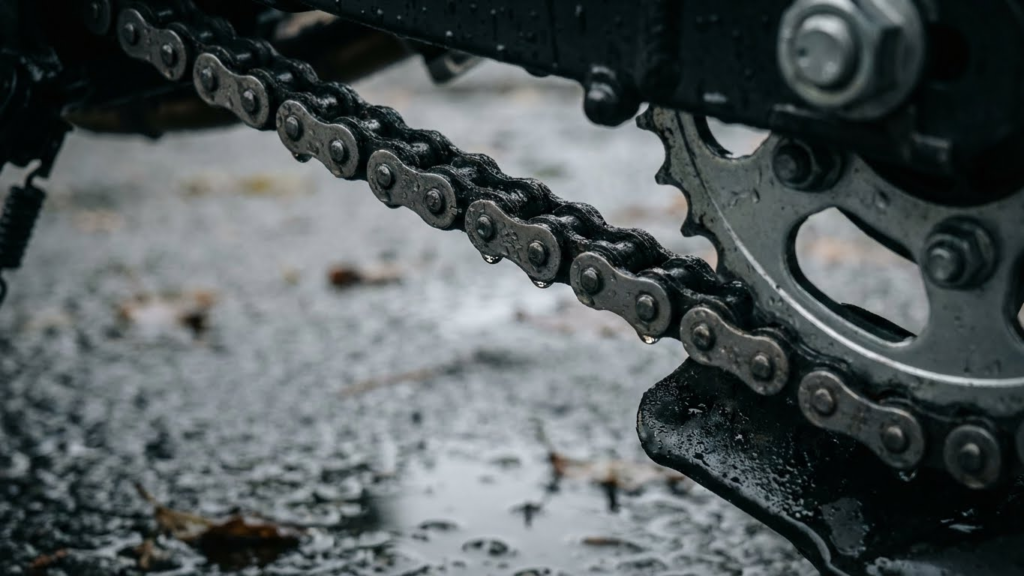
I focus cleaning frequency on the conditions, equipment, and products that actually shorten chain life. These three areas determine whether I clean every 300 miles, 1,000 miles, or immediately after a ride.
Weather and Environmental Conditions
Rain, salt, and road grime accelerate corrosion and grit build-up on the rollers and O-rings. If I ride in steady rain or through salted roads, I clean and relube the chain after each such ride to remove corrosive residues that can penetrate seals.
Dusty or muddy off‑road sections embed abrasive particles between the chain and sprockets. I shorten my interval to every 200–400 miles in dusty terrain and clean immediately after heavy mud to prevent abrasive wear. Urban stop‑and‑go riding still picks up grit, so I aim for 500–750 miles on city streets unless I notice visible grime.
Temperature extremes affect lubricant performance. In cold climates the lube thickens and attracts less dirt but can form viscous deposits; in hot climates it thins and flings off faster, so I adjust cleaning frequency accordingly.
Type of Chain and Motorcycle
Standard non‑sealed chains need more attention than sealed (O-ring, X-ring) chains. I clean non‑sealed chains every 300–500 miles because they lack internal lubricant retention. For O-ring and X-ring chains, I usually extend the interval to 500–1,000 miles, provided there’s no heavy contamination.
High‑power motorcycles and bikes used for track days cause higher chain stress and faster lubricant fling‑off. I inspect and clean these chains more often—typically every 300–400 miles or after each hard session. Low‑power commuter bikes tolerate longer intervals, so I target 750–1,000 miles when conditions are mild.
Sprocket condition matters too. If I spot hooked teeth or uneven wear, I clean and inspect the chain immediately and consider replacement to prevent accelerated wear.
Lubricant Selection
Thick, sticky chain lubes adhere longer but attract more road grime. I use heavier lubricants for long highway runs where fling‑off is less of a problem, and I clean less frequently—around 700–1,000 miles. For stop‑and‑go or wet riding I choose water‑resistant, thin‑film lubes and clean more often because they can wash off.
Wax‑based lubricants build protective films but require cleaner application and sometimes a complete strip before re‑waxing. I strip and reapply wax every 500–800 miles, depending on exposure to rain and debris. Aerosol sprays give easy coverage but vary widely; I follow manufacturer guidance and check chain condition sooner if the product is light or solvent‑based.
Always match lube type to my riding style and local conditions, and monitor visible residue, noise, or gritty feel as triggers to clean sooner.
Proper Techniques for Cleaning a Motorcycle Chain
I prioritize safe, methodical steps: gather the right tools, follow a repeatable cleaning sequence, and inspect each link and sprocket closely for wear or damage.
Tools and Materials Required
I use a motorcycle stand or rear paddock to lift the wheel so the chain spins freely. Important tools: a soft nylon brush or dedicated chain brush, a stiff bristle toothbrush for tight spots, and a microfibre rag for wiping. For chemicals I bring a citrus-based or kerosene chain cleaner for O- and X-rings; avoid aggressive solvents on O-ring chains. A spray-on chain cleaner or aerosol degreaser speeds the job on very dirty chains. I keep a drip tray or old cardboard under the bike to catch runoff. For lubrication I carry a motorcycle-specific chain lube (chain wax or wet lube depending on conditions), and gloves and eye protection for safety.
Step-by-Step Cleaning Process
I position the bike on a stand and shift the rear wheel so a clean section of chain faces me. I apply cleaner liberally and let it soak 1–2 minutes to loosen grime. Then I scrub the chain with the nylon brush along both sides, focusing on links, rollers, and the inside surface that contacts sprockets. I rotate the wheel slowly by hand to work the cleaner through each link. For stubborn deposits I repeat cleaning and use the toothbrush on plate edges and O-ring gaps. I avoid high-pressure water blasting; I use low-pressure water rinse or a damp rag to remove residue. I wipe excess cleaner and loosened grit with the microfibre rag while rotating the wheel until the rag runs mostly clean.
Drying and Inspection
After wiping, I let the chain air-dry or speed the process with a clean rag until no moisture remains. I inspect every link for stiff movement by flexing the chain laterally and rotating the wheel; a stiff link will not swing smoothly. I check sprocket teeth for hooked, worn, or uneven profiles and measure chain slack with a ruler or spec sheet—1–1.5 inches (25–40 mm) typical, but I follow the manufacturer’s exact spec. I look for missing O-rings, heavy corrosion, or elongated chain pitch; any of these prompt replacement. Only when the chain is completely dry do I apply lube evenly to the inside face of the chain while slowly rotating the wheel.
Maintaining Your Chain Between Cleanings
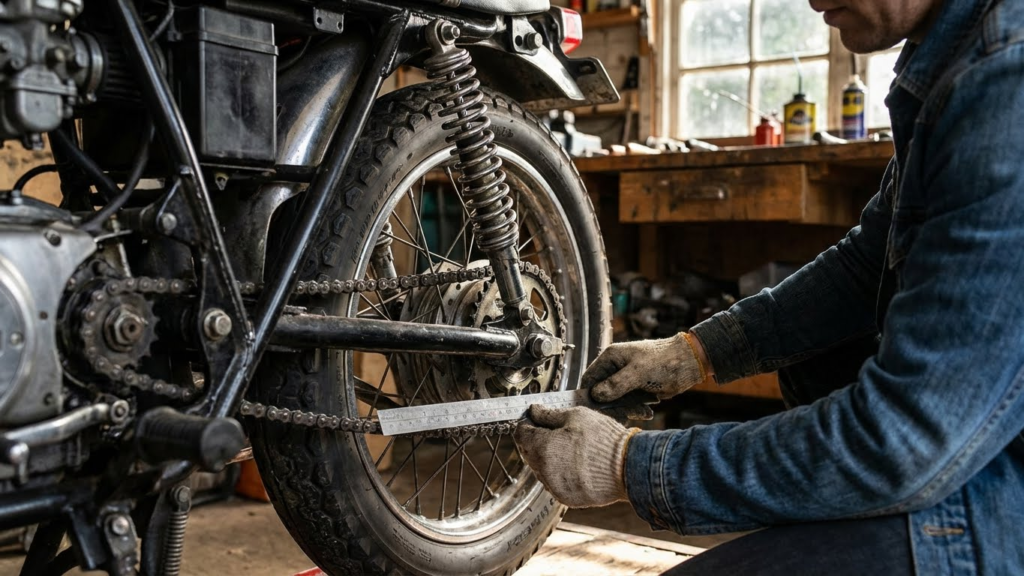
I check my chain regularly for wear, dirt buildup, and proper tension so I can catch small issues before they require a full clean or part replacement.
Routine Inspections
I inspect the chain visually every 200–300 miles and after riding in wet, muddy, or salty conditions.
I look for stiff links, excessive side-to-side play, rust, and missing O‑ring seals. Use a bright light and rotate the rear wheel slowly while watching each link pass a fixed point.
I measure chain slack at the midpoint of the chain run and compare it to the manufacturer’s spec; if it exceeds spec, I adjust the rear axle increments recommended in the owner’s manual.
I also scan the sprockets for hooked or worn teeth and check for uneven wear; replacing both chain and sprockets together prevents accelerated damage.
I keep a small log or note on my phone with inspection dates and adjustments.
That helps me spot trends so I can schedule deeper maintenance before failures occur.
Spot Cleaning Tips
When I see surface grime or road salt, I perform a spot clean immediately rather than waiting for a full service.
I use a dedicated chain cleaner or a mild degreaser applied with a nylon brush; avoid wire brushes that can damage O‑rings and seals.
Procedure I follow:
- Place bike on a paddock or center stand to free the rear wheel.
- Spray cleaner on the dirty section and scrub with a soft brush.
- Wipe excess cleaner and loosened grime with a clean rag.
- Allow the chain to dry, then reapply a thin, even coat of chain lubricant to the cleaned section only.
I focus lubrication on the rollers and inside of the chain rather than the outside plates to reduce fling.
After spot cleaning I ride briefly and recheck for fling or oversaturation, wiping away excess lube to prevent dirt attraction.
Common Mistakes to Avoid When Cleaning Chains
I focus on practical errors that shorten chain life or ruin lubrication so you can spend less time fixing problems later. Small habits—how often you clean and which products you use—make the biggest difference in chain wear and ride safety.
Over-Cleaning or Under-Cleaning
I see riders swing between two extremes: scrubbing the chain every ride or ignoring it until it squeals. Cleaning every 200–300 miles or after riding in rain, mud, or salty conditions keeps grime from grinding into the rollers. Over-cleaning with harsh scrubbing or aggressive solvents strips factory lube and wears seals, which can accelerate stretch and corrosion.
Check the chain before deciding. If it looks dry, noisy, or has visible grit, clean and re-lube. If it’s lightly dusty and still well-lubricated, a quick wipe and targeted lube on the rollers will suffice. Use a gentle brush and work one section at a time to avoid overworking seals and O-rings.
Inappropriate Cleaning Products
I avoid using strong degreasers, brake cleaner, or kerosene on O-ring or X-ring chains because they can swell and crack the rubber seals. Those products remove bonded grease from inside the link and compromise seal integrity, which leads to faster wear.
Instead, I use a chain-specific cleaner or a mild biodegradable degreaser, applied sparingly and rinsed or wiped off thoroughly. For lubrication, I choose a motorcycle chain lube matched to riding conditions—wet lube for rain and cold-weather rides, and dry or wax-based lube for dusty, dry environments. Always apply lube to the rollers, not the sprocket faces, and allow it to set before riding.
Conclusion
I recommend a regular cleaning rhythm based on riding conditions and mileage. For most road riders I aim for every 300–600 miles (500–1,000 km), and I clean more often after wet, dusty, or off-road rides.
I focus on inspection when I clean. I check for wear, proper tension, and damaged O-/X-rings, because cleaning is also a chance to catch problems early.
I use a targeted approach: light wipe and lube after short dry rides, deeper clean with dedicated cleaner and brush when grime builds. That balances chain life, performance, and the time I spend on maintenance.
I keep a simple checklist to follow each time:
- Inspect chain and sprockets
- Clean appropriate to condition
- Dry and apply suitable chain lube
- Recheck tension and alignment
I find consistency matters more than perfection. A modest routine performed regularly extends chain life and improves ride feel.
