
You need to know when to swap motorcycle tires to stay safe and keep your bike handling well. Replace tires every five to six years at the latest, and sooner if tread wear, cracks, bulges, or other damage appear. I’ll show what to check and how to spot worn tires before they become a problem.
Think about miles and age: some tires wear out in 4,000–8,000 miles, while others last much longer depending on bike type, riding style, and maintenance. I’ll walk you through quick inspections, common warning signs, and simple tips to help you get the most life from your tires without risking safety.
Key Takeaways
- Replace tires by age or when you see clear wear or damage.
- Front and rear tires wear at different rates depending on riding and bike type.
- Regular inspections and proper maintenance extend tire life and improve safety.
Recommended Replacement Intervals
I focus on three clear measures: what the bike maker advises, how many miles tires tend to last, and the tread depth you must not go below. These give you concrete steps to decide when to change tires.
Manufacturer Guidelines
I always check the motorcycle and tire maker first. Manufacturers list a recommended service life in the owner’s manual or on the tire sidewall; this includes maximum age and any special limits for sport, touring, or off‑road use. Follow those limits because they account for the tire compound, construction, and expected loads.
If the manual says “replace after X years” or the tire sidewall shows a DOT date code older than the stated limit, I replace the tire even if tread looks okay. Warranties and safety notices from the maker also guide urgency. When in doubt, I contact the manufacturer or an authorized dealer for model‑specific advice.
Mileage Recommendations
I use mileage as a practical guide but treat it as flexible. Typical front tires last 6,000–12,000 miles and rear tires 3,000–10,000 miles depending on bike type and rider habits. Sport bikes and heavy power delivery shorten rear tire life; touring bikes and steady highway cruising extend both.
I track actual miles and compare them to expected ranges for my bike and tire model. If I hit the lower end and notice uneven wear, I plan a change. If I remain in the higher end but the tire still meets tread and age standards, I keep riding but check more often.
Tread Depth Standards
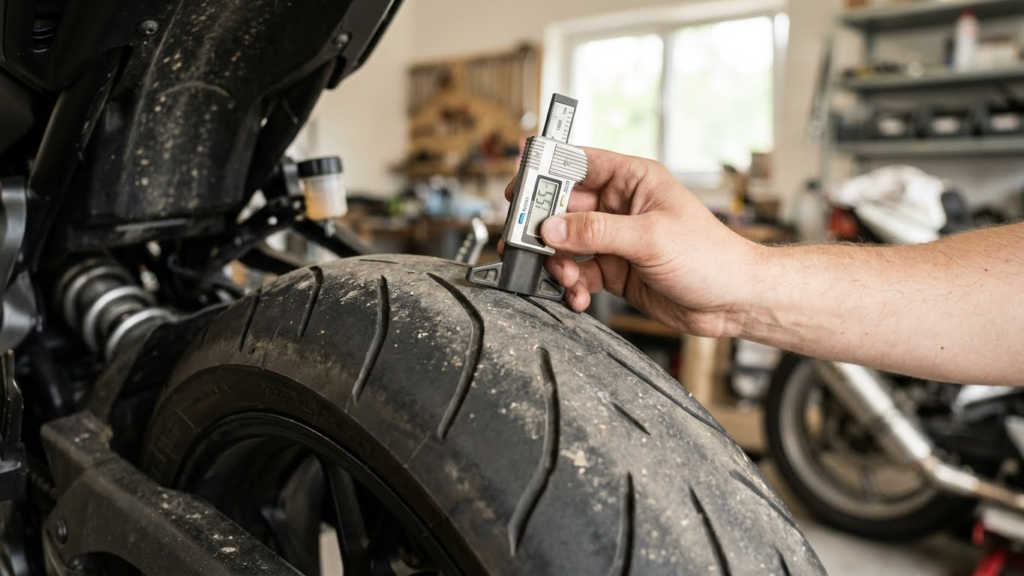
I treat tread depth as the legal and safety floor. Most experts and many laws set a minimum of 1.6 mm (2/32″) across the main grooves. I use a tread gauge or the tire wear bars molded into the groove to measure this.
If the tread reaches wear bars or drops below 1.6 mm, I replace immediately. I also consider reduced groove depth for wet traction; many riders upgrade before hitting the legal limit to keep predictable handling in rain.
Signs Your Motorcycle Tires Need Replacing
I check tires for three main problems: tread depth and wear bars, cracking or dry rot, and uneven wear patterns that change handling or cause vibrations.
Visible Wear Indicators
I look for the tread wear indicators (small raised bars in the grooves). When the tread surface is flush with those bars, the tire has reached legal and safe limits and needs replacement.
I also measure tread depth with a gauge. Front tires should generally be above 2/32″ (1.6 mm) in critical grooves; rear tires often need replacement sooner for traction. If tread looks shallow across the center or shoulders, that’s a clear sign.
Cutting, chunking, or exposed cords demand immediate change. Riding with worn tread cuts braking grip and wet-weather traction. For reference on legal limits and inspection tips, I check resources like the Motorcycle Safety Foundation and DOT guidance.
Cracks and Dry Rot
I inspect sidewalls and the tread surface for small cracks, deep fissures, or a chalky, dry appearance. These signs mean the rubber is breaking down from age, UV, or ozone exposure and can fail suddenly.
I pay attention to bulges or bubbles as they indicate internal cord damage. Even if tread depth looks okay, dry rot or cracks near the bead or shoulder require prompt replacement.
If a tire is over five years old, I treat age-related cracking as a serious risk and have the tire inspected by a professional. Tire makers and safety sites like NHTSA recommend regular checks for aging tires.
Uneven Tread Wear
I check for uneven wear patterns: cupping (scalloped dips), center wear, or more wear on one side than the other. Cupping can cause vibrations at speed and often points to suspension or balance problems.
Center-only wear usually means overinflation, while edge wear indicates underinflation or aggressive cornering. One-sided wear often signals misalignment or improper suspension setup.
If the wear pattern is uneven, I fix the root cause before fitting new tires. Balancing, alignment, and correct air pressure extend tire life and restore predictable handling.
Factors Affecting Tire Longevity
I focus on the main things that shorten or extend a tire’s life: how you ride, the tire’s construction, and where you keep the bike. These three areas determine how fast tread wears, how the rubber ages, and when you should replace the tire.
Riding Habits
I look first at how riding style changes tire wear. Hard acceleration and aggressive launches wear the center tread quickly. Fast cornering and frequent leaning scuffs the shoulders and can expose cords over time.
Brake technique matters too. Heavy front braking shifts weight forward and can flat-spot the front tire. Repeated drag braking increases heat and speeds rubber breakdown.
Mileage and load also affect life. Carrying a passenger or heavy luggage raises tire temperature and flattens contact patches faster. High-speed riding increases heat buildup, so tires on highways often wear quicker than those used mostly around town.
I recommend tracking miles by riding type. Note aggressive rides separately from commuting. That helps predict when tread depth or age will force a change.
Tire Type and Compound
I check the tire’s purpose and rubber recipe next. Sport tires use softer compounds for grip; they usually last fewer miles than touring or cruiser tires. Touring tires use harder compounds and thicker tread, so they resist wear on long trips.
Tires also differ by construction: radial versus bias-ply affects heat dispersion and wear patterns. Some modern tires use dual or triple compounds—harder center, softer shoulders—to balance mileage and corner grip.
Look at the manufacturer’s recommended service life and treadwear indicators molded into the tire. DOT codes show manufacture date, which matters because even unused tires age chemically. I always weigh compound softness, expected miles, and riding style when choosing a replacement.
Storage Conditions
I store or advise on storage because environment speeds aging. Heat and direct sunlight break down rubber; UV and ozone cause cracks in sidewalls and tread. A tire stored outdoors on a hot surface will age faster than one in a cool, shaded garage.
Pressure and position matter too. Long-term storage with the bike on its wheels can create flat spots. I recommend slightly lower inflation or using stands to remove weight from tires for multi-month storage.
Use clean, dry areas away from solvents, fuel, and batteries. These chemicals can soften or swell rubber. If I know a bike sits idle for six months or more, I inspect for cracks and check DOT age before riding.
Safety Risks of Overdue Tire Replacement
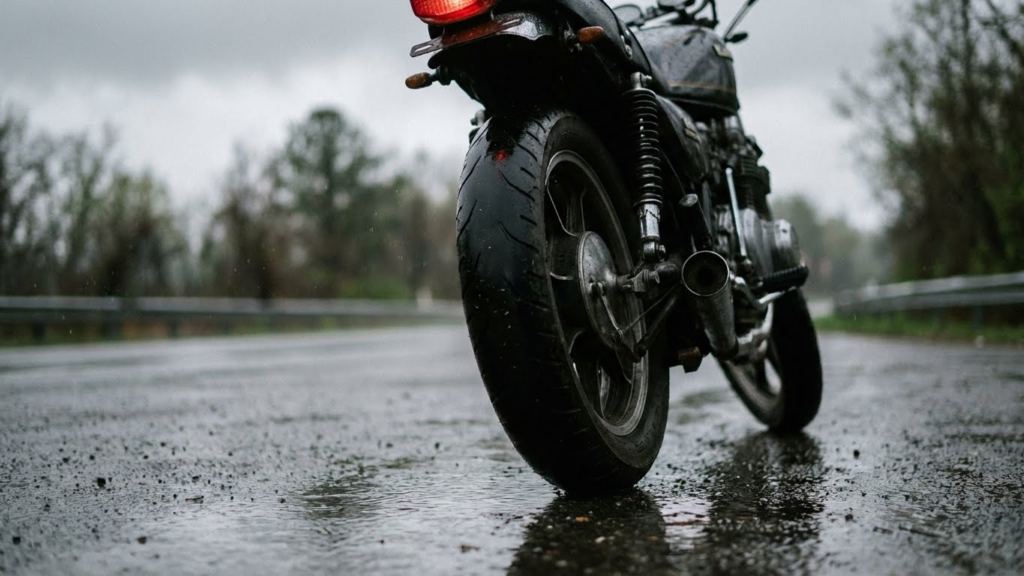
I focus on two main dangers riders face when they keep tires past their safe life: loss of grip in normal and wet conditions, and a higher chance the tire will fail suddenly. Both raise the odds of a crash and can cause serious injury.
Reduced Traction
I notice traction drops as tread wears down and rubber hardens with age. Shallow tread channels can’t evacuate water well, so hydroplaning starts at lower speeds. That makes braking distances longer and turns less predictable on wet roads.
Hard, aged rubber also grips less on cold or rough surfaces. You’ll feel more sliding during cornering and under hard braking. Even a small skid at highway speed can force you off line and into traffic or off the road.
Check tread depth and feel for smooth patches. Replace tires when wear bars show, when tread depth is near manufacturer minimums, or when the compound looks cracked or glossy from age.
Increased Risk of Blowouts
I treat sidewall cracks, bulges, and puncture repairs older than the tire’s recommended life as red flags. These defects weaken the carcass and raise the chance of a sudden failure at speed.
Heat buildup at high speeds or under heavy loads worsens hidden damage. A blowout can dump the bike’s balance in an instant, leaving little time to recover. The risk rises on long highway rides, with heavy luggage, or after repeated hard braking.
I inspect tires for cuts, embedded objects, and separation between layers. Replace tires over five years old, or sooner if you see bulges, exposed cords, or repeated pressure loss.
How to Inspect Motorcycle Tires
I check tires regularly for cuts, bulges, tread depth, and age. Proper inspection keeps me safe and helps me spot problems early.
Checking for Physical Damage
I start by running my hand over the tire surface to feel for cuts, embedded objects, or uneven lumps. Look for nails, glass, or stones lodged in the tread and remove them carefully. If you see a puncture in the tread, note its size: small punctures can sometimes be repaired, but sidewall damage usually means replacement.
Next I inspect the sidewalls for cracks, bulges, or blisters. Sidewall bulges indicate internal cord damage and require immediate replacement. I also check the wear bars — if the tread is level with those bars, the tire needs replacing. Measure tread depth with a gauge; most sport and street tires should be above roughly 1/32–2/32 inch for safe wet traction. For more guidance on identifying tire damage, I refer to resources like the National Highway Traffic Safety Administration (NHTSA) and tire manufacturers such as Michelin.
Assessing Age and Manufacturing Date
I find the tire’s DOT code stamped on the sidewall to read the manufacturing week and year. The last four digits tell me the week and year (for example, 2319 means the 23rd week of 2019). I consider tires over five years old suspect, and I plan to replace tires at or before ten years regardless of tread if exposure, UV, or stored conditions were poor.
I also look for dry rot: spiderweb cracks across the tread or sidewall show rubber breakdown. Storage matters — tires kept warm, in sunlight, or near chemicals age faster. For official aging guidance, I check manufacturer recommendations like those from Michelin or Bridgestone to decide whether to replace an older tire even if it still has usable tread.
Tips for Maximizing Tire Life
I focus on simple, repeatable steps that save money and keep me safer on the road. Small habits—checking pressures and inspecting tires—make the biggest difference.
Proper Inflation
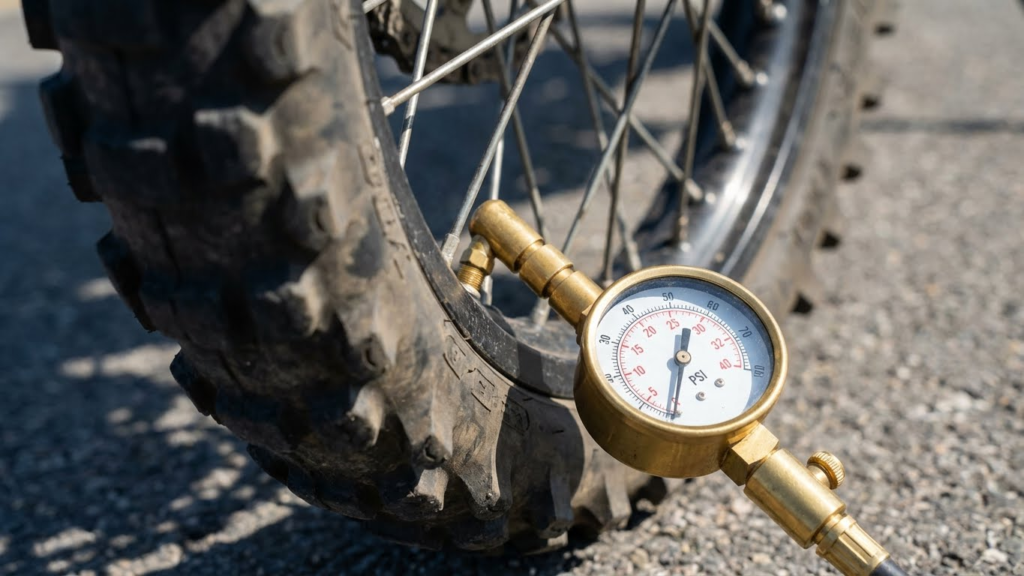
I check tire pressure at least once a week and always when the tires are cold. Cold means the bike has been parked for three hours or more, or I haven’t ridden more than a mile. I use the pressure values listed on the bike’s placard or the owner’s manual, not the number molded into the tire.
I carry a reliable gauge and a small pump or CO2 cartridge on long trips. Underinflation causes extra heat and uneven wear on the shoulders. Overinflation reduces contact patch and makes the center wear faster. If I carry weight or a pillion, I add the recommended pressure for the heavier load.
Regular Maintenance
I visually inspect tires before every ride. I look for cuts, bulges, sidewall cracks, embedded objects, and tread separation. I also check tread depth using a gauge or the tire’s wear bars; if the bars show, I replace the tire.
I keep wheels balanced and aligned and check suspension settings. Worn shocks or wrong alignment make tires wear unevenly. I rotate or replace the rear tire more often than the front when applicable. Finally, I store spare or rarely used bikes upright in a cool, dry place away from sunlight and ozone sources like electric motors or generators.
Choosing the Right Replacement Tires
I pick tires based on the bike and how I ride. Sport bikes need sticky, high-grip tires for cornering. Cruisers and touring bikes benefit from long-wearing tires that handle miles and weight.
Check the manufacturer’s size and load-speed ratings first. I match the exact tire size stamped on the sidewall and never go below the rated load or speed. Incorrect sizing changes handling and can be dangerous.
Think about compound and tread pattern. Softer compounds give more grip but wear faster. Harder compounds last longer but may feel less precise. Tread patterns matter for wet traction and stability; I choose deeper grooves for rainy riding.
Use this quick checklist when buying:
- Confirm size, load, and speed ratings.
- Match tire type to riding style (sport, touring, dual-sport).
- Prefer reputable brands with clear specs.
- Check manufacture date (DOT code) — avoid tires older than five years.
If I’m unsure, I ask a pro or a shop I trust. Proper mounting and correct tire pressure matter as much as the tire choice. I always inspect the tires after installation and during the first few rides to confirm fit and feel.
FAQs
What about age?
I advise replacing tires that are over five years old even if tread looks OK. Rubber hardens and can crack, which cuts grip and safety.
How do I check tread?
Look for wear bars and use a tread depth gauge when you can. If tread is at or below the wear bars, replace the tire.
Can I ride on a tire with small cracks or bulges?
No. I treat any sidewall cracks, cuts, or bulges as reasons to stop riding and replace the tire immediately. Those problems can cause sudden failure.
Does riding style affect lifespan?
Yes. Aggressive riding, heavy loads, and poor roads shorten tire life. I suggest more frequent inspections if you ride hard or carry heavy weight.
How often should I inspect tires?
I check tire pressure and do a quick visual inspection before each ride. I do a deeper inspection monthly or after long trips.
Quick checklist I use:
- Tire age — replace at ~5 years
- Tread depth — check wear bars
- Sidewall condition — no cracks or bulges
- Pressure — set to manufacturer spec
If you’re unsure, I recommend a trusted mechanic or tire shop give a professional look.
Conclusion
I recommend checking tires often and replacing them based on condition, not just age or mileage. I look for tread depth at the wear bars, cracks, bulges, and uneven wear every few rides.
I follow the guideline that many riders use: roughly 5,000–10,000 miles for replacement can apply, but your riding style and tire type change that range. I also treat five years of calendar age as a strong signal to have a professional inspect or replace the tire.
I keep simple maintenance habits: check pressure, inspect visually, and store the bike away from direct sun. These steps help me extend tire life and spot problems early.
If I see any safety warning—loss of handling, rapid air loss, or visible damage—I replace the tire immediately. I never push a suspect tire hoping it lasts a few more miles.
Key actions I take:
- Monitor tread and sidewalls monthly.
- Replace at wear bars or visible damage.
- Get a pro inspection if tire is older than five years.
Following these steps keeps my rides safer and gives me predictable performance.
