You want to stay safe and avoid tickets, and you can do that by spotting signs early, understanding what they tell you, and acting without hesitation. Obey every regulatory sign, follow warning signs that signal danger ahead, and use guide signs to plan turns and lane changes so you keep moving legally and safely.
I will show simple ways to read common signs, react fast in tricky situations, and make obeying signs a habit whether you ride a bike, scooter, or motorcycle. Stick with me and you’ll feel more confident on the road and make smarter choices every time you ride.
Key Takeaways
- Learn to recognize and respond to signs quickly to reduce risk.
- Follow legal signs and warnings to avoid tickets and hazards.
- Build habits that keep you alert and compliant on any ride.
Understanding Road Signs
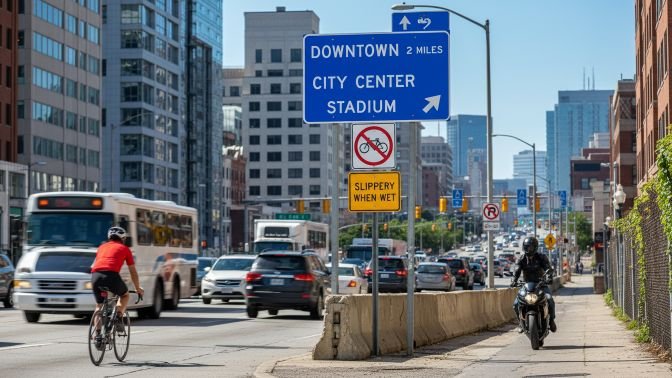
I explain which signs you will see, why each sign exists, and how to read common symbols so you can act quickly and safely. The next parts cover sign types, their purposes, and common symbols you must know.
Types of Road Signs
I sort road signs into three main groups: regulatory, warning, and guide/informational.
- Regulatory signs tell you what you must or must not do. Examples: Stop, Yield, Speed Limit, No Turn, and One Way. Disobeying these signs can lead to tickets or crashes.
- Warning signs alert you to hazards ahead. These often use a diamond shape and yellow color. Examples: curve ahead, slippery when wet, pedestrian crossing, and merging traffic. Slow down and prepare to react when you see them.
- Guide and informational signs give directions and services. These signs are usually green, blue, or brown. Examples: highway exit signs, mile markers, hospital, and gas station signs. They help you navigate without forcing action.
I pay attention to color, shape, and placement because those features tell me what to expect before I read the words.
Purpose of Road Signs
I use road signs to keep traffic orderly and reduce risk. They set legal rules, warn of dangers, and guide travel choices.
Regulatory signs create clear expectations, like where to stop or how fast to drive. When everyone follows them, intersections and lanes flow more predictably.
Warning signs reduce surprise. They give me time to slow, change lanes, or check for pedestrians. That lowers the chance of sudden braking or swerves.
Guide signs help me plan routes and find services quickly. Clear guidance prevents last-second maneuvers that cause collisions.
Overall, signs reduce confusion and align human behavior with safe road design.
Common Sign Symbols
I recognize symbols faster than words when I ride. Knowing a few key symbols improves response time.
- Arrow symbols show direction: left turn, right turn, or straight only.
- Silhouettes indicate users: a pedestrian means crosswalks; a bicycle means a bike lane.
- Speed numbers inside a rectangle or circle give the legal limit.
- Triangle or octagon shapes mean yield or stop; octagon always means stop.
- Diamonds indicate hazards; rectangles give information or rules.
I practice reading signs from a distance so I can act smoothly. If the symbol or shape is unfamiliar, I slow down and scan for supporting text or lights.
Essential Rules for Obeying Road Signs
I focus on clear actions you can take at signs, so you know exactly what to do when you see them. Read each sign, act promptly, and check mirrors and blind spots before changing speed or direction.
Recognizing Mandatory Signs
I treat mandatory signs as orders. These signs often use blue backgrounds or white symbols and tell you actions you must take, such as “Turn Right,” “Keep Left,” or “Cycle Lane.” When I see one, I prepare early: signal, move into the correct lane, and adjust my speed to match the sign’s instruction.
Common examples:
- Keep left/right arrows
- Minimum speed signs
- Lane-only signs for buses or cycles
If a sign conflicts with lane markings or other signs, I follow the sign until directed otherwise. For official shapes and colors, I refer to government guides like the Federal Highway Administration (FHWA) or my local DMV for precise rules and illustrations.
Complying With Warning Signs
Warning signs alert me to hazards ahead. They usually have yellow or orange backgrounds and shapes that signal the type of danger, like sharp curves, merging traffic, or pedestrian crossings. I slow down and scan the road when I see these signs.
I use these steps:
- Reduce speed to a safe level for the hazard.
- Increase my following distance.
- Look for specific cues (e.g., crosswalk markings, construction cones).
I also check for additional plates that give distances or time limits. For technical details on common warning signs and recommended speeds, I consult resources such as the National Highway Traffic Safety Administration (NHTSA).
Respecting Prohibitory Signs
Prohibitory signs tell me what I must not do. They often have red circles or slashes and include “No Entry,” “No U-turn,” and “No Parking.” I treat them as strict limits, not suggestions.
Practical actions I take:
- Stop before entering a “No Entry” zone.
- Avoid turns where U-turns are banned.
- Find legal parking if a “No Parking” sign applies.
Breaking these rules can cause fines or hazards. If a sign is unclear or damaged, I slow down and look for posted regulations or consult official local maps before proceeding.
Interpreting Regulatory Signs
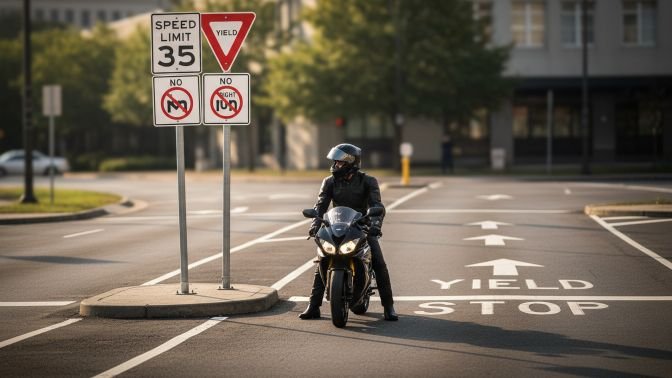
I focus on the rules that control speed, right-of-way, and lane use so riders can follow signs without hesitation. Read the sign shape, color, and text, then act immediately and predictably.
Speed Limits and Restrictions
I treat speed limit signs as the legal maximum unless road or weather conditions require slower speeds. A posted number on a white rectangular sign tells me the maximum speed in mph. I slow down for curves, wet roads, heavy traffic, or when a lower advisory speed is posted on a yellow plaque.
I obey special limits like school zones and work zones. These often show times or flashing lights. When lights flash, I reduce speed to the posted limit and watch for children or workers.
I note restrictions such as minimum speeds, truck speed limits, or advisory speeds. If a sign limits vehicle type or weight, I follow it to avoid fines and hazards. I use cruise control only when conditions are steady and safe.
Yield and Stop Requirements
I stop fully at red octagon stop signs and at flashing red lights. A full stop means my wheels stop and I check left, right, then left again before proceeding when safe. I do not roll through or treat a stop sign like a yield.
I yield at yield signs by slowing and giving the right-of-way to traffic or pedestrians already in the intersection. If no one is coming, I proceed without stopping. At merge signs, I adjust speed to fit safely into traffic.
I treat pedestrian crossings, school crossings, and crosswalk signs as strict warnings. I always stop for pedestrians in crosswalks. I also obey instructions from traffic officers and temporary signs during incidents.
Lane Usage Instructions
I follow lane control signs that tell me which lane to use for turns, through travel, or HOV access. Overhead arrows and pavement markings match; I pick the correct lane before I reach the intersection. If I must change lanes, I signal early and check mirrors and blind spots.
I obey no-turn, no-left-turn, and no-right-turn signs. These signs often include time restrictions; I follow them exactly. For bus lanes, bike lanes, and HOV lanes, I enter only if the sign allows my vehicle type and time of use.
I treat reversible lanes and turn-only lanes with caution. Flashing lane signals and signs may change direction or use. I wait for a clear green arrow or allowed indication before entering those lanes.
Reacting to Informational and Guide Signs
I pay attention to signs that tell me where to go, how far things are, and what services are nearby. I use them to plan lane changes, exits, and stops safely and without last-minute moves.
Following Directional Signs
I look for green or blue directional signs that name highways, exits, and lane uses well before I need to turn or change lanes. I scan them from a distance so I can move into the correct lane early.
If a sign indicates a specific lane for my route, I get into that lane as soon as it is safe. I avoid sudden swerving or last-second braking.
When a sign shows route numbers or arrows, I match those symbols with my map or GPS. If my planned exit is approaching, I check mirrors, signal, and change lanes gradually.
If I miss an exit, I continue to the next safe turnaround. I never stop or reverse on the shoulder.
Reading Distance and Location Signs
I read distance signs to time my actions. A sign that says “City — 3 miles” tells me when to start preparing for turns, exits, or speed changes. I note successive distance panels to judge remaining time and space.
If distances shrink quickly, I move sooner rather than later to avoid last-minute moves.
For service and facility signs (hospital, gas, food), I note the symbol and the distance listed. I plan stops by checking my fuel and fatigue level against the distance shown.
If I need immediate help, I follow the hospital symbol and the nearest-mile marker to guide emergency responders.
Adapting to Challenging Situations
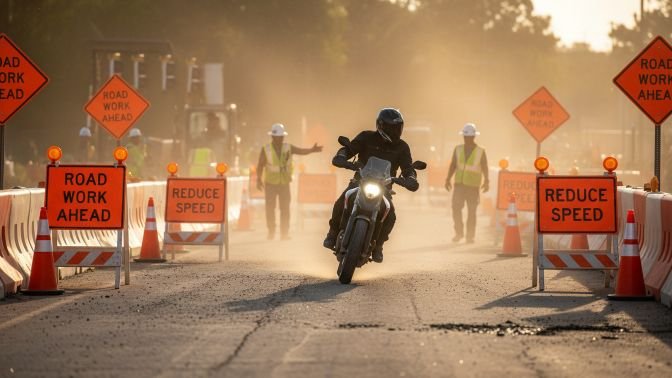
I focus on clear, safe choices when signs are hard to read or when temporary signs change normal traffic patterns. I slow down, make conservative moves, and watch other road users closely.
Navigating Unclear or Obstructed Signs
If a sign is blocked by trees, dirt, or parked vehicles, I slow and create space between my bike and traffic. I use hand signals early and make eye contact with drivers when possible to show my intentions.
When the message is faded or missing, I follow the safest legal option: yield to others, stop if unsure, and obey road markings and signals that I can see. I avoid guessing the sign’s intent or making sudden lane changes.
I report obstructed or damaged signs to local authorities when I can do so safely, using a phone once stopped. That helps fix hazards and keeps others safer.
Adjusting to Temporary Signs and Roadworks
When I meet temporary signs at roadworks, I treat them as priority rules. Temporary speed limits, lane shifts, and detours usually override the usual signs, so I follow them even if they conflict with my normal route.
I position myself away from heavy equipment and avoid narrow squeeze points when possible. If workers direct traffic with signs or gestures, I obey the worker’s instructions over fixed signs.
I ride slower, keep both hands ready to brake, and watch for loose gravel or sudden surface changes near work zones. When a detour sends me off my usual path, I check maps or a safe stopping point to confirm the new route before proceeding.
Safe Practices for All Rider Types
I focus on concrete habits that keep me visible, predictable, and legal. That means using the right signals, positioning myself for safety, and keeping my bike or motorcycle well maintained.
Motorcyclist Considerations
I always obey traffic signals and lane markings, and I ride with the flow of traffic on the right side of the road. I wear DOT-approved helmets and visible gear, and I use headlights even in daylight to increase visibility. I maintain a safe following distance—at least two seconds in good conditions, more when wet or heavy traffic increases risk.
I inspect tires, brakes, lights, and mirrors before every ride. I use both hands on the bars except when signaling. When turning or changing lanes, I tap the brake, use my turn signal, and check mirrors and blind spots. For legal details and helmet standards, I consult resources like the National Highway Traffic Safety Administration (NHTSA) and my state’s DMV.
Cyclist and E-Bike Guidelines
I ride as far right as practicable while keeping a safe line; I move into the lane to avoid hazards or when preparing for a left turn. I use hand signals for turns and stops, and I make eye contact with drivers when possible to confirm they see me. I wear a helmet and bright clothing or reflective gear after dusk.
I keep my bike or e-bike lights working and use a white front light and red rear light at night. I follow local bike laws about riding on sidewalks and bike lanes and lock my bike securely when parked. For signs and local rules, I check resources like my city’s transportation department and cycling advocacy groups for current guidance.
Legal Consequences of Ignoring Road Signs
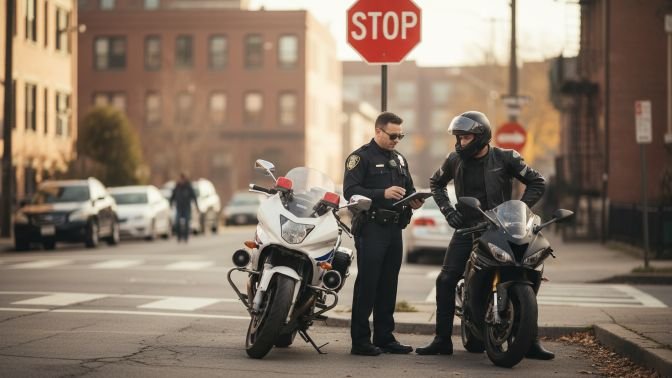
I take road signs seriously because breaking them can cost money, harm others, and affect my driving record. The next paragraphs explain specific penalties and how fault is assigned after a crash.
Fines and Penalties
I can be ticketed and fined if I run a red light, ignore a stop sign, or disobey regulatory signs. Ticket amounts vary by state and city, but common penalties include a fixed fine, court fees, and possible assessment points on my license.
Points on my license often lead to higher insurance rates. Accumulating too many points can trigger license suspension or require a defensive driving class to remove points. In some places, repeated violations become misdemeanors, which bring larger fines and possible jail time.
Local laws may add traffic school as an option to reduce points or dismiss a ticket. I should check my jurisdiction’s exact fines and point system because amounts and consequences differ widely.
Accident Liability
If I ignore a sign and cause a crash, I am usually found at fault or at least partly responsible. Police reports and witness statements often cite sign violations as direct causes, which insurers use to assign liability.
Being at fault affects insurance in two ways: I’ll likely pay higher premiums, and my insurer may deny claims if I acted recklessly. Victims can sue me for medical bills, lost wages, and pain and suffering when my violation led to injury.
If I face criminal charges—such as for reckless driving or vehicular manslaughter—the stakes rise from civil costs to possible fines, probation, or prison. I should document the scene and contact an attorney when a serious injury or death occurs.
Improving Awareness and Compliance
I focus on clear, simple messages that riders can remember and use every day. Short reminders on helmets, bikes, and at trailheads help reinforce key signs and rules.
I encourage regular training and practice rides to build habits. Repetition makes following signs automatic, especially in busy or unfamiliar areas.
I support visible, well-maintained signs and markings. When signs are clean, reflective, and placed where riders naturally look, compliance increases.
I recommend using checklists before rides: lights, brakes, mirror, and knowledge of local signs. A quick routine lowers the chance of missing a sign or signal.
I promote community campaigns and peer modeling. Riders copy safe behavior they see, so groups should show correct responses to signs.
I suggest simple tech aids like route apps that warn about upcoming signs or hazards. These tools supplement, not replace, attention to physical signs.
Bold, short rules work best for memory. Examples:
- Stop at red lights.
- Yield where posted.
- Use bike lanes when available.
I track progress by noting near-misses and rule violations on group rides. That data guides focused reminders and practical training.
FAQs
What signs must I spot first?
I watch for stop, yield, speed limit, and no-entry signs first. These control who goes, how fast, and where you may ride.
How do I follow a speed limit on a bike?
I keep a steady, safe pace that fits the posted limit and road conditions. If the road is wet or crowded, I slow down below the limit.
What if a sign is faded or missing?
I treat faded or missing signs as if the rule still applies and use extra caution. I also report damaged or missing signs to local authorities.
How do I handle right-of-way signs?
I yield when signs or road markings tell me to. If unsure, I stop and make eye contact with drivers before proceeding.
Conclusion
I urge every rider to pay attention to road signs at all times. Signs tell you what to do, where to go, and how fast to travel. Following them keeps you and others safer. I recommend scanning the road ahead and checking signs early. That gives you time to slow, stop, or change lanes without sudden moves. Small adjustments prevent many common crashes.
