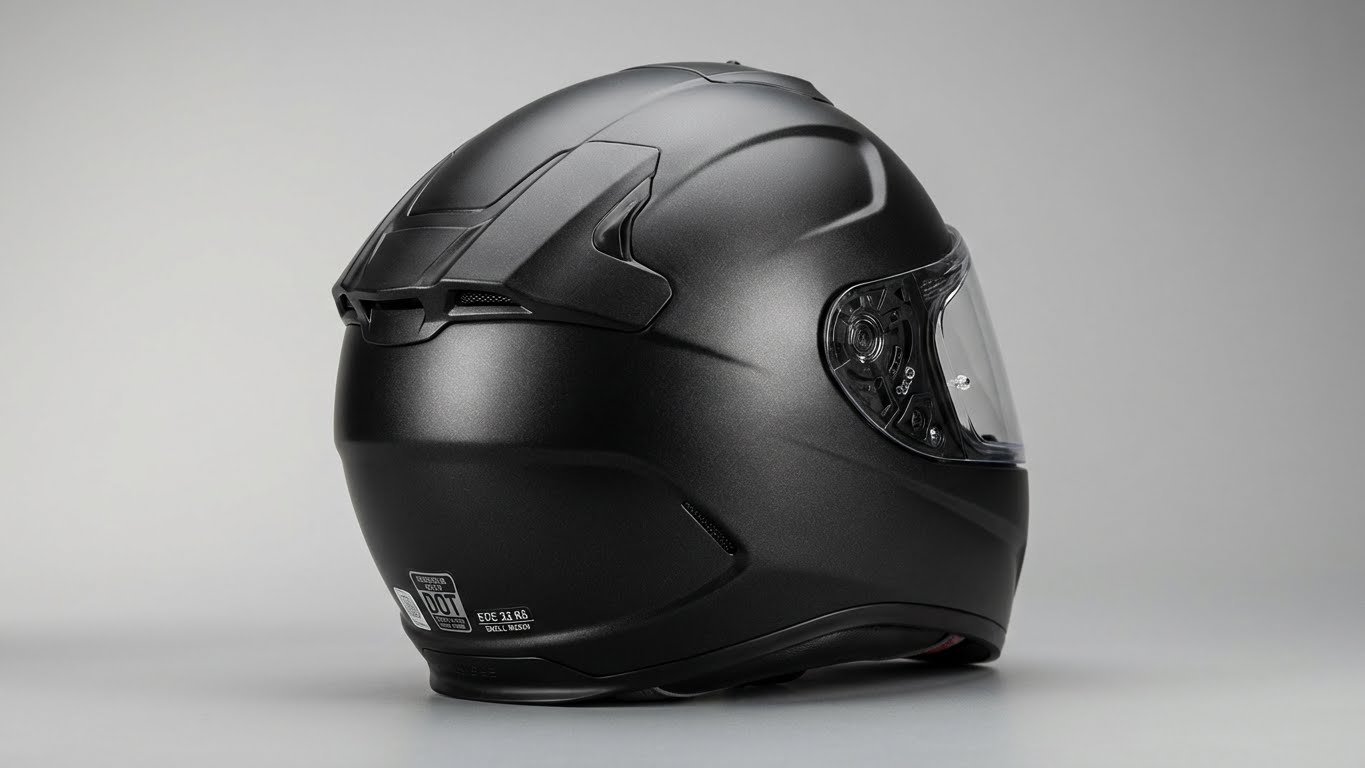
When I check if a motorcycle helmet meets safety standards, I always look for specific certification labels on the helmet. The most important step is to find the DOT sticker, which shows it meets U.S. federal safety rules for impact resistance, penetration, and retention. Some helmets may also carry other certifications like ECE or Snell, which have their own testing methods and offer different levels of protection.
Knowing how to identify these certifications helps me pick a helmet that truly protects me while riding. It’s not just about having a helmet but making sure it is tested and certified to keep me safe in a crash. In this post, I’ll explain how I check for these safety standards and what they mean, so you can be confident in your helmet choice too.
Key Takeways
- Always look for certification labels to ensure helmet safety.
- Different certifications test helmets in various ways for protection.
- Choosing a certified helmet is key to rider safety.
Understanding Motorcycle Helmet Safety Standards
Knowing how helmet safety standards work helps me pick the right helmet for protection. It means understanding how helmets are tested, who sets the rules, and why certification matters when I’m on the road.
What Are Helmet Safety Standards?
Helmet safety standards are sets of rules and tests that helmets must pass. These tests check if a helmet can protect my head in crashes. They look at things like impact resistance, shell strength, and how well the helmet stays on during a crash.
The tests measure impact absorption to reduce head injuries. There are also checks for the helmet’s chin strap and how much force it can handle. These standards ensure a helmet isn’t just comfortable but also safe.
Not all helmets meet the same standards. Some meet basic rules, and others meet higher, stricter ones. Knowing which standard a helmet meets helps me decide how well it will protect me.
Overview of Key Organizations
Several groups set helmet safety standards worldwide. The most important in the U.S. is the Department of Transportation (DOT). Helmets with a DOT sticker have passed minimum safety tests required by law.
In Europe, the Economic Commission for Europe (ECE) sets standards by testing helmets on similar impact and retention rules. Their certification, called ECE 22.05 or 22.06, is widely trusted.
There’s also the Snell Memorial Foundation, a private group that tests helmets to tougher conditions than DOT or ECE. Snell certifications are often found on racing helmets.
Each of these organizations focuses on tests like impact absorption and helmet stability but uses slightly different methods and levels of strictness.
| Organization | Region | Certification | Focus |
|---|---|---|---|
| DOT | USA | FMVSS 218 | Minimum federal safety |
| ECE | Europe | ECE 22.05/22.06 | International safety |
| Snell | Global | Snell M2020, M2025 | Higher impact standards |
Importance of Helmet Certification
I always check for certification before buying a helmet because it proves the helmet meets safety rules. Without certification, I can’t be sure if it will protect me well during an accident.
Certified helmets reduce the risk of head injuries by meeting strict testing criteria. They have passed tests that look at impacts from different angles and speeds.
Certification labels also help me avoid cheap helmets that look good but aren’t tested properly. Buying non-certified helmets is risky because they may fail in crashes.
Certification provides peace of mind. It means I’ve chosen gear that meets industry safety benchmarks. It’s a key step in being a responsible and protected rider.
Popular Motorcycle Helmet Safety Certifications
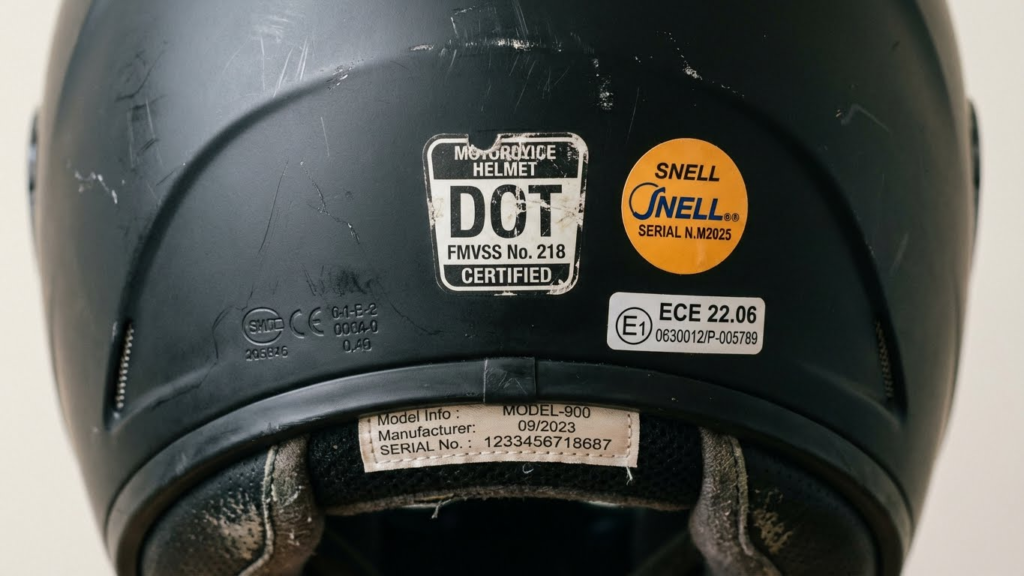
When checking motorcycle helmet safety, it’s important to understand the main certifications that show a helmet has passed safety tests. Each certification uses different methods to test helmets for impact protection, durability, and comfort. Knowing these standards helps you pick a helmet that meets reliable safety rules.
DOT Certification
The DOT certification is the minimum legal safety requirement for helmets sold in the United States. It follows the Federal Motor Vehicle Safety Standard (FMVSS 218). Helmets with this label must protect against impact and penetration while staying on the rider’s head during a crash.
DOT tests check things like impact absorption, penetration resistance, and how well the chinstrap holds. The helmet must also pass tests under different temperatures and speeds. The DOT sticker on the back shows it meets these rules.
You can learn more about DOT standards on the National Highway Traffic Safety Administration (NHTSA) website NHTSA.gov.
ECE Certification
The ECE 22.05 or updated 22.06 standard is commonly used in Europe and many other countries. ECE tests a helmet with several impact points and at higher speeds than DOT does. The certification also checks the helmet’s field of vision and retention system.
ECE helmets must pass practical and scientific tests on materials and design before getting approved. This makes ECE certification one of the most widely accepted and trusted globally.
Manufacturers often submit to ECE testing even for helmets sold in the US, as it can show higher safety levels. For detailed testing info, you can visit the Economic Commission for Europe (ECE) site.
Snell Certification
The Snell Memorial Foundation offers a voluntary but rigorous certification that many riders trust for extra safety. Snell testing goes beyond DOT and ECE by using stricter impact tests. They use more severe impact speeds and multiple hits on the same helmet.
Snell approves helmets only if they pass tests for shock absorption, chinstrap strength, and shell penetration. The focus is on racing helmets, but many street helmets meet Snell standards.
Because Snell is harder to pass, helmets with this rating are seen as high-quality but usually cost more. You can review Snell standards and updates at SnellFoundation.org.
SHARP Rating System
SHARP is a rating program used mainly in the UK that evaluates helmets with a star system from 1 to 5. Unlike certification, SHARP tests real helmets on many impact points to give a performance score.
The star ratings provide a clear way to compare helmets on safety beyond basic certification. For example, a 5-star helmet offers better protection based on real crash simulation data.
SHARP helps riders choose helmets by showing how all certified helmets perform in real-life tests. Their detailed reports are available on the official SHARP website, and they sometimes test helmets wearing the ECE certification.
This mix of certification and ratings guides me to pick helmets that fit both legal standards and proven crash performance.
How to Identify a Certified Motorcycle Helmet
To be sure your helmet will protect you, you need to look closely at its certification. Key details like labels, manufacturer information, and signs of fake certifications help you know if the helmet meets safety rules and standards.
Reading Certification Labels and Stickers
A certified helmet always has a certification label or sticker. For helmets sold in the U.S., look for the DOT label. This sticker is usually on the back of the helmet and shows it meets the Federal Motor Vehicle Safety Standard 218. The DOT label should be permanent and legible.
Some helmets also have other certifications, like Snell or ECE. Snell-certified helmets come with an internal sticker that includes a serial number. You can check this number online to verify its authenticity. ECE certification is common in Europe but sometimes found on helmets sold in the U.S.
Always inspect the label closely. If the sticker looks like it could peel off or is blurry, the helmet might not be genuinely certified. For more details about helmet safety labels, the National Highway Traffic Safety Administration (NHTSA) offers helpful guides.
Inspecting the Manufacturer’s Details
A trustworthy helmet comes from a known brand with clear manufacturer information. You should find a label inside the helmet with the brand name, model, size, and date of manufacture. I check these details because they help confirm the helmet’s authenticity.
Look for quality in materials and construction. Genuine helmets typically have stitching and padding that are neat and well-finished. Poor craftsmanship can hint at a fake or unsafe product.
You can also visit the manufacturer’s official website to compare your helmet’s details with their product listings. This step ensures your helmet matches what the company made and certified.
Recognizing Counterfeit Certifications
Fake helmets may have fake or copied certification labels. One way to spot them is by checking if the label is poorly printed or placed oddly. For example, a DOT sticker that looks too new or is not permanent can be suspicious.
Counterfeit helmets sometimes show multiple certification stickers from different agencies, but these may not match the helmet’s real safety tests. If you see this, research the labels using official certification lists like the Snell Memorial Foundation’s database.
Also, be cautious about helmets sold at suspiciously low prices. Genuine certified helmets cost more because they go through rigorous safety testing.
Understanding these details helps me pick helmets that truly protect in a crash.
Testing Methods for Helmet Safety

To check a helmet’s safety, you need to understand how it performs in impact, how well it stops sharp objects, and how secure the straps hold it in place. These factors make a big difference in protecting your head during a crash.
Impact Absorption Tests
Impact absorption tests measure how well a helmet absorbs energy when it hits something hard. In the lab, testers use a headform fitted with sensors inside the helmet. They drop this helmeted headform onto a flat or curved surface from a specific height and speed.
The sensors record how much force reaches the headform. A good helmet lowers the force to reduce the risk of brain injury. Helmets that meet DOT FMVSS No. 218 standards must pass this test at several impact points and speeds.
Penetration Resistance
Helmets also need to stop sharp objects like rocks or metal from piercing through. During penetration tests, a pointed striker is dropped or pressed onto the helmet shell with force.
The shell and inner liner must absorb the impact without letting the sharp object touch the headform inside. This test ensures the helmet won’t let dangerous items penetrate, which can cause serious injuries.
Retention System Testing
The retention system includes the chin strap and fasteners that keep the helmet securely on your head. During retention tests, the helmet is placed on a headform, and a strong force is applied to the straps.
The test checks that straps do not break or loosen under sudden force, like during a crash. Proper retention prevents the helmet from slipping off or moving too much, which is critical for protection.
Each of these tests plays a key role in making sure a helmet can protect you well on the road.
Helmet Safety Standards by Region
Helmet safety standards vary depending on where you live. Each region sets rules to make sure helmets protect riders well in crashes. These rules focus on things like impact resistance, coverage, and how well a helmet stays on during a crash.
North America
In North America, the U.S. Department of Transportation (DOT) sets the main safety standard for motorcycle helmets. The FMVSS 218 specifies tests helmets must pass, like impact absorption and retention system effectiveness. Every helmet sold in the U.S. must have a DOT certification label proving it meets these standards.
Canada uses a similar system but follows its own rules called the Canadian Motor Vehicle Safety Standard (CMVSS 218). Both places focus on helmets that protect well but also let riders stay comfortable.
The U.S. also has different helmet laws by state. Some states require helmets for all riders, while others only for those under a certain age. You can learn more about these laws at the NHTSA website.
Europe
Europe follows the ECE 22.06 helmet standard, considered stricter in many ways than DOT. It tests helmets on impact resistance, chin strap strength, and coverage. The ECE label must be permanently attached to helmets sold in European countries.
This standard is harmonized across the European Union, making helmet laws more unified. Many helmets sold worldwide meet ECE standards because of how strict and well-recognized they are.
If you buy a helmet in Europe or from European brands, check for the ECE certification mark. The European Commission provides details on these rules and safety tips at their road safety portal.
Asia and Australia
In Asia, standards vary by country, but many use a version of the Japanese JIS or Indian ISI marks. These focus on impact absorption and helmet strength but may have fewer requirements than DOT or ECE.
Australia uses the AS/NZS 1698 standard, which is rigorous. It tests helmets for impact energy absorption, penetration resistance, and retention like other standards. Australian helmets must show this certification.
Because of the wide range of standards, I always check a helmet’s label carefully when buying in Asia or Australia. For global safety compliance, many helmets also carry DOT or ECE marks regardless of local rules.
For detailed info on safety rules across countries, you can visit the Helmet Safety Institute.
Why Motorcycle Helmet Safety Standards Matter
Helmet safety standards set clear rules for how helmets should protect riders. They help prevent serious injuries, ensure helmets meet the law, and give riders confidence in their gear. These standards focus on testing impact resistance, penetration protection, and how well the helmet stays on during a crash.
Reducing Head Injuries
The main goal of helmet safety standards is to reduce head injuries. Helmets must pass tests that check how well they absorb impact. This means the helmet can protect your brain if you fall or crash.
Standards like DOT require helmets to resist penetration and hold firmly on your head during accidents. Without these tests, helmets might fail when you need protection most. I always look for helmets that meet or exceed these standards. It’s vital because head injuries can have serious, long-term effects.
Legal Requirements
In the United States, helmets sold to the public must meet Department of Transportation (DOT) standards. This legal rule ensures every helmet has passed a minimum level of safety testing.
Failing to wear a DOT-certified helmet can lead to fines or other penalties depending on where I ride. Laws may vary by state, but following them is the easiest way to avoid trouble. Sometimes, helmets with extra certifications like ECE or Snell go beyond the law’s minimum safety levels. I find it helpful to know where and when these certifications apply.
Peace of Mind for Riders
Wearing a certified helmet gives me confidence while riding. Knowing my helmet has passed tough safety tests helps me focus on the road instead of worrying about protection.
Seeing labels for DOT or other respected standards shows the helmet met real crash tests, not just marketing claims. This gives peace of mind. I trust these certifications because they are backed by science and strict rules. When choosing a helmet, safety certification is the first factor I consider before style or price.
When to Replace Your Certified Helmet
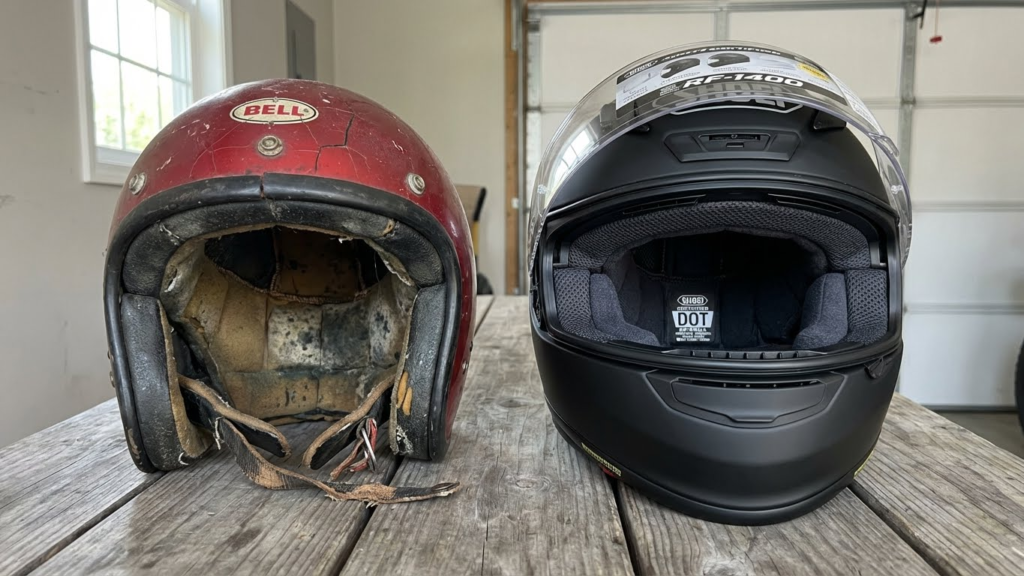
I know it can be hard to decide when it’s time to get a new helmet. You need to look for clear signs that your helmet isn’t as safe as it should be. Also, helmets don’t last forever, so knowing how long yours should be used is key to staying protected.
Signs of Wear or Damage
I always check my helmet carefully for any damage after a crash or impact. Even if there are no visible cracks on the outside, the inside foam can be crushed or weakened. This damage lowers the helmet’s ability to absorb shocks.
Look for:
- Cracks or dents on the shell
- Worn or missing padding
- Broken or loose straps or buckles
- Fading or brittleness from sun exposure
If I notice any of these, I don’t take chances. I replace the helmet right away because a damaged helmet can’t protect my head properly.
Recommended Lifespan
Most certified helmets are designed to last about 5 years. After this time, the materials start to break down, even if they look fine. The inner foam becomes less effective, and the outer shell can weaken.
Some helmets include a manufacture date on a label inside. If yours doesn’t, I suggest keeping a note of when you bought it.
I replace my helmet every 5 years or sooner if there’s a crash or damage. Using a helmet beyond its lifespan means I risk riding with gear that won’t give me the best protection.
Resources for Checking Helmet Certification
When I want to check if a motorcycle helmet meets safety standards, I look for official certification labels on the helmet itself. The most common and important label in the U.S. is the DOT sticker. This shows the helmet meets the Federal Motor Vehicle Safety Standard (FMVSS) No. 218.
Sometimes helmets have other stickers too, like ECE or Snell, which are also recognized safety certifications. These labels prove the helmet has passed different tests for impact resistance and protection.
I also check websites from trusted organizations like the National Highway Traffic Safety Administration (NHTSA). NHTSA explains how to identify helmets that meet safety rules. They offer guides on what labels to look for and how to spot fake certifications.
Below is a quick checklist I use to verify a helmet’s safety certification:
- Check for a DOT sticker on the back of the helmet
- Look for additional certifications like ECE or Snell
- Verify the sticker is genuine and not a fake or peeling label
- Consult official sites like NHTSA for current standards and advice
Using these resources helps me be confident that the helmet I choose meets safety rules designed to protect me in a crash.
FAQS
How do I know if a helmet meets safety standards?
I always look for a clear DOT sticker on the back of the helmet. This means it meets the Federal Motor Vehicle Safety Standard 218 in the U.S. Other certifications like ECE or Snell show that the helmet passed different safety tests too.
Are all certifications the same?
No. Each certification tests helmets differently. DOT focuses on impact resistance and retention. ECE and Snell have additional tests that can be more strict. I try to find a helmet with more than one certification if possible.
Can I trust a helmet without labels?
No. A helmet without the proper certification sticker may not be safe. I avoid helmets without DOT or another recognized label because they might not protect well in a crash.
How often should I replace my helmet?
Manufacturers often recommend replacing helmets every 5 years or after a crash. Materials break down over time, reducing safety. I check the helmet’s age and condition before deciding.
What should I check apart from certifications?
Fit is just as important as certification. A helmet must fit snugly and be properly fastened. I test for comfort and make sure the retention system works well to keep the helmet securely in place.
Here is a quick checklist I use to check helmet safety:
| Step | What to Look For |
|---|---|
| Certification sticker | DOT, ECE, or Snell on helmet |
| Helmet age | Less than 5 years old |
| Fit and comfort | Snug, no pressure points |
| Retention system | Strong chin strap, holds firmly |
| Signs of damage | Cracks or wear on shell |
Conclusion
I always check for recognized safety certifications when choosing a motorcycle helmet. The most common ones are DOT, ECE, and Snell. Each standard tests helmets for impact resistance, penetration, and how well they stay on your head during a crash.
It’s important to look for the certification label or sticker on the helmet. Without it, you cannot be sure the helmet meets basic safety rules. I also pay attention to features like the helmet’s weight, chinstrap strength, and inner padding.
I recommend testing the fit before buying. Even the safest helmet is useless if it doesn’t fit right. You want something snug but still comfortable.
Here’s a quick checklist I use when inspecting helmets:
| What to Check | Why it Matters |
|---|---|
| Certification Label | Proves it passed safety tests |
| Fit and Comfort | Ensures protection during impact |
| Chinstrap Quality | Keeps the helmet secure |
| Weight and Padding | Affects comfort and shock absorption |
Choosing a helmet that meets these standards can reduce your chance of serious head injury. It’s a simple step that adds a lot of protection. I always prioritize helmets with these clear safety marks.
