
Motorcycle gloves get dirty from sweat, dirt, and grime, which can damage them and reduce their protection. To wash motorcycle riding gloves properly, you need to clean them based on their material, like leather or textile, using gentle methods that avoid harm. Taking care of your gloves keeps them comfortable, safe, and lasting longer on the road.
I’ve learned that washing gloves the right way helps keep their grip and protective qualities strong. Whether your gloves are made of leather, textile, or have special features like waterproofing or heating, each type needs a slightly different cleaning approach. Knowing how to prepare, wash, and dry your gloves can make a big difference in their performance and comfort.
Key Takeways
- Clean gloves based on their material to avoid damage.
- Proper washing keeps gloves comfortable and safe.
- Drying and storage affect their long-term durability.
Different Types of Motorcycle Riding Gloves

Motorcycle gloves come in many styles made from different materials. These materials affect how the gloves protect you and how you should clean them. Choosing the right type helps keep your gloves in good shape and working properly.
Leather vs. Textile Gloves
Leather gloves are popular because they offer strong protection and durability. They resist abrasion well, which is important in case of a fall. However, leather can be sensitive to water and harsh cleaning, so you need to clean it gently. Using mild soap and cool water by hand is best. After washing, conditioning the leather keeps it soft and prevents cracking.
Textile gloves, like those made from mesh or synthetic fabrics, are generally lighter and more breathable. They often include waterproof layers and provide better airflow for hot weather. Textile gloves are easier to clean, too — many can be machine washed on a gentle cycle. But you should avoid high heat when drying them to prevent damage.
Waterproof and Weather-Resistant Options
Some gloves are made with waterproof or weather-resistant materials to keep your hands dry in rain or cold. These gloves often feature membranes like Gore-Tex or other synthetic liners. They require careful cleaning because harsh soaps or soaking can damage the waterproof layers.
Usually, spot cleaning or hand washing with mild detergent works best. Avoid machine washing unless the manufacturer says it’s safe. Always fully air dry these gloves to keep the waterproof property intact. Proper care helps maintain their ability to block water and retain warmth.
Impact of Glove Materials on Cleaning Methods
Different materials need specific cleaning methods to avoid damage. For example, leather gloves hate hot water and rough scrubbing. Using a leather conditioner after washing can restore oils lost during cleaning.
Textile gloves tolerate more water and can often handle gentle machine washing, but you should still protect features like armor or reflective patches by removing them if possible. Waterproof gloves should be cleaned gently to keep the membranes working.
In all cases, never use bleach or strong detergents. Let gloves air dry fully, shaping and stuffing them with paper towels if needed to keep their form. Proper cleaning based on material type extends glove life and preserves safety features.
Preparing Your Gloves for Washing
Before cleaning my motorcycle gloves, I follow key steps to ensure they don’t get damaged and the process goes smoothly. This means checking for any problems, understanding the care instructions, and having the right supplies ready.
Inspecting for Damage
The first thing I do is carefully look over my gloves for any tears, holes, or loose stitching. Riding gloves can get damaged during rides, and washing them with existing damage might make things worse. If I find any small rips, I decide whether to repair them first or replace the gloves.
I also check any hard parts, like knuckle armor or plastic inserts. These need to be removed before washing to prevent damage to the gear and the gloves. Taking these steps keeps my gloves in better shape over time and makes cleaning safer.
Reading Manufacturer’s Care Labels
Next, I always find the care label on my gloves and read it closely. Different materials need different cleaning methods. For example, leather gloves require gentle hand washing and special conditioners afterward. Textile or mesh gloves may be safe for machine washing on a gentle cycle, but only with cold water.
Ignoring the manufacturer’s instructions can lead to shrinking, stiffening, or cracking of the gloves. The label often has important advice like water temperature limits, soap types, and drying methods. I make sure to follow these exactly to protect my gear.
Gathering Required Cleaning Supplies
I prepare all the supplies I’ll need before starting. For most gloves, this includes a mild soap or a cleaner made for the glove material. For leather gloves, I use leather-specific soap and conditioner.
I also have soft cloths or sponges for scrubbing, a clean basin or sink for soaking, and paper towels for drying. If I plan to machine wash textile gloves, I’ll use a laundry bag to protect them during the wash. Having everything ready helps keep the washing process quick and controlled.
How to Wash Leather Motorcycle Gloves
Leather gloves need careful cleaning to keep their shape and softness. I focus on gentle hand washing, using the right leather-safe cleaners, and proper drying and conditioning techniques. These steps protect the leather from drying out, cracking, or losing its flexibility.
Hand Washing Techniques
I always start by removing surface dirt with a soft brush or damp cloth. Then, I fill a basin with cool or lukewarm water—hot water can shrink or damage leather. Using my hands, I gently rub the gloves in soapy water. I prefer a mild soap, like liquid castile soap, to avoid harsh chemicals found in regular detergents.
I avoid soaking gloves for too long; just a quick, gentle wash is enough. Rinsing is done carefully with cool water to remove all soap residue. Squeezing the gloves softly helps remove water without wringing or twisting, which can deform the leather. For tough stains, I use a soft cloth dipped in soap rather than scrubbing hard.
Using Leather-Safe Cleaners
Using a cleaner made specifically for leather is important to preserve its natural oils. I usually choose pH-balanced leather cleaners that are designed for gloves and shoes. These cleaners help lift dirt without stripping the leather of necessary moisture.
Application is simple: apply a small amount to a soft cloth and rub it gently over the gloves. Avoid pouring cleaner directly on the leather. If you’re interested, sites like the Leather Care Group provide good product recommendations and techniques.
Once clean, I wipe the gloves with a damp cloth to remove excess cleaner. This step helps maintain leather’s softness and prevents stiffness after drying.
Drying and Conditioning Leather
After washing, I pat the gloves dry with a towel and reshape them to their natural form. I never put leather gloves in direct sunlight or near heat sources like radiators because this dries the leather too fast and causes cracking.
Instead, I leave them to air dry at room temperature, laid flat or on a glove stand. Once dry, I apply a leather conditioner. This step is key to keeping gloves supple and extending their lifespan. Using a small amount, I rub the conditioner evenly and let it absorb for a few hours.
For guidance on conditioners, Leather Honey offers trusted products that work well for motorcycle gloves. Conditioning should be done regularly, especially after cleaning or heavy use.
How to Wash Textile Motorcycle Gloves
Textile motorcycle gloves need gentle care to avoid damage to the fabric and stitching. I focus on cleaning them carefully by hand or, if necessary, using a machine with the right settings and detergents that protect the material.
Manual Washing Steps
I start by filling a basin with lukewarm water. Then, I add a mild detergent made for delicate fabrics. Soaking the gloves for about 10 minutes helps loosen dirt without hurting the fibers.
Next, I gently rub the gloves with my hands, paying attention to dirty areas but avoiding rough scrubbing. This helps keep the fabric and stitching intact. After washing, I rinse them well with clean water to remove all soap.
To dry, I squeeze out water lightly without wringing. Then, I let the gloves air dry completely at room temperature, away from direct sunlight or heaters. This prevents shrinking and fabric damage.
Machine Washing Considerations
If I use a washing machine, I place the gloves inside a mesh laundry bag. This protects them from getting stretched or torn during the wash cycle.
I always choose a cold water, gentle cycle to minimize stress on the fabric. Strong agitation can harm the gloves, so I keep the load small and avoid washing with heavy items.
I skip the dryer. Instead, I remove the gloves right after the cycle ends and air dry them like with hand washing. This keeps their shape and prevents material damage.
Selecting Suitable Detergents
I use detergents labeled for delicate or synthetic fabrics when washing textile gloves. Harsh chemicals or bleach can weaken fibers and ruin color.
Avoid fabric softeners since they can leave residues that affect grip and fabric breathability. A mild laundry soap or a specialized cleaner designed for technical gear works best.
Before washing, I test the detergent on a small, hidden area of the gloves to check for any reaction or color change. This simple step helps me avoid surprises with damage during cleaning.
Special Care for Waterproof and Heated Gloves
Waterproof and heated gloves need careful cleaning to keep their features working well. I always use specific methods that protect waterproof liners from damage and ensure that heated gloves stay safe during washing.
Cleaning Waterproof Liners
When cleaning gloves with waterproof liners, I avoid soaking or using strong detergents. I gently hand wash the exterior using cool water and mild soap. This protects the waterproof membrane inside.
I always remove any removable liners and wash them separately, if possible. After cleaning, I let the gloves air dry slowly, away from direct heat or sunlight. This prevents the waterproof layer from shrinking or cracking.
Avoid machine washing or drying. Those actions can damage the technical fabrics and reduce waterproofing. Light cleaning helps the gloves keep their breathability and water resistance over time.
Washing Heated Gloves Safely
Heated gloves contain wiring and battery parts, so I never fully submerge or machine wash them. First, I disconnect or remove any batteries and follow manufacturer instructions closely.
To clean, I use a damp cloth with mild soap to wipe the glove surfaces. For dirty spots, I rub gently, avoiding excess moisture near electronics.
I let the gloves air dry completely before reconnecting batteries. This careful method prevents water from damaging heating elements and keeps the gloves working properly on cold rides.
Drying and Restoring Motorcycle Riding Gloves
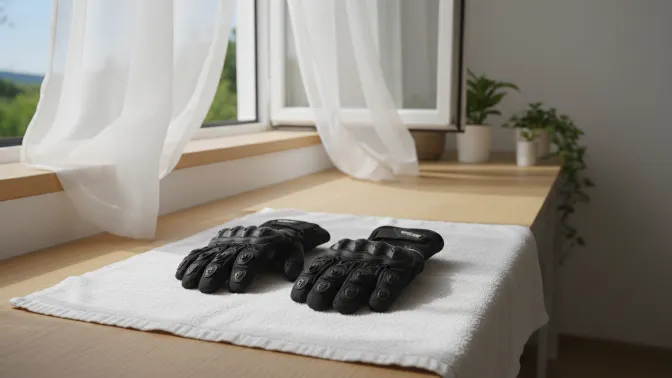
After washing motorcycle gloves, drying and restoring them properly is key to keeping their fit, feel, and durability. It’s important to let them dry fully without using harsh methods that can cause damage. Paying attention to temperature, light exposure, and shape helps maintain their quality.
Proper Air Drying Methods
I always air dry my motorcycle gloves instead of using machines or direct heat. The best way is to lay them out flat on a clean towel in a well-ventilated room. This allows moisture to evaporate slowly and evenly.
For leather gloves, I use a fan to speed up drying but keep them far from heat sources. Textile or mesh gloves can dry a bit faster outdoors if shade is available.
It takes several hours or sometimes a full day to dry gloves completely. Using a dryer or heater risks shrinking, stiffening, or cracking the material. For more on leather glove care, you can check resources like Leather Care Experts for detailed drying tips.
Avoiding Sun and Heat Damage
Direct sunlight and high temperatures are enemies of motorcycle gloves. The sun’s UV rays can cause leather and fabric colors to fade and materials to weaken over time.
I avoid drying my gloves in full sun or near radiators, heaters, or hair dryers. Heat dries gloves too fast and unevenly, which leads to hardening or cracking, especially in leather.
Keeping gloves in a cool, shaded spot preserves their look and function longer. If you’re storing gloves after drying, make sure they are fully dry to prevent mildew but away from any warm spots. More about sun damage prevention can be found at American Leather Chemists Association.
Maintaining Glove Shape During Drying
Retaining the original shape of gloves while drying is essential for comfort and protection. I gently reshape my gloves as they dry, making sure fingers and palms keep their form.
For leather gloves, I stuff the inside with clean paper towels or white tissue. This helps absorb moisture and supports the glove to prevent shrinking or distortion.
Avoid folding or crumpling gloves during drying and storage because this can cause creases that weaken material fibers. Using a glove stand or laying gloves flat is best for shape retention.
These simple steps help my gloves stay ready and comfortable for the next ride.
Long-Term Maintenance and Storage Tips
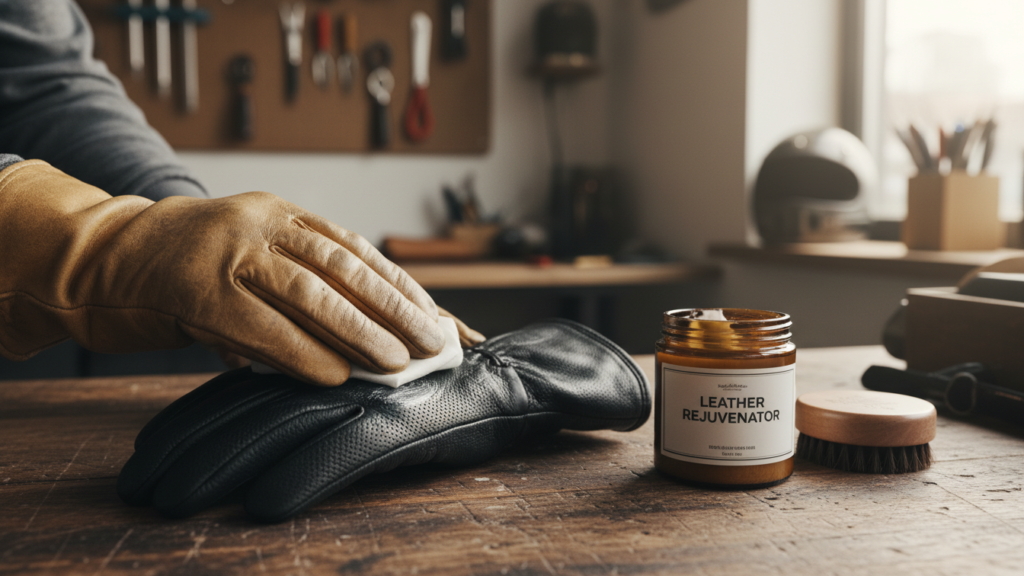
Keeping your motorcycle gloves in good shape means more than just washing them. It involves treating the materials properly and storing them the right way to avoid damage, bad smells, and wear over time.
Conditioning and Protecting Materials
I make sure to condition my gloves regularly, especially when they are leather. Leather can dry out and crack if left untreated. I use a leather conditioner or a special glove care product. After cleaning, I apply a thin, even layer and let it soak in naturally. This helps keep the leather soft and flexible.
For textile or synthetic gloves, I avoid harsh chemicals. Instead, I use mild cleaners and sometimes a fabric protector spray to keep water and dirt away. Conditioning is less about softness here but more about protecting the materials from breaking down. Avoid over-applying products, as this can cause buildup or reduce grip.
Proper Storage to Prevent Odor and Degradation
Storing gloves properly is key to preventing odor and material breakdown. I air out my gloves after every ride to let moisture escape. Moisture causes bacteria that lead to bad smells. When gloves are dry, I store them at room temperature, away from direct sunlight or heat sources.
I avoid cramming gloves into tight bags or pockets. Instead, I place them flat or lightly stuffed with soft paper inside to keep their shape. Using a breathable fabric bag can help stop dust and dirt buildup while allowing airflow. For long-term storage, every few months I reapply conditioner or check for signs of damage to keep my gloves ready for the road.
Common Mistakes to Avoid When Washing Gloves
Washing motorcycle gloves requires care to keep them working well and lasting longer. Using the wrong cleaners, handling heat poorly, or ignoring care labels can all cause damage. Knowing what to avoid helps me protect my gloves effectively.
Using Harsh Chemicals
I avoid harsh chemicals because they can ruin the glove material quickly. Detergents with strong bleach or solvents break down leather, fabric, and stitching. Even some regular laundry detergents are too rough.
Instead, I choose a gentle detergent designed for delicate fabrics. This keeps my gloves clean without stripping oils or weakening fibers. I also skip bleach, fabric softeners, and stain removers unless they’re safe for the glove type.
When I wash, I mix the detergent in water before soaking the gloves. Direct application of soap can leave stains or cause stiffness. This method also helps keep the gloves soft and comfortable on my hands.
Exposing Gloves to Excessive Heat
Heat is one of the fastest ways to damage motorcycle gloves. I never put mine in the dryer or near direct heat like radiators or sunlight. High temperatures warp leather and shrink fabrics, making gloves tight and losing flexibility.
After washing, I air dry my gloves in a shaded, ventilated area. I shape them to their original form while drying to avoid misshaping. This slow drying preserves the glove’s fit and durability.
If liners are inside, I remove them first and dry separately. Liners can dry faster than the gloves and avoid trapping moisture that would cause odor or mildew.
Neglecting Manufacturer Instructions
Ignoring care labels or manufacturer advice can shorten glove life. Gloves vary by material—leather, textile, or mixed—and each needs specific washing steps.
I always check the label for instructions on water temperature, detergent type, and drying. If the manufacturer recommends hand washing only, I don’t risk using a machine.
Following these instructions protects features like waterproof membranes or reinforcements. I also learn if gloves need special treatment, like conditioning leather after washing, enhancing comfort and protection for future rides.
FAQs
How often should I wash my motorcycle gloves?
I recommend washing gloves based on how often you ride. If you ride daily, washing once a week keeps them fresh. For occasional riders, cleaning them every few weeks is enough.
Can I machine wash my gloves?
Most gloves should not go in the washing machine. Machine washing can damage materials like leather or delicate fabrics. I always hand wash my gloves with mild soap and cool water to protect them.
What cleaning products should I use?
I use mild soap or a gentle detergent. Harsh chemicals can ruin glove materials and reduce their lifespan. Avoid bleach or strong cleaners.
How do I dry my gloves after washing?
I never put gloves in a dryer. Instead, I air dry them away from direct sunlight or heat sources. This helps keep the shape and prevents cracking, especially with leather gloves.
What if my gloves have a bad smell?
Bad smell often comes from sweat buildup. Regular washing helps, but you can also try airing them out between rides or using odor-absorbing inserts. I avoid strong sprays that might harm the glove fabric.
Can I wash gloves made from different materials the same way?
No, treatment depends on the glove material. Leather needs special care, often using leather conditioner after washing. Textile gloves usually handle water better but still need gentle cleaning.
Keeping your gloves clean maintains comfort and safety on the road. I find a gentle washing routine works best for all types.
Conclusion
I always take the time to clean my motorcycle gloves carefully because I know it helps them last longer. Using gentle methods keeps the gloves from losing their shape or wearing out too fast.
I find it important to use the right cleaning products based on the glove’s material. For example, leather gloves need special cleaners and conditioners, while fabric gloves might handle mild soap and water better.
Keeping my gloves fresh also makes riding more comfortable and safe. Dirt, sweat, and oils build up over time, which can reduce grip and protection if not cleaned regularly.
I’ve learned that hand washing is usually the best way to avoid damage. Plus, letting gloves air dry completely keeps them from shrinking or becoming stiff.
Here are a few key tips I follow every time:
- Use mild soap or specific cleaners
- Avoid harsh scrubbing or machine washing
- Air dry away from direct heat
- Condition leather gloves after cleaning
By sticking to these simple steps, I make sure my gloves stay ready for every ride while maintaining their durability and comfort.
