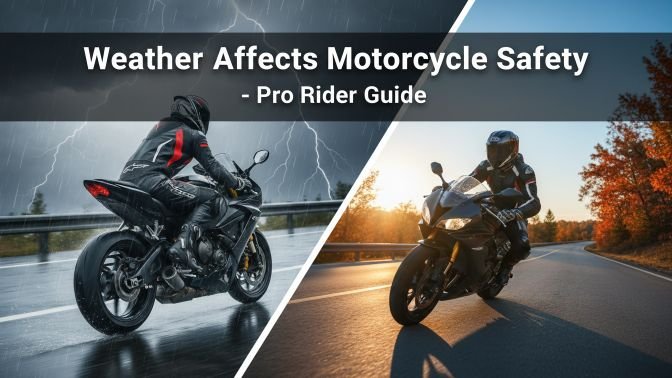
You feel the road change under your tires before you see it. Rain slicks the pavement, wind tugs at your handlebars, and cold makes tires less sticky — all of which change how your bike steers, brakes, and stays upright. Bad weather doesn’t just make riding uncomfortable; it raises your crash risk by reducing traction, lowering visibility, and forcing tougher split-second decisions.
I’ll show you what each type of weather does to your bike and your choices, and give practical steps you can use right away to ride safer. Expect clear tips on gear, bike prep, and when to delay a trip so you can keep control and avoid common hazards.
Key Takeaways
- Weather alters bike handling and traction, so adapt speed and braking.
- Reduced visibility and road hazards demand better defensive riding.
- Proper gear and maintenance cut risk and help you ride safely in changeable conditions.
Impact of Weather on Motorcycle Handling
I focus on how rain, wind, and temperature change the way a bike steers, grips, and reacts. These forces alter traction, balance, and tire reach in ways you can feel instantly.
Traction Loss in Wet Conditions
I watch traction fall the moment the road gets wet. Water reduces contact between tire and pavement, so braking distances grow and cornering forces that once felt safe now cause the bike to slide sooner.
I slow earlier and use smooth throttle and brake inputs to avoid sudden weight shifts. I aim for the tire grooves and cleaner patches of pavement and try to avoid painted lines, metal grates, and puddles that hide oil or deep water.
I check tire tread and pressure before riding in rain. Tread channels water away and preserves grip; worn tires hydroplane much easier. If I must ride hard in wet weather, I cut speed by 20–30% versus dry conditions to keep a margin for mistakes.
Wind Effects on Stability
Crosswinds push a motorcycle off line and can make steering feel twitchy. Gusts at highway speeds can move a bike several feet in seconds, especially when passing large vehicles that create sudden pressure changes.
I keep a firm but relaxed grip and counter-steer smoothly. I shift body position slightly into the wind and reduce lean angle when gusts hit. Riding a bit slower through exposed areas gives me more time to correct.
I also watch for wind effects when overtaking trucks. The wake behind a truck can yank my bike sideways. I plan for that by not lingering beside large vehicles and by accelerating past them decisively when safe.
Temperature-Related Tire Performance
Cold tires feel stiff and offer less grip until they warm. On short rides or after a long stop, I avoid hard cornering or braking until the tires reach operating temperature.
Hot temperatures soften rubber and can increase wear, but extreme heat can also reduce traction if the surface becomes greasy or if tires over-inflate. I adjust pressure toward manufacturer recommendations for the expected load and temperature.
I perform a quick steering and brake test after starting out to sense tire behavior. If I notice reduced feel or slippage, I slow and ride more conservatively until the tires stabilize.
Visibility Challenges in Various Weather Conditions
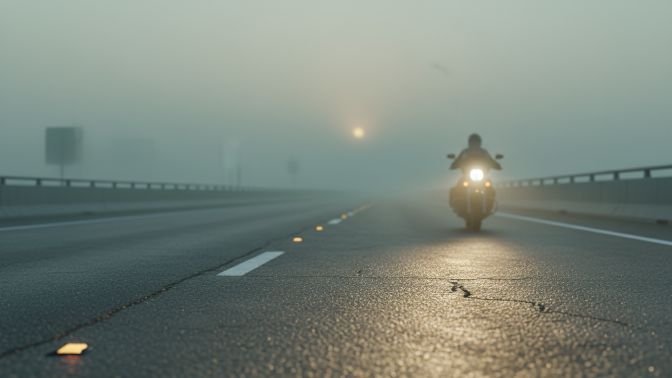
I focus on the main visibility risks riders face and how those risks change with fog, bright light, and precipitation. Each condition cuts reaction time and hides road hazards in different ways, so I explain what to watch for and how to respond.
Fog and Reduced Sight Distance
Fog shrinks how far I can see and masks other road users until they are very close. In dense fog I slow to a speed that lets me stop inside my visible distance, use low beams and fog lights, and avoid high beams that bounce back and worsen glare. I position myself in the lane where other drivers can spot me earlier, and I increase following distance to at least three to four seconds.
I also rely on road edge lines and rumble strips to stay oriented when visual references vanish. If visibility drops below a few hundred feet, I choose to pull off at a safe place and wait; motion increases risk. For local guidance on fog driving techniques, I consult resources like the National Highway Traffic Safety Administration (NHTSA).
Glare from Sunlight or Headlights
Sun glare at sunrise or sunset can blind me for several seconds, making lane markings, signs, and small obstacles hard to see. I use a tinted visor or sunglasses that cut glare but keep contrast, and I lower my speed where the sun sits low on the horizon. When oncoming headlights create glare at night, I avoid looking directly at them and instead use the right lane edge or painted lines as a visual guide.
I clean my visor and helmet shield regularly; scratches and raindrops amplify glare. I also scan farther ahead and soften my focus to catch shadows that reveal hazards. The American Academy of Ophthalmology has practical tips on glare and eye protection I find helpful.
Precipitation Obstructing Vision
Rain, sleet, and snow reduce clarity through helmet shields and spray from other vehicles. In light rain I increase distance and smooth out braking and steering; in heavy rain I slow further and pick lines that avoid deep water and oil patches. I use anti-fog treatments on my shield and a pinlock insert when available to stop internal fogging.
Spray from cars can hide potholes and debris, so I avoid following too closely and move to a lane with less traffic when possible. In freezing rain or sleet, I avoid riding unless I have heated gear and tires rated for cold wet traction. For weather updates and storm warnings, I check the National Weather Service before long rides.
Rider Decision-Making in Adverse Weather
I focus on clear choices that cut risk: pick safer roads, change how I ride, and limit when and how long I go out. Each choice has simple, concrete steps I use to protect myself and my bike.
Route Planning and Weather Forecasting
I check a 48-hour forecast and radar before I leave. I avoid routes with known flood zones, steep descents, or long exposed bridges when wind or heavy rain is expected.
I choose roads with good drainage and more traffic signs and lights. Urban streets with lower speeds and shorter sight lines can be safer than high-speed rural roads in wet conditions.
I map alternate exits and pull-over spots in case conditions worsen. I note nearby gas stations and shelters every 10–20 miles on longer trips.
I use a phone app with live radar and alerts, and I set ETA checkpoints. If forecasted wind gusts exceed 25–30 mph or chance of heavy rain is over 50%, I delay or reroute.
Adjusting Riding Techniques
I lower my speed to increase reaction time and reduce hydroplaning risk. I smooth out throttle, braking, and steering inputs to avoid sudden weight shifts.
I increase following distance to at least 3–4 seconds in rain and even more in fog or cold. I avoid lane-splitting in slippery conditions and keep both hands lightly on the bars for control.
I use proper gear: high-traction tires, clear or anti-fog visor, and layers that keep me dry and warm. I ride in the tire tracks of cars where water is thinner and steer clear of painted lines, metal surfaces, and drain covers.
Timing and Duration of Rides
I prefer midday rides when temperatures are higher and visibility is better. I avoid dawn and dusk in cold months due to black ice risk and low sun glare.
I cut planned trip length when weather turns poor. Shorter rides reduce exposure time and give me more frequent chances to reassess conditions.
If a forecast shows storms arriving within my ride window, I postpone. For essential trips, I break the trip into shorter legs with planned stops every 30–60 minutes to check weather and my gear.
Effects of Extreme Temperatures on Riders
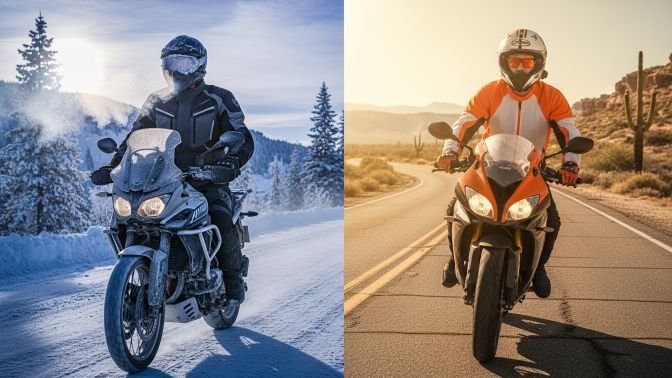
I focus on how very cold or very hot conditions change a rider’s body, mental sharpness, and ability to control the bike. You’ll find clear, practical points about fatigue, reaction time, heat illness, and simple steps to reduce risk.
Cold-Induced Fatigue and Reaction Time
I notice cold makes my muscles stiffer and slower. Fingers and thumbs lose dexterity when gloves get cold or wet, which hinders throttle, clutch, and brake control. Slower hand movements can turn a small obstacle into a major problem.
Cold also drains energy faster. My body diverts blood to vital organs, leaving limbs colder and weaker. That increases fatigue and lowers vigilance, so I miss visual cues like brake lights or road debris.
I use layers, heated grips, and good insulated gloves to keep joints and hands responsive. Warming breaks every hour and checking tire pressures (which drop in cold) help maintain safe control.
Heat-Related Health Risks
High heat makes me sweat, which can lead to dehydration and reduced concentration. Dehydration tightens muscles and blurs focus, so I react slower to sudden hazards.
Heat also raises my heart rate and core temperature. Prolonged riding in high heat risks heat exhaustion or heat stroke, which cause dizziness, fainting, and confusion—dangerous while riding.
I drink water before and during rides, choose ventilated gear, and plan rides for cooler parts of the day. I watch for early signs: heavy sweating, headaches, nausea, or lightheadedness, and stop immediately if they appear.
Protective Gear for Weather Protection
I focus on gear that keeps me dry, keeps my vision clear, and keeps my core warm. The right pieces cut risk and let me control the ride in rain, wind, fog, or cold.
Waterproof Clothing and Accessories
I choose a waterproof outer layer with sealed seams and a breathable membrane like Gore-Tex or a similar laminate. A good jacket and pants with taped seams stop water and let sweat escape. Look for waterproof ratings (in mm) and taped seams rather than just a water-resistant finish.
Boots and gloves matter as much as the jacket. Waterproof boots with gusseted tongues and wrist-sealing cuffs keep water out. Over-gloves or rain mitts add a layer for heavy downpours. I carry a compact waterproof over-suit if I expect long wet rides; it packs small and protects zippers and vents underneath.
Fast closures and adjustable cuffs improve fit and prevent water entry. Reflective panels boost visibility in low light. I inspect zippers, seams, and cuffs before long trips to avoid failures when wet.
Eye Protection and Anti-Fog Solutions
I wear a helmet face shield with an anti-scratch and anti-fog coating or use Pinlock inserts. Pinlock systems create a sealed air pocket that stops fogging far better than coatings alone. For open-face helmets I use a good pair of goggles with foam that seals around my face.
I clean shields with a gentle, non-abrasive cleaner and let them dry fully before rides. Anti-fog sprays or wipes help, but I apply them sparingly and follow manufacturer instructions to avoid damaging coatings. For heavy rain, a hydrophobic treatment causes water to bead and roll off, improving visibility.
I also use clear replacement shields for night or low-light rides. Tinted shields reduce clarity in poor light and can hide hazards. I carry a microfiber cloth to clear droplets quickly at stops.
Insulation for Cold Weather
I layer rather than rely on one bulky coat. A moisture-wicking base layer moves sweat away from skin. An insulating mid-layer like fleece or synthetic fills traps heat. I finish with a windproof, insulated shell to block cold air and retain warmth.
Heated gear—vests, gloves, or grips—adds reliable warmth for long rides. Battery-powered heated layers must fit under my outer shell and have enough runtime for the trip. I prioritize insulated gloves with waterproofing and thermal liners to protect fingers, which lose heat fastest.
I check for adjustable hems and cuffs to seal out drafts. Neck gaiters, balaclavas, and thermal socks close gaps and keep my core temperature stable.
Motorcycle Maintenance for Weather Readiness
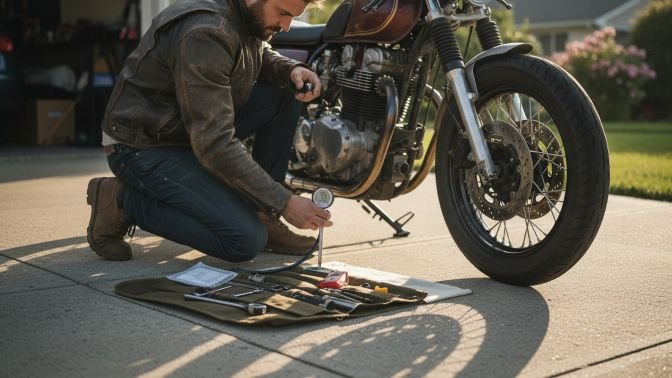
I focus on the parts that change ride safety in different weather: tires, brakes, and the electrical system. Small checks and timely fixes cut risk on wet, cold, or windy days.
Tire Tread and Pressure Checks
I check tire tread depth and look for uneven wear before any cold or wet ride. Use a tread gauge; replace tires under 2/32″ tread or sooner if grooves look shallow for wet grip. Inspect for cracks, bulges, or embedded debris that can fail in low temperatures.
I measure pressure when tires are cold and follow the manufacturer’s recommended psi on the swingarm or owner’s manual. Cold weather lowers tire pressure roughly 1–2 psi per 10°F drop, so adjust accordingly. Proper pressure keeps contact patch consistent and reduces hydroplaning risk.
Carry a portable gauge and small pump to top off pressure. If you frequently ride in mixed weather, choose tires rated for wet grip and cooler temps. For more on tire care, I consult resources like Tire Rack and my motorcycle’s service manual.
Brake System Inspection
I inspect pads, discs, and fluid to keep stopping power predictable in all weather. Measure rotor thickness and look for scoring or warping. Replace pads when lining is under 2–3 mm or shows uneven wear. Wet roads lengthen stopping distances, so full pad life matters.
I check brake fluid level and color; darker fluid means moisture contamination. Change fluid per the manual or every 1–2 years to keep boiling point high in heavy use. Squeeze levers and pedal for firm, consistent feel—sponginess often signals air or degraded fluid.
I also check brake lines for cracks or swelling. Replace rubber lines that feel soft; consider braided stainless lines for firmer lever feedback in cold, wet conditions. Refer to DOT guidance and your owner’s manual when servicing brakes.
Electrical System Reliability
I test battery voltage and charging output before cold snaps, since low temperatures drop cranking power. I aim for a resting voltage above 12.6 V. If voltage falls under load, I recharge or replace the battery to avoid no-starts on cold mornings.
I inspect terminals for corrosion and clean them with a wire brush. Tighten connections and use dielectric grease to prevent moisture intrusion. I check the stator and regulator/rectifier output if I see low charging volts at speed.
I make sure lights and heated gear connectors work reliably. Replace dim bulbs and fix loose wiring to stay visible in rain or fog. For detailed charging system checks, I use my service manual and trusted guides like those from Motorcycle Consumer News.
Road Hazards Resulting from Weather
I focus on the road dangers that come from rain, wind, cold, and heat. Knowing how each hazard forms helps you spot risks and choose safer lines and speeds.
Slippery Surfaces and Hydroplaning
Wet pavement reduces tire grip quickly, especially in the first 10–15 minutes of a rainstorm when oils on the road mix with water. I slow early, reduce lean angle, and avoid sudden braking to keep traction.
Painted lines, metal grates, and manhole covers become slick even at low speeds. I treat them like ice—cross them straight and without heavy braking or acceleration.
Hydroplaning happens when water lifts the tire off the road surface. If I feel the bike float, I ease off the throttle and hold the handlebars steady. I do not brake hard or make abrupt steering inputs. Proper tire tread depth and correct pressure lower hydroplaning risk.
Debris and Potholes
Wind and storms blow branches, gravel, and trash into lanes. I scan farther ahead and signal or warn other riders in my group about visible debris. Avoiding sudden swerves keeps me stable; if I must dodge, I brake first, then steer smoothly.
Potholes form after freeze-thaw cycles or when surfaces erode under heavy rain. Hitting one can bend rims or cause loss of control. I reduce speed in known trouble spots and choose a line that keeps me away from the center of the lane where potholes collect. If avoidance isn’t possible, I stand slightly on the pegs and let the suspension absorb the impact.
Flooded Streets and Standing Water
Standing water can hide deep holes, debris, or washed-out pavement. I never assume depth from the curb; water over the mid-axle of a car can be deep enough to stall or wash a motorcycle. I turn back or find a higher route when depth is uncertain.
Riding through floodwater risks engine intake flooding and loss of electrical systems. If I must pass shallow water, I keep a steady low speed in first gear, avoid revving, and cross perpendicularly. After leaving the water, I test brakes gently and dry them by applying light pressure while moving slowly.
Long-Term Effects of Weather on Motorcycles
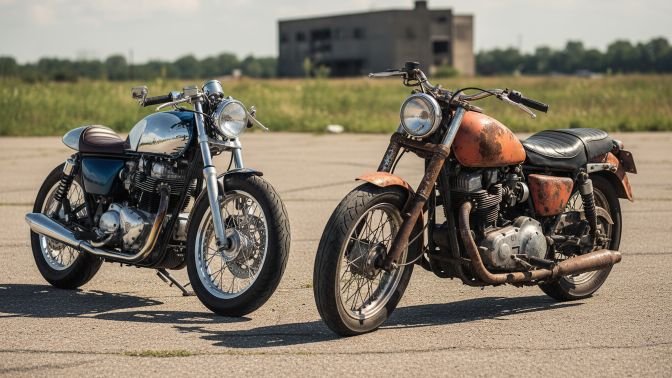
I have seen how repeated exposure to sun, rain, salt, and cold wears a bike down over time. Paint fades and plastic becomes brittle from UV light, which makes the bike look older and can expose metal parts to rust.
Moisture causes the most common long-term damage. Water and road salt lead to corrosion on the frame, exhaust, and fasteners. Electrical connectors and switches can develop poor contacts, causing intermittent faults.
Cold weather affects rubber and fluids. Tires and hoses stiffen, which reduces grip and can cause cracks. Brake fluid and engine oil that are not changed regularly lose effectiveness faster in extreme temperatures.
I recommend these maintenance steps to reduce long-term damage:
- Wash often, especially after salt exposure.
- Wax and protect painted and plastic surfaces from UV.
- Lubricate chains and exposed metal regularly.
- Inspect electrical connectors and reseal or replace corroded parts.
- Store indoors or use a breathable cover when possible.
Small, regular checks prevent many future repairs. I keep a calendar for seasonal maintenance and treat weather-related wear before it becomes serious.
FAQs
How does rain change my riding?
I slow down and increase following distance. Wet roads cut traction, and painted lines and metal surfaces get slick quickly.
Can I ride safely in wind?
I avoid high winds when I can. Gusts can push a bike off line, so I brace, keep a steady throttle, and steer into the wind if needed.
What should I do in fog or low visibility?
I use low-beam lights and reduce speed. I ride where other drivers can see me and stay out of blind spots.
Is it safe to ride in extreme heat or cold?
Heat can cause fatigue and tire pressure changes; cold can reduce tire grip and slow reflexes. I dress for the temperature and check tire pressure more often.
How does snow or ice affect riding?
I treat snow and ice as very dangerous and avoid riding when present. Even thin patches of ice can cause an immediate loss of control.
What gear helps in bad weather?
I wear a full-face helmet, waterproof outer layers, and gloves with good grip. High-visibility gear helps other drivers spot me sooner.
How do I prepare before a ride in variable weather?
I check forecasts, inspect tires and brakes, and plan safer routes. I also set realistic time and distance limits for the conditions.
When should I cancel a ride?
I cancel when conditions feel beyond my skill or the bike’s capability. Heavy rain, ice, whiteout snow, or extreme winds are strong reasons to wait.
Conclusion
I have shown how weather changes the risks and choices every rider faces. Rain, wind, fog, cold, and heat each affect visibility, traction, and comfort in different ways.
I recommend adjusting speed, changing following distance, and choosing safer routes when conditions worsen. Simple gear choices and tire checks make a big difference.
I urge riders to plan before they leave. Check forecasts, delay nonessential trips, and tell someone your route when weather looks bad.
I accept that not every hazard can be avoided, so I emphasize skills and mindset. Practice low-speed control and scanning techniques in safe places so you react better on the road.
I present a short checklist you can use before each ride:
- Check forecast and road conditions.
- Inspect tires, lights, and brakes.
- Wear weather-appropriate layers and high-visibility gear.
- Reduce speed and increase following distance in poor conditions.
I want you to make small, consistent choices that lower risk. Those choices add up and keep more rides safe and enjoyable.
