You commit a traffic violation when you speed, run a red light, weave between lanes, ride without a helmet, or ignore alcohol limits. Most common violations by riders are speeding, running signals or stop signs, unsafe lane use, and riding without proper helmets or documentation. Knowing these now helps you spot risky habits and avoid tickets or crashes.
I’ll show how each violation raises your crash and fine risk, which ones drivers often miss, and quick steps you can take to ride safer and stay legal. Keep reading to learn the simple changes that protect you and your wallet.
Key Takeaways
- Know the top violations that most often lead to crashes and fines.
- Small changes in riding habits cut your legal and safety risk.
- Carry proper gear and documents to avoid many common penalties.
Overview of Common Traffic Violations by Riders
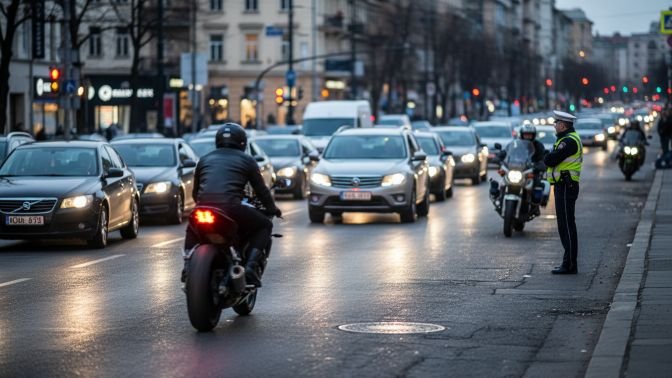
I focus on rider actions that most often cause tickets, crashes, or legal trouble. I cover what counts as a rider-specific violation, how laws treat riders, and how often these violations happen and why they matter.
Defining Rider-Specific Violations
I define rider-specific violations as actions only riders or motorcyclists typically commit. Examples include lane splitting, running a stop sign or red light on a motorcycle, riding without a helmet where laws require one, carrying passengers beyond design limits, and failing to use proper lighting or turn signals.
I list common rider violations with quick notes:
- Lane splitting: riding between lanes of slow or stopped traffic.
- Helmet noncompliance: not wearing a DOT-compliant helmet where required.
- Improper passenger/seat use: carrying extra people or using luggage unsafe ways.
- Signal and light failures: riding without headlights, taillights, or turn signals.
- Speeding and reckless maneuvers: weaving, wheelies, or aggressive lane changes.
I note that some actions, like speeding, apply to all drivers but look different on a motorcycle because of balance and visibility issues.
Legal Framework for Riders
I explain laws vary by state and country. Some places explicitly allow lane splitting; others ban it. Helmet laws also differ: universal helmet laws require all riders to wear helmets, while partial laws apply only to certain ages.
I point out key legal concepts:
- Equipment standards: helmets and lights often must meet specific safety standards (e.g., DOT).
- Licensing and endorsements: many jurisdictions require a motorcycle endorsement or separate license.
- Liability and insurance: riders face specific rules about minimum insurance and helmet use that affect claims.
I emphasize that knowing local statutes matters. I recommend checking state DMV rules or local traffic codes to confirm whether particular rider behaviors are legal where you ride.
Frequency and Impact of Violations
I describe which violations occur most often and why they matter. Speeding and helmet noncompliance rank high in both ticket data and crash reports. Lane splitting shows up frequently in urban areas with heavy congestion.
I cite typical consequences:
- Fines and points on a license, which raise insurance rates.
- Higher crash risk: helmet nonuse increases injury severity; risky maneuvers raise crash odds.
- Legal exposure: violations can affect fault in crashes and civil liability.
I advise riders that small infractions can have big outcomes. Even routine signal failures or carrying an extra passenger can lead to citations and unsafe situations.
Failure to Obey Traffic Signals
I will explain common signal-related violations riders make and why they matter for safety and legal risk. These cover running red lights, skipping full stops at stop signs, and not yielding at marked crosswalks.
Running Red Lights
Running a red light means entering an intersection after the traffic signal turns red. I risk collisions with cross traffic and pedestrians when I do this. Red-light crashes often cause T-bone impacts, which lead to serious injuries because side protection on bikes and scooters is minimal.
Police issue citations and fines for this offense, and in many places cameras record violations. Repeated crashes or tickets can raise insurance costs or lead to license points. To reduce risk, I watch the signal early, slow on amber, and stop if I can’t clear the intersection before red. For more on local rules and penalties, I check state vehicle codes or the National Highway Traffic Safety Administration (https://www.nhtsa.gov).
Ignoring Stop Signs
Failing to stop at a stop sign usually means rolling through without a full stop, or stopping but not yielding the right of way. I must come to a complete stop with the wheels halted, look left-right-left, and proceed only when it’s safe. Rolling stops cause right-of-way mistakes and are common in low-speed neighborhoods, but they still lead to crashes.
Law enforcement treats stop-sign violations as moving violations that can carry fines and points. I use a simple habit: stop fully, scan for cars, bikes, and kids, then move. Local traffic guides explain stop-sign placement and rules; I often reference my state DMV site for details (https://www.dmv.org) when I’m unsure.
Disregarding Pedestrian Crosswalks
Not yielding to pedestrians in marked crosswalks risks severe harm because pedestrians have priority in most jurisdictions. I must slow or stop when people step into crosswalks, even if no signal shows a pedestrian crossing. Ignoring crosswalks often results in citations and civil liability if a person is hit.
I stay extra alert near schools, transit stops, and shopping areas where foot traffic is heavy. Nighttime and poor weather need more caution because visibility drops. To learn about pedestrian right-of-way laws and safety tips, I consult resources like the Centers for Disease Control and Prevention for pedestrian safety data (https://www.cdc.gov).
Speeding and Reckless Riding
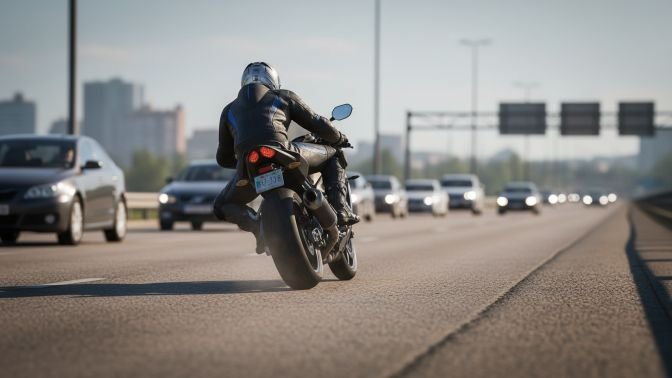
I focus on behaviors that raise crash risk and legal trouble: going past posted limits, sudden lane moves, and cutting through slow traffic. These actions reduce reaction time and make collisions more likely.
Exceeding Speed Limits
I notice most speeding happens on straight roads and highways where riders feel safe. Going even 10–20 mph over the posted limit can turn a recoverable mistake into a crash. Higher speeds increase stopping distance, reduce time to spot hazards, and make helmet protection less effective.
Tickets, points on a license, and higher insurance follow many stops for speeding. Enforcement often targets known hotspots like school zones, construction areas, and sharp curves. I recommend checking posted limits, using cruise control where safe, and slowing before intersections and bends.
Aggressive Lane Changes
I see riders cut across lanes without signaling or checking mirrors. Quick, aggressive lane changes leave little room for nearby vehicles and motorcyclists, especially in heavy traffic. A sudden move into another rider’s path can cause a side-swipe or force an evasive swerve.
Common causes include impatience and trying to gain a few seconds on a commute. To avoid trouble I scan mirrors, signal early, and wait for a full lane’s width before moving. If a driver doesn’t notice you, slow and create space rather than pushing through.
Weaving Through Traffic
I often observe riders weaving between lanes at stop-and-go speeds. This behavior reduces predictability and can put a rider in a blind spot. Cars changing lanes or opening doors are greater hazards when a rider is filtering between vehicles.
Many areas allow lane filtering only under strict rules. I keep speed low when filtering, use clear signals, and avoid passing on the right where drivers expect less traffic. When traffic is dense, staying visible and maintaining a steady line lowers the chance of sudden collisions.
Unsafe Lane Usage
I focus on two key rider mistakes that lead to citations and crashes: moving between lanes incorrectly, and failing to show other road users what you intend to do. Both raise the chance of sudden conflicts and make it hard for drivers to predict your moves.
Improper Lane Splitting
I see riders get cited when they move between stopped or slow vehicles in ways that are unsafe or illegal where they ride. Lane splitting is treated differently by location; in some places it’s allowed with limits, while in others it’s banned. Important factors include speed differential, the space between vehicles, and rider control.
I keep these points in mind: do not split when traffic is moving fast or gaps are too tight. A safe split usually means low speeds (often under 30 mph) and only passing slow or stopped cars with ample room. Police look for reckless weaving, crossing lane markers, or causing drivers to brake suddenly—those are common reasons for a ticket.
Failure to Signal Intentions
I get stopped when I change lanes or turn without signaling, and that applies even for brief lane moves on a motorcycle. Using your turn signal, hand signal, or brake light gives other road users clear notice of your next action.
Signal early—at least 100 feet before a turn in many jurisdictions—and keep the signal on until the maneuver is complete. Failure to signal can be cited as an unsafe lane change if it forces another driver to react. I also watch that my signals are visible: check bulbs, lens cleanliness, and that hand signals are used when electronic signals fail.
Failure to Yield the Right of Way
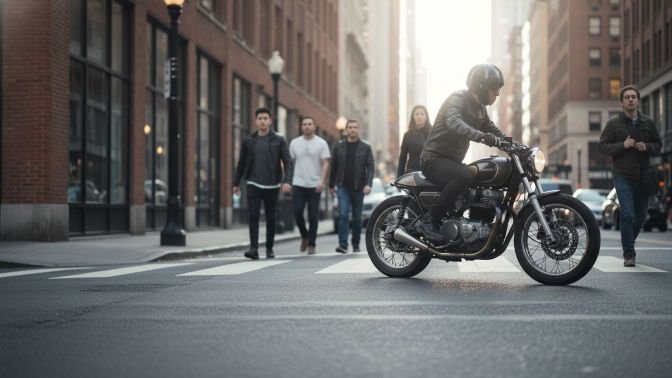
I explain where riders most often fail to yield, who they must yield to, and the common mistakes that cause crashes or tickets.
At Intersections
I watch intersections closely because they are a top spot for right-of-way errors. Riders often roll through stop signs or start moving on a yellow light when another vehicle still has the right of way. At four-way stops, the rule that the vehicle on your right goes first is easy to miss in busy, confusing situations.
I slow and visually confirm other drivers’ intentions before I proceed. I also avoid assuming eye contact means the other driver will yield. Failing to stop fully or taking a turn without checking for cross-traffic can cause T-bone crashes and citations.
To Pedestrians
I always yield to pedestrians in crosswalks and at intersections, even if there is no painted crosswalk. Pedestrians have the right of way when they are on the road I’m entering, and not yielding is a frequent reason for fines and serious injuries.
I reduce speed near schools, bus stops, and busy shopping areas. I look for wheelchair users, children, and people stepping into the street from between parked cars. If a pedestrian is crossing, I stop and wait until they clear the lane before I move.
During Merging
I yield when merging onto highways, changing lanes, or entering from ramps. Riders who speed up and force their way into gaps cause rear-end and side-swipe collisions. Proper merging means matching the flow of traffic and signaling early.
I check mirrors, blind spots, and use my turn signal to tell others my intent. If traffic is tight, I slow and give space rather than weaving aggressively. Law enforcement often cites riders who merge without regard for oncoming vehicles or who cut off another driver.
Riding Under the Influence
Riding while impaired raises crash risk, legal exposure, and severe injuries. I cover how alcohol and other drugs affect control, judgment, and the laws riders face.
Alcohol-Related Violations
I see alcohol as a leading factor in deadly motorcycle crashes. Blood alcohol concentrations (BAC) over legal limits reduce reaction time, balance, and lane control. Many states treat intoxicated riding like driving a car; for motorcycles, that often means DUI charges, license suspension, and heavy fines. Data from traffic safety agencies show a large share of rider fatalities involve alcohol, so enforcement and breath tests at crashes are common.
Practical risks include slower braking, poor cornering, and misjudging distances. I advise avoiding any alcohol before riding and using alternatives like taxis or rideshare. For more on legal limits and penalties, I reference the NHTSA and state traffic safety pages for current rules.
Impairment from Drugs
I treat drug impairment—both illicit and prescription—as equally dangerous. Marijuana, opioids, and sedatives impair coordination and decision making. Stimulants can create risky overconfidence. Tests for drug impairment are more complex than BAC and vary by state, which complicates enforcement and defense.
Medical prescriptions can still cause impairment, so I recommend discussing side effects with a doctor before riding. Law resources like FindLaw and state DMV sites explain how drug-related charges work and possible defenses. If I must ride after medication, I choose not to ride until I know how it affects my balance and reaction time.
Helmet and Safety Gear Non-Compliance
I focus on how riders fail to use helmets and other protective gear, and what that means for safety and legal risk. I point out common mistakes and the immediate consequences riders face on the road.
Not Wearing Required Helmets
I see riders skip helmets for reasons like short trips, heat, or wanting a clear view. That choice raises the chance of head injury in a crash and can lead to fines where helmet laws exist. In states or countries with universal helmet laws, officers can stop riders and issue citations; penalties often include fines and sometimes points on the license.
I note helmet fit and certification matter too. A loose or uncertified helmet gives far less protection than one that meets DOT, ECE, or other recognized standards. I advise checking the helmet label, replacing helmets after impacts, and securing a proper strap every ride to reduce injury risk and legal trouble.
Missing Essential Protective Equipment
I often find riders who wear a helmet but skip other key gear like jackets, gloves, boots, and eye protection. These items cut the severity of road rash, fractures, and limb injuries in crashes. Lack of eye protection can also cause immediate danger from debris and insects, reducing reaction time and increasing crash risk.
Some jurisdictions require specific items—eye protection for open-face helmets or reflective clothing at night. I remind riders that suitable boots, abrasion-resistant jackets, and gloves improve control and reduce long-term injury. Carrying visible, weather-appropriate gear also lowers the chance of enforcement stops and improves overall ride safety.
Distracted and Inattentive Riding
I focus on the rider actions that most often break the law and raise crash risk: looking away from the road, hands off the controls, or mental distraction. The two main issues are using phones and trying to do other tasks while moving.
Using Mobile Devices
I see riders reach for phones to call, text, or check navigation. Even a few seconds looking down at a screen can make a rider miss a stopped vehicle, a pothole, or a red light. Many jurisdictions treat handheld phone use as a traffic offense, and enforcement can include fines and points on the license.
Practical steps I recommend: mount your device before you move, enable voice directions, and set do-not-disturb modes. If you must handle the phone, pull safely off the road, kill the engine, and then use the device. These actions cut distraction and reduce both legal and crash risk.
Multi-Tasking While Riding
I often notice riders eating, adjusting clothing, or fiddling with maps or music while underway. These tasks take one or both hands off the controls and split attention between riding and the secondary task. That loss of control increases crash risk and can form the basis for citations like careless riding.
Simple habits help: secure loose items before starting, preprogram your route, and use glove-friendly controls or helmet-mounted systems. If you must adjust gear or equipment, stop in a safe place. Staying focused on throttle, brakes, and lane position is the best way to avoid violations and stay safe.
Incorrect or Missing Documentation
I focus on the specific documents riders must carry and the common mistakes that lead to stops, fines, or vehicle impoundment. I explain what officers look for and what you can do to avoid problems.
Lack of Valid License
A valid license is the single most important document I keep ready when I ride. If my license is expired, suspended, or not the correct class for the vehicle I operate, an officer can cite me immediately. Many riders forget to renew on time or keep a learner’s permit when they should have a full license.
I also watch for restrictions and endorsements. If I tow, carry passengers for hire, or operate a motorcycle, I must have the right endorsement printed on my license. Not having it can mean fines or being legally barred from riding that vehicle.
Simple habits cut risk: I store my license in a secure, easy-to-reach place and check the expiration date monthly. If my license is about to expire, I start renewal steps well before the deadline.
Expired Registration or Insurance
Driving with expired registration or no proof of insurance is a common stop that can lead to tickets or vehicle impoundment. I check my registration card and insurance card before every trip, especially after any policy renewal or vehicle transfer.
Electronic proof often works, but I verify the state’s rules where I ride. Some areas require a physical card; others accept screenshots. If my registration is expired, I avoid riding until I renew, because fines rise and authorities may tow the vehicle.
When I change insurance providers, I confirm the effective date and keep a current policy number and insurer contact in my phone. This reduces the chance of being unable to show valid coverage during a traffic stop.
Parking and Stopping Infractions
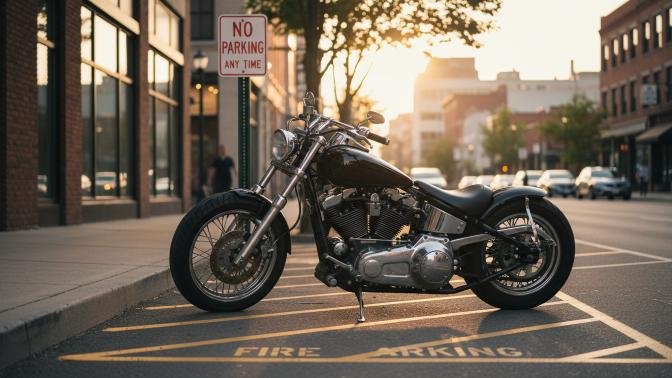
I focus on where riders stop or leave their vehicles and the real problems those choices create for safety, access, and enforcement. The two main issues are parking in restricted zones and blocking routes that others need to use.
Illegal Parking Zones
I see riders often park in places marked by signs, curb colors, or meters that forbid stopping. Common examples include fire lanes, bus stops, loading zones, and spaces reserved for people with disabilities. Parking in these zones can lead to immediate fines, towing, or impoundment.
Pay attention to curb paint (red, yellow, blue) and posted hours for restrictions. If a rider ignores a “no parking” sign curbside during peak hours, they risk a higher fine and added towing fees. For motorcycles and scooters, narrow visibility can make the violation more dangerous near intersections and crosswalks.
I recommend checking local rules before leaving a vehicle. Short-term loading might be allowed in some areas, but only if signs permit it and the engine is off when required.
Blocking Access or Pathways
I encounter many cases where riders stop on sidewalks, bike lanes, or building entrances. This blocks pedestrian flow, creates hazards for people with wheelchairs or strollers, and can violate local obstruction laws. A rider parked across a curb cut or ramp can cause real delays and potential injuries.
Enforcement often treats these as separate offenses from illegal parking zones. Fines can be similar, but liability rises if obstruction causes an accident. I advise leaving at least the full width of the sidewalk and keeping bike lanes clear. When loading, pull fully into a legal spot or use designated bays to avoid blocking paths.
Consequences of Traffic Violations
I explain the main penalties riders face so you know what to expect and how each outcome affects your driving record, finances, and daily life.
Fines and Penalties
I list fines as the most immediate cost after a ticket. Small moving violations like failing to signal or minor speeding often carry fines from $25–$200 depending on local rules. More serious offenses, such as reckless riding or DUI, can cost hundreds to thousands of dollars.
In many places, fines come with additional mandatory fees and court costs. If you miss a payment or a court date, I note that late fees and collections can add up quickly and may lead to a bench warrant in extreme cases.
I recommend checking the exact fine schedule for your state or city. Some jurisdictions offer traffic school or diversion programs that reduce fines in exchange for safe-driving courses.
Points on License
I explain that points are assigned for specific violations and they show up on your driving record. Common points examples: 1–3 points for minor speeding, 4–6 points for reckless driving, and larger point values for DUI.
Points add up over time. If you accumulate a set number within a fixed period (often 12–24 months), you face higher insurance premiums and stricter penalties. Insurers typically raise rates after the first few points, sometimes by 20–50% depending on history.
I advise monitoring your points through your state DMV. Many places let you attend a certified course to remove or reduce points once every few years, but rules vary so confirm eligibility before you enroll.
Possible Suspension
I describe license suspension as a high-impact result that removes your legal right to ride for a set period. Suspension can happen after reaching a points threshold, committing serious violations (DUI, hit-and-run), or failing to pay fines or appear in court.
Suspension lengths vary: brief suspensions (30–90 days) for repeated minor offenses, longer terms (months to years) for serious or repeated major violations. Some jurisdictions also use automatic administrative suspension for certain blood-alcohol levels.
I emphasize the practical consequences: loss of work, family strain, and added reinstatement costs. Reinstating a license often requires paying fees, providing proof of insurance, and sometimes completing education or treatment programs.
Tips for Riders to Avoid Common Violations
I focus on clear, practical steps you can take right now: ride with awareness, know the rules where you ride, and keep your bike in safe working order.
Practicing Defensive Riding
I scan intersections early and keep a safe following distance—at least two seconds in good conditions, more in wet or heavy traffic. I assume drivers may not see me, so I use lane position to stay visible and avoid blind spots. I reduce speed before turns and maintain a steady throttle through corners to prevent instability.
I watch for common crash factors like unsafe speed and improper turns. When passing, I signal early, double-check mirrors, and glance over my shoulder. For more on defensive techniques, I recommend the Motorcycle Safety Foundation’s rider tips: https://www.msf-usa.org.
Staying Informed of Regulations
I check local motorcycle laws regularly because rules for helmets, lane splitting, and speed limits vary by state. I subscribe to my state DMV updates or visit their site to confirm changes before riding into a new area. Knowing specific fines and points for violations helps me make smarter choices on routes and speeds.
I carry a printed copy or saved PDF of key rules when traveling across states. If I ride for work or long distances, I review commercial vehicle or courier regulations that may apply. The National Highway Traffic Safety Administration (NHTSA) provides reliable statistics and guidance.
Routine Equipment Checks
I do a quick pre-ride inspection every time: tires, brakes, lights, signals, and fluid levels. I check tire pressure and tread depth, squeeze front and rear brakes, and confirm headlights and turn signals work. A five-minute check prevents many violations tied to faulty equipment.
I schedule regular maintenance with a trusted shop for chain tension, brake pad wear, and suspension. I keep documentation of recent service and repairs in case a citation questions my bike’s condition. Small neglect can lead to safety risks and avoidable tickets.
FAQs
How can a rider fight a ticket?
I tell people to check the evidence: radar calibration, officer notes, and traffic cameras. Small errors can weaken the case, so gather photos, witness names, and any video.
Do helmet or license laws matter?
Yes. Not wearing a required helmet or riding without the proper license can carry fines and more serious penalties. Rules vary by state, so I recommend checking local laws before you ride
What about distracted or impaired riding?
Using a phone or riding under the influence greatly increases danger and penalties. I advise avoiding devices and never riding after drinking or using drugs.
Can points or fines be removed?
Some states offer traffic school or diversion programs that reduce or remove points. I suggest contacting the court or a lawyer quickly to learn available options.
Who should I contact after a ticket or crash?
I recommend speaking with an attorney experienced in traffic law and, if necessary, your insurance company. Quick action protects your driving record and legal rights.
Conclusion
I focused on the most common violations riders commit, such as speeding, running lights, lane splitting without care, and distracted or impaired riding. These behaviors raise crash risk and often bring legal and financial penalties.
I urge riders to prioritize simple habits: obey speed limits, stop at signals, wear proper gear, and avoid distractions. Small choices reduce the chance of serious injury and keep other road users safer.
I recommend tracking one or two habits to change at a time. For example, start by always checking mirrors and blind spots, then work on eliminating phone use while riding. Step-by-step changes stick better than trying to fix everything at once.
I keep safety practical and specific. Use a checklist before every ride, take a refresher course if you feel rusty, and review local traffic laws regularly. These steps lower risk and make riding more predictable for everyone.
I include a quick reminder table for easy reference:
| Common Violation | Simple Fix |
|---|---|
| Speeding | Set cruise control where possible; watch speedometer often |
| Running signals | Scan intersections early; prepare to stop |
| Distracted riding | Put phone away; use hands-free only for emergencies |
| Impairment | Never ride after drinking or using impairing drugs |
I expect that small, consistent changes will lead to safer rides and fewer violations for most riders.
