
You want a simple, reliable rule to help keep space between you and the vehicle ahead while riding. The two-second rule says you should stay at least two seconds behind the vehicle in front under normal, clear conditions to give yourself time to react. I’ll show you how to use it and when to increase that gap.
I use the two-second rule on every ride because it works at any speed and is easy to check: pick a fixed point the vehicle ahead passes, then count to two before you pass it. I’ll explain how weather, road surfaces, and traffic can change that buffer so you know when to add extra space.
Key Takeaways
- Keep a two-second gap in normal conditions to allow time to react.
- Increase the gap when roads, weather, or traffic reduce safety.
- Use a fixed point and a simple count to check your following distance.
Understanding the Two-Second Rule
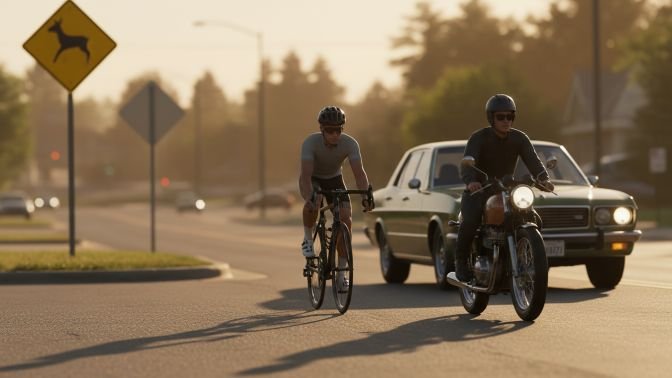
I explain what the rule means, why it matters for safety, and where the idea came from. You will get a clear definition, the main safety goals, and the rule’s roots in road and rider training.
Definition of the Two-Second Rule
I define the two-second rule as a simple timing method riders use to keep a safe gap behind the vehicle ahead.
Pick a fixed point on the road—like a sign or tree—and when the rear of the vehicle ahead passes that point, start counting “one thousand one, one thousand two.” If you pass the same point before you finish two seconds, you are too close.
This rule works at any speed because it measures time, not distance.
It applies to bikes, motorcycles, and cars. It assumes dry, clear conditions and that your brakes and tires are in good condition.
Purpose of the Rule
I use the rule to give myself enough time to see hazards, decide, and brake safely.
Two seconds typically provides enough reaction time to avoid rear-end collisions under normal conditions.
The rule also helps reduce panic braking and sudden lane changes.
Keeping that buffer lowers crash risk and gives space to steer around debris, sudden stops, or slower vehicles.
Origins in Road Safety
I trace the rule back to basic traffic safety studies and driver training practices.
Road-safety educators introduced time-based following distances because people find it easier to judge seconds than exact meters at speed.
Traffic safety campaigns and driving schools adopted the two-second rule as a simple, teachable guideline.
Some authorities recommend three seconds in poor weather or heavy traffic, showing the rule evolved from research and practical training to become a common safety standard.
How to Apply the Two-Second Rule While Riding
I use a simple timing method, pick a fixed point on the road, and adjust for conditions. The steps below show how I measure the gap, when I lengthen it, and mistakes I avoid.
Step-by-Step Guide to Measuring Distance
I pick a fixed roadside marker, like a sign or a stripe, to start measuring. When the rear of the vehicle ahead passes the marker I begin counting, “one thousand one, one thousand two.” If I reach two before my front wheel passes the marker, my gap is safe under ideal conditions.
I maintain a steady pace while counting. If traffic speed changes, I reset the count at the next marker. For highways, I prefer using wider markers such as bridge joints or large signs to avoid miscounting. For more detail on measuring and official guidance, I reference resources from highway safety organizations like the NHTSA.
Adjusting for Different Riding Conditions
I always lengthen the gap when conditions worsen. On wet or icy roads I double or triple the count to at least 4–6 seconds. Visibility issues like rain, fog, or night riding also make me add time.
When carrying a passenger or extra weight, I increase distance because braking distance grows. In heavy traffic I keep a flexible buffer and avoid sudden lane changes. For guidance on braking distances and adjustment factors, I consult safe-riding materials from recognized riding schools and safety sites.
Common Mistakes Riders Make
Riders often miscount by starting too late or using inconsistent markers. I avoid this by choosing clear points and practicing a steady count. Tailgating because you feel pressured is another frequent error. I resist that pressure and slow down to restore a proper gap.
Relying only on speedometers or judging distance by eye leads to underestimating the space needed. I train myself to use the count method, and I watch how other vehicles behave—brake lights and tire spray are early warning signs that I need more distance.
Benefits of Using the Two-Second Rule

I use the two-second rule to keep a clear buffer behind other riders. It helps me judge time gaps, react to hazards, and stay calm while I ride.
Enhancing Reaction Time
I pick a fixed point on the road and count “one-one thousand, two-one thousand” as the rear bike passes that point. That simple timing gives me about two seconds to see and decide before I reach the same spot. Two seconds at typical riding speeds gives me room to spot brake lights, debris, or a sudden turn and begin slowing or steering.
When I need more time—wet roads or heavy traffic—I add extra seconds. This small change increases my braking distance and lowers the chance I must make an abrupt maneuver. The rule trains my eye to measure space in time, not feet, which works at any speed.
Reducing Accidents
Keeping two seconds behind the rider ahead reduces rear-end collisions by preventing tailgating. I avoid close following where I might not see hazards until it’s too late. That gap lets me brake smoothly and keep control during emergency stops.
The rule also helps in traffic flow. I maintain steady speed rather than rapid brake-and-accelerate cycles. Fewer sudden changes lower the risk of chain-reaction crashes. In short, the two-second buffer cuts my exposure to common riding accidents.
Increasing Rider Confidence
Riding with a consistent two-second buffer makes my decisions less rushed. I feel more in control when I can anticipate actions ahead and plan lane changes or braking early. That calmness reduces stress, which improves focus.
Newer riders gain confidence quickly because the rule is easy to learn and apply. I can teach it in minutes and test it on any road. As confidence rises, my posture, throttle control, and hazard scanning all improve, which feeds back into safer riding.
Factors Affecting Safe Following Distance
I focus on the two biggest things that change how much space you should leave: the surface under your tires and the speed and type of vehicle you ride. These two factors tell you whether two seconds is enough or if you must add time.
Weather and Road Conditions
Wet, icy, or oily roads lengthen my stopping distance a lot. I increase the gap when roads are wet or when temperatures drop near freezing. Puddles can hide slick patches; black ice can appear with little warning.
Visibility matters too. Rain, fog, or heavy spray from other vehicles reduce the time I have to see hazards. I rely on clear sightlines to judge gaps, so in low visibility I add at least one to two seconds to my following distance.
Road surface matters: loose gravel, wet leaves, or metal plates cut traction. I slow down on these surfaces and give extra space in case my tires slide. For guidance on stopping distances in poor conditions, I refer to resources like the AAA or government road safety pages.
Speed and Vehicle Type
Higher speed increases stopping distance nonlinearly, so I extend the time gap at highway speeds. At 60 mph my braking distance is many times longer than at 30 mph, so two seconds may be too short. I aim for more seconds as speed rises.
The type and weight of my vehicle matter. Heavier motorcycles, loaded touring bikes, or bikes with pillions take longer to slow. Wind and crosswinds affect tall or lightly loaded bikes, so I add space when wind gusts push me.
Traffic flow and the behavior of vehicles ahead also influence me. If the vehicle ahead is a heavy truck or a motorcycle, I expect different braking patterns and keep extra distance. For official guidance on safe following distances at speed, I check materials from the Federal Motor Carrier Safety Administration (FMCSA).
Limitations and Considerations

I point out the key limits of the two-second rule and legal issues tied to following distance so you can judge when to change your spacing.
Scenarios Where the Rule May Not Be Enough
I use the two-second rule for normal, dry roads and steady speeds, but it can be unsafe in many real situations. Rain, fog, ice, gravel, or a wet road surface increase stopping distance and reduce traction. At higher speeds, like on highways, two seconds may not give me enough time to react to sudden stops. Heavy winds or riding a loaded bike also make braking and control slower.
I add space in these conditions. A common method I use is the four-second rule for bad weather or when I’m carrying a passenger or cargo. In traffic with heavy braking or near construction, I keep even more room and scan farther ahead to spot hazards sooner.
Legal Implications of Following Distance
Laws about following distance vary by place, and following the two-second rule does not guarantee legal safety. Some jurisdictions set a minimum distance in meters or require a specific safe gap based on speed. If I tailgate or don’t leave enough room and a crash happens, I can be cited for careless or reckless riding.
Insurance and police reports often look at whether I maintained a “safe following distance.” I keep documented behavior in mind: use the two- or four-second guideline, adjust for conditions, and be prepared to explain my spacing if needed.
Comparing the Two-Second Rule to Other Safety Guidelines
I explain how the two-second rule stacks up against longer time buffers and legal distance rules. I focus on where the two-second rule works, when to use more time, and how laws may require different minimums.
Three-Second Rule
The three-second rule is like the two-second rule but gives a larger time gap between you and the rider or vehicle ahead. I use it when conditions are less than ideal — rain, low light, heavy traffic, or when towing a trailer. The extra second gives more time to spot hazards and start braking.
To apply it, pick a fixed point on the road. When the vehicle ahead passes that point, count “one-one-thousand, two-one-thousand, three-one-thousand.” If I pass that point before counting to three, I’m too close. The three-second rule reduces collision risk by widening reaction and braking time without being hard to judge while riding.
Minimum Safe Distance Laws
Some places set legal minimum following distances instead of time rules. These laws may specify a fixed distance (meters or feet) or define a time gap like two or three seconds. I always check local rules because compliance can avoid fines and legal liability.
Legal distances can override my choice of time rule. For example, a law might require 50 feet at certain speeds or a three-second gap in poor weather. I treat legal minimums as the baseline and increase my gap beyond that when road or traffic conditions demand extra safety.
FAQs
What exactly is the two-second rule?
I use the two-second rule to judge a safe following distance behind another rider or vehicle. I pick a fixed point on the road and count “one thousand one, one thousand two” after the lead vehicle passes it. If I reach the point before I finish, I’m too close.
Does the rule change with speed?
No. The two-second count works at most speeds because it measures time, not distance. I still increase my gap in heavy traffic or on fast roads.
When should I leave more than two seconds?
I add time for wet, icy, or gravel roads, for poor visibility, and when carrying a passenger or heavy load. I also widen the gap if the rider ahead looks unstable or distracted.
How does it work in group riding?
In staggered formation, I keep one second from the rider beside me and two seconds from the rider directly ahead in my lane. This keeps the group safer while allowing room for quick moves.
Is the two-second rule a law?
No, it’s a safety guideline, not a legal requirement. I treat it as the minimum under ideal conditions and aim for more space when needed.
Any quick tips to remember it?
Pick road signs or trees as markers. Practice counting steadily. I make the rule a habit before every ride
Conclusion
I use the two-second rule as a simple, reliable way to keep space between my bike and the vehicle ahead. It gives me time to see a hazard, decide, and act without overcomplicating judgment by speed or distance.
In good conditions, two seconds usually works well. I increase that buffer in rain, fog, on loose surfaces, or when I feel tired or distracted.
I trust the rule because it is time-based, so it scales with speed. It helps me avoid tailgating and improves my visibility and reaction time.
When riding in heavy traffic or at higher speeds, I aim for three seconds or more. Small changes in road or weather conditions can cut the margin for error, so I adjust proactively.
I practice the rule by picking a fixed point on the road and counting until the vehicle passes it. This makes the rule easy to use and remember under stress.
I recommend using the two-second rule as a minimum standard, then adding space when conditions are worse or when carrying passengers or cargo. It stays useful, simple, and practical for safer riding.
