Motorcycle cops don’t usually wear full face helmets because of practical needs like communication, visibility, and comfort. This guide explains why law enforcement officers prefer open or modular helmets and how these choices impact their job performance and safety.
Key Takeaways
- Helmet type is chosen for practicality: Motorcycle cops prioritize communication and visibility over full-face protection.
- Open or modular helmets offer better communication: They allow officers to use radios and hear surroundings clearly.
- Comfort and heat management are crucial: Full face helmets can be uncomfortable during long shifts.
- Visibility and peripheral vision matter: Open helmets provide a wider field of view, essential for safety and awareness.
- Safety standards still apply: Although not full face, police helmets meet rigorous safety criteria.
- Situational needs influence helmet choice: Officers may switch helmets depending on weather and task.
- Helmet design balances protection with operational efficiency: The goal is to optimize performance without compromising safety.
Why Don’t Motorcycle Cops Wear Full Face Helmets?
If you’ve ever seen a motorcycle cop on duty, you might have noticed they rarely wear full face helmets. Instead, they often choose open-face or modular helmets. But why is that? This guide will explain the reasons behind these helmet choices, focusing on practical, safety, and operational factors. By the end, you’ll understand why full face helmets aren’t always the best option for motorcycle cops.
Understanding Helmet Types and Their Uses
Before diving into why motorcycle cops avoid full face helmets, let’s briefly look at the common types of motorcycle helmets:
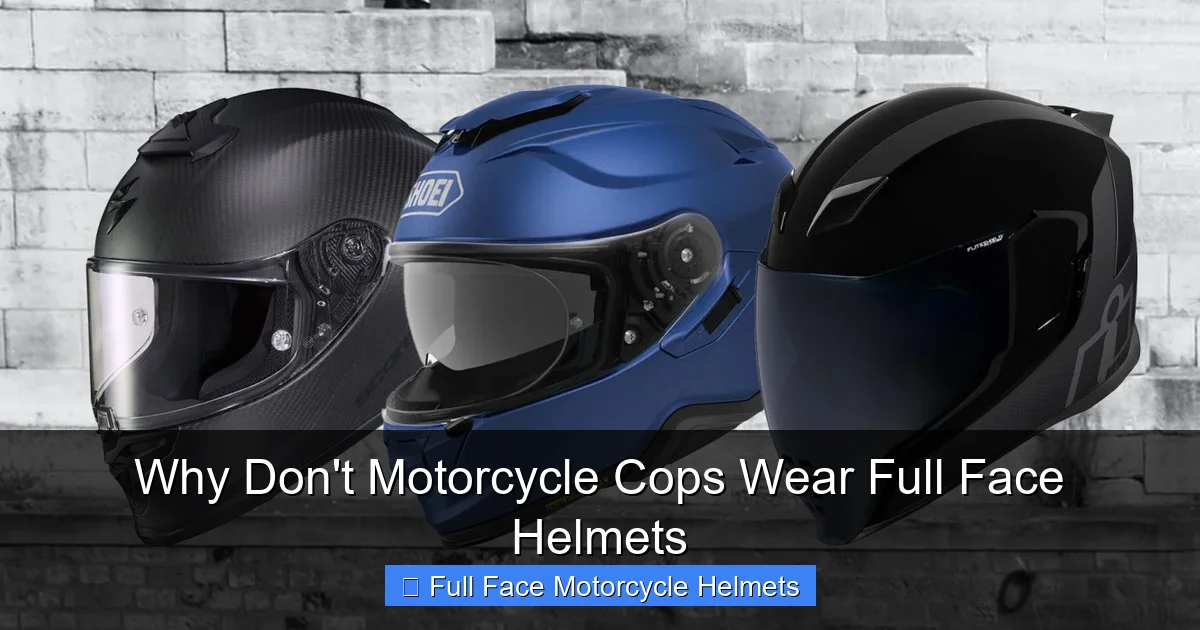
Visual guide about Why Don’t Motorcycle Cops Wear Full Face Helmets
Image source: bestbeginnermotorcycles.com
- Full Face Helmets: Cover the entire head and face, providing maximum protection.
- Modular Helmets: Have a chin bar that flips up, combining features of full face and open helmets.
- Open Face Helmets: Cover the top and sides of the head but leave the face exposed.
- Half Helmets: Cover only the top of the head, offering minimal protection.
Motorcycle cops generally favor modular or open face helmets. Let’s explore why.
Step 1: Communication Needs on the Road
One of the biggest reasons motorcycle cops avoid full face helmets is communication.
Why Communication Matters
Police officers rely on radios and other communication devices to coordinate with dispatch and fellow officers. Clear, quick communication can be a matter of life and death.
How Helmet Choice Affects Communication
Full face helmets can muffle voices and make it harder to hear ambient sounds or radio chatter. Open and modular helmets, on the other hand, allow for better sound transmission and easier use of microphones and earpieces.
Practical Tip:
Many officers use helmets equipped with built-in communication systems designed for open or modular helmets, ensuring hands-free operation and clear audio.
Step 2: Visibility and Awareness
Another critical factor is visibility.
Wide Field of Vision
Full face helmets have a narrower field of view because of the chin bar and visor design. Motorcycle cops need to be aware of their surroundings at all times, including peripheral activity.
Situational Awareness
Open face helmets offer a wider, less obstructed view. This helps officers monitor traffic, pedestrians, and potential threats more effectively.
Example:
When riding through crowded city streets, an officer wearing an open face helmet can spot hazards from the side quicker than someone in a full face helmet.
Step 3: Comfort During Long Shifts
Comfort is essential, especially during extended hours on patrol.
Heat and Ventilation
Full face helmets can trap heat and restrict airflow. This makes them uncomfortable, especially in warm climates or during summer months.
Weight and Fatigue
Full face helmets tend to be heavier. Wearing one for hours can cause neck strain and fatigue, which impacts an officer’s performance.
Practical Tip:
Modular helmets provide a good balance by allowing the officer to flip up the chin bar when stopped, improving ventilation without fully removing the helmet.
Step 4: Safety Standards and Protection
Some might think open face helmets are less safe. However, police helmets meet strict safety standards.
Certified Protection
Whether full face or open face, police helmets are tested to meet DOT, ECE, or Snell standards. These certifications ensure adequate protection in crashes.
Trade-Off Between Protection and Functionality
While full face helmets provide more facial protection, the operational needs of police officers sometimes require a compromise. The helmet must protect but also allow the officer to do the job effectively.
Step 5: Adaptability Based on Situation and Weather
Motorcycle cops often change helmets depending on weather or task.
Hot Weather
In hot weather, an open or modular helmet improves airflow and reduces heat buildup.
Cold or Risky Conditions
In colder weather or high-speed chases, officers might opt for full face or modular helmets with the chin bar down for better protection.
Example:
Some departments issue multiple helmet types so officers can choose what fits their shift.
Troubleshooting Common Concerns
Concern: Open face helmets expose the face to injury.
While this is true, police helmets are designed to offer maximum head protection. Officers also use visors, goggles, or face shields when needed to protect eyes and face.
Concern: Communication devices may not fit all helmet types.
Modern communication systems are designed to be versatile. Officers receive training and gear that integrate well with their preferred helmet styles.
Concern: Weather conditions can be challenging.
Officers adapt by using modular helmets or additional gear like balaclavas and face masks to shield against wind, cold, or rain.
Conclusion
So, why don’t motorcycle cops wear full face helmets? The answer lies in balancing safety, comfort, communication, and visibility. While full face helmets provide maximum protection, they can hinder communication and awareness, which are critical for law enforcement officers. Open face and modular helmets offer a practical compromise, ensuring officers stay safe while performing their duties efficiently. Understanding these factors helps us appreciate the thoughtful choices behind police helmet use.
🎥 Related Video: When the cop does the biker taps. #motorcycle #biker #cops #police #bikers #helmet #hayabusa
📺 Itz Mando
