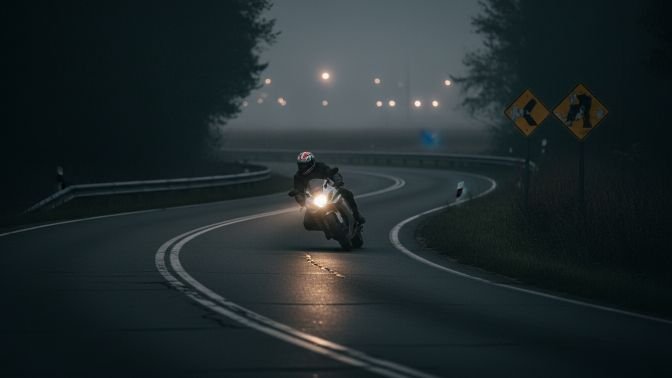
Night riding feels different because your senses and the road change after dark. You see less, other drivers spot you later, and hidden hazards like sharp turns, wet patches, or animals become harder to spot. These factors together make night riding more risky because reduced visibility and tired or impaired drivers cut down reaction time and raise the chance of a crash.
You can lower that risk by adjusting how you ride, upgrading lights and reflectors, choosing familiar routes, and staying alert to weather and fatigue. Keep reading to learn practical steps that help you stay safer on every night ride.
Key Takeaways
- Night conditions limit what you can see and shorten your reaction time.
- Other road users and environmental hazards raise the chance of collisions.
- Proper gear, route choices, and alertness make night riding safer.
Reduced Visibility At Night
Low light makes it harder to see road details, other road users, and hazards. Your eyes, bike lights, and surrounding street lighting all affect how quickly you can spot and react to danger.
Impaired Ability To Spot Hazards
At night your eyes rely more on rods, which detect motion but not fine detail. That lowers your ability to read small hazards like potholes, debris, or lane markings until you are very close.
On a bike, that short detection range cuts your reaction time. You may see a hole only when you are a few feet away, leaving little time to safely steer or brake.
Headlights and bike lights create a bright spot but leave surrounding areas dark. This contrast can hide objects just outside the beam. Glare from oncoming cars also temporarily reduces your ability to see hazards.
Limited Peripheral Vision
Your peripheral vision depends on cones and rods working together; in low light that system weakens. You will notice people, animals, or vehicles moving at the edges of your sight later than you would in daylight.
That delay means a car door opening, a pedestrian stepping into the road, or a cyclist coming from a side street can appear suddenly.
To compensate, you must scan more often and turn your head regularly. Use wider beams or auxiliary lights to improve side visibility, and position yourself where drivers can spot you earlier.
Difficulty In Judging Distances
Depth cues shrink at night. Shadows, reduced texture contrast, and fewer visible reference points make it harder to tell how far away an object is. You may misjudge the speed and distance of oncoming cars or the gap to a parked vehicle.
On a bike, that misjudgment affects passing and crossing decisions. You might start a maneuver thinking you have time when you do not.
Use fixed visual references when possible, like lane lines or reflective signs. Slow down when visibility drops so you give yourself time to assess distance accurately.
Impact Of Poor Lighting Conditions
Streetlight coverage varies widely. Some roads have bright, consistent lighting; others have dark stretches or flickering lamps. Areas with no lighting force you to depend solely on your bike lights, which limits what you can see.
Weather makes lighting worse. Rain, fog, or wet pavement scatter light and create glare or reflections that hide hazards.
Choose routes with reliable lighting when you can. Keep lights clean and fully charged, and add reflective clothing or tape so drivers spot you even when the road lighting fails.
Increased Risks From Other Road Users
Night riding raises the chance that other drivers will behave in ways that put you at risk. Expect reduced attention, poorer visibility of you, and more drivers who are tired or impaired.
Lower Driver Awareness
Drivers notice less at night. Streetlights and signs can hide hazards, and car headlights create glare that masks small objects or a motorcycle’s silhouette. You should assume drivers may not spot you until they are very close.
Watch intersections closely. Many drivers fail to check blind spots or to judge your speed accurately when visibility is low. Maintain a defensive distance and avoid riding in drivers’ blind spots to give them more time to react.
Use bright, well-aimed lights and reflective gear to increase your chance of being seen. Government safety sites like the NHTSA explain how visibility affects crash risk and offer tips you can follow.
Greater Chance Of Being Overlooked
Motorcycles are smaller and sit lower than cars, making them easy to miss at night. Drivers turning left or changing lanes often look for larger vehicles first. You may blend into dark backgrounds or be hidden by glare from other lights.
Position yourself in the lane where drivers are most likely to spot you. Move slightly off the center when negotiating intersections so your outline contrasts with the background. Signal early and use brake light flashes to confirm your intentions.
Consider adding reflective tape and auxiliary lighting. These measures make your silhouette clearer to others and reduce the chance that a driver will simply not see you until it’s too late.
Fatigued Or Impaired Drivers
Night hours see more drowsy and impaired driving. Fatigue slows reaction time and reduces situational awareness. Intoxicated drivers also have worse judgment and may not follow lane markings or traffic signals reliably.
You need to anticipate erratic actions: drifting lanes, late braking, or sudden turns. Give these vehicles extra space and avoid passing on the right where a sleepy or impaired driver might drift into you.
If you ride regularly at night, learn local crash statistics and trends from trusted sources such as traffic safety organizations. That data can help you plan safer routes and choose times to avoid higher concentrations of at-risk drivers.
Hazards Unique To Night Riding
You face three main added dangers at night: sudden loss of sight from bright lights, road hazards that blend into darkness, and animals crossing without warning. Each of these raises reaction time and decision-making demands.
Glare From Oncoming Lights
Oncoming headlights and high beams can temporarily blind you. Bright light forces your pupils to contract, then leaves you seeing poorly in the dark that follows. You may miss lane markers, cyclists, or pedestrians while your vision recovers.
Adjust your line and speed when you spot glare. Look slightly to the right edge of your lane and avoid staring at headlights. Use a clear, properly aimed visor or shield on a motorcycle helmet or anti-glare eyewear for bicycling. If glare is severe, slow down and increase following distance until your vision steadies.
Be cautious of drivers flashing beams or switching between high and low. Those rapid changes can make your eyes jump between bright and dark, increasing the chance you won’t spot hazards. Keep lights properly aligned on your bike or motorcycle to avoid adding to the problem.
Obstacles Hidden By Darkness
Potholes, debris, wet leaves, oil slicks, and uneven pavement hide in shadows. Reduced contrast at night makes small but dangerous obstacles hard to see until you’re very close. Hitting one at speed can cause a crash or loss of control.
Scan the road farther ahead than you normally would and reduce speed on unfamiliar or poorly lit routes. Use strong front lights with a wide beam to reveal surface texture and edges. Ride a little further from the curb where glass and debris collect, but stay aware of traffic when you shift position.
Keep tires properly inflated and check tread for grip. Proper bike or motorcycle suspension and tires that handle wet or rough surfaces give you more margin for correction if you hit a hidden obstacle.
Unexpected Wildlife Activity
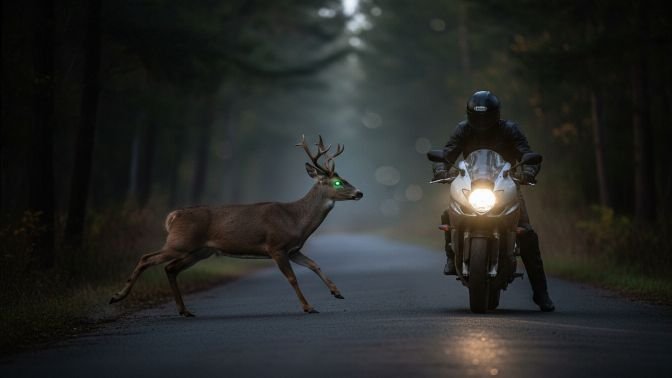
Animals move differently at night and often cross roads without warning. Deer, raccoons, and smaller mammals are more active after dark, and their eyes may reflect your lights unpredictably. A sudden animal on the road leaves you little time to brake or swerve safely.
Scan roadside vegetation and use peripheral vision to spot reflections or movement. Slow your speed in rural areas and places with signs warning of wildlife. If an animal appears suddenly, brake in a straight line rather than swerving; swerving often causes worse crashes with traffic or fixed objects.
If you often ride in wildlife zones, consider adding a horn or bell and using intermittent flash patterns to make you more noticeable. These measures can reduce surprise encounters and give animals time to move away.
Decreased Reaction Time
Your vision and alertness drop at night, so you spot hazards later and take longer to decide what to do. That delay makes small risks turn into big problems quickly.
Reduced Time To Respond To Hazards
Low light cuts how far ahead you can clearly see. Streetlights and headlights often only light a few hundred feet, so you may not notice a patch of gravel, a stopped car, or a pedestrian until you are much closer than during the day. Your eyes also take longer to detect and identify objects in dim light, so recognizing a hazard — such as a cyclist without reflectors — can add fractions of a second to your response.
Glare from oncoming headlights can hide hazards and force you to blink or look away, further costing time. Fatigue and reduced contrast sensitivity at night slow your thinking too. Together, these factors shrink the window you have to react, so you must scan earlier, reduce speed, and increase following distance to give yourself more time.
Longer Stopping Distances
When you react slower, your vehicle travels farther before you even begin braking. At 50 mph, a half-second delay adds about 37 feet of travel before braking starts. Poor visibility can make you misjudge speed and distance, so you may brake later or not hard enough.
Nighttime conditions can also reduce braking effectiveness. Wet roads, cold tires, or uneven light can affect traction and your ability to stop quickly. To reduce stopping distance, slow down, look farther ahead, and be ready to brake smoothly but firmly when you spot a hazard.
Weather Exacerbates Nighttime Dangers
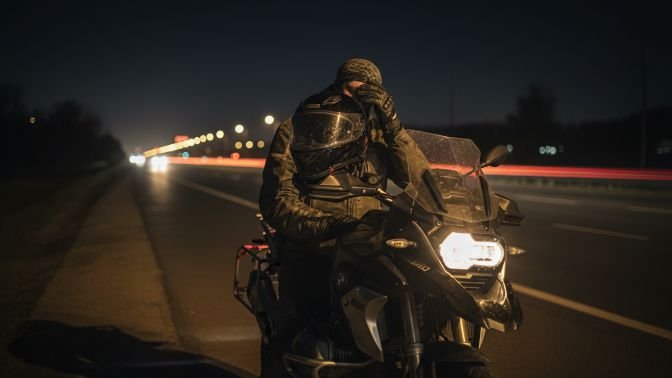
Bad weather cuts your sightlines and slows reactions. Wet roads, spray, and fog all reduce how far you can see and how quickly you can stop, which makes riding after dark riskier.
Rain And Wet Surfaces
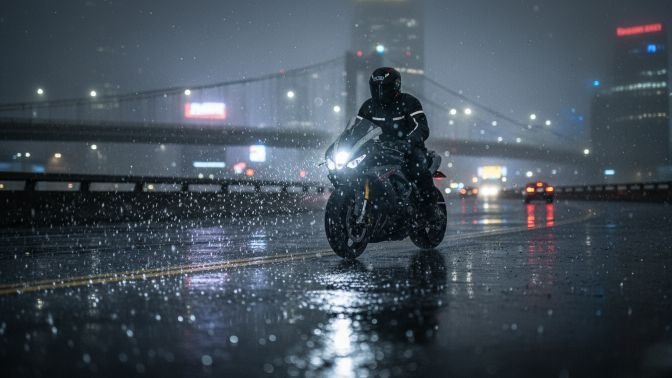
Rain reduces tire grip and increases stopping distance. Water on the road can hide oil, leaves, and potholes that cause skids. You should reduce speed, increase the gap to the vehicle ahead, and avoid sudden braking or sharp turns.
Puddles create hydroplaning risk when tires lose contact with the road. Hydroplaning can happen at highway speeds and even lower when tread depth is low. Check tire pressure and tread before riding at night in wet weather.
Rain also cuts headlight effectiveness. Reflections from wet pavement and oncoming beams cause glare that hides lane markings and obstacles. Use low beams, keep your visor or windshield clear, and slow down more than you would in daytime rain.
Fog And Mist Impact
Fog scatters light and sharply reduces visibility distance. You may see only a few car lengths ahead, making it hard to judge speed and distance. Use low beams or fog lights; high beams make the glare worse.
Moisture on the road lowers traction, like light rain. Surfaces can be slick, especially on bridges and shaded stretches. Ride at a steady, controlled pace and avoid quick lane changes.
Fog can hide stationary hazards and stopped vehicles. Rely on road edge lines and reduce speed enough that you can stop inside your visible distance. If visibility falls below a few car lengths, pull off at a safe, well-lit spot until conditions improve.
Equipment Considerations For Night Riding
You need reliable lights, backups, and visible clothing to reduce risks. Pick gear that suits the roads you ride, how long you ride, and local traffic patterns.
Dependence On Lighting Systems
Your headlight is the main safety device. Choose one with 300–800 lumens for paved roads; use brighter or beam-adjustable lights for mixed or off-road trails. Mount a handlebar light for a steady wide beam and a helmet light to aim where you look. Bring a secondary light or spare battery so you don’t lose forward visibility if one fails.
Taillights must be visible from a distance. Use a flashing rear light plus a steady option for close-range visibility. Check battery charge before every ride and carry a USB power bank or spare batteries. Test beam pattern and run time at night so you know how long your setup will last.
For buying and care, follow manufacturer instructions and inspect mounts, lenses, and wiring each week. Learn to replace batteries and swap lights quickly. Trusted sources like the NHTSA and bike safety sites explain legal light requirements and recommended lumen ranges.
Reflective Gear Limitations
Reflective clothing helps but has limits. Reflective vests, ankle bands, and helmet stickers increase detection from headlights but do little to illuminate hazards in front of you. They work best when drivers already have headlights on and are looking in your direction.
Placement matters: ankle reflectors show motion near the road surface, while a reflective vest highlights your torso. Avoid assuming reflectives make you fully visible; combine them with bright lights and position yourself where drivers can see you early. Wet or dirty surfaces reduce reflectivity, so keep gear clean and replace faded materials.
High-visibility colors (neon yellow/orange) add daytime and dusk visibility, but don’t replace lights at night. For standards and materials guidance, check resources from cycling safety organizations and product tests to ensure reflectives meet retroreflective performance levels.
Environmental Factors Affecting Safety
Road surface condition, lighting, and surrounding land use change how well you can see obstacles and how your bike handles. These factors affect your stopping distance, traction, and how other drivers spot you.
Poorly Maintained Roads
Potholes, uneven seams, loose gravel, and faded lane markings become much harder to spot at night. Your headlight shows a smaller area and hides depth cues, so a pothole that looks shallow in daylight can toss your wheel without warning. Wet patches, oil slicks, and leaves reflect light differently and can look like dry pavement until you hit them.
Ride slower in areas with poor road work. Scan ahead and use high beams when safe to widen your field of view. Keep a firm but relaxed grip and smooth throttle control to avoid sudden reactions if your front tire hits a defect. If you must cross debris, do it at a right angle and reduce speed first.
Urban Versus Rural Area Risks
In cities, glare from streetlights, signs, and parked cars can hide pedestrians and open car doors. Busy intersections and short sightlines behind parked vehicles raise the chance that someone steps into your path. However, urban streets often have more lighting and slower traffic speeds.
On rural roads, you face little lighting, higher speeds, and unexpected hazards like wildlife or slow farm vehicles. Reflective signs and road edges may be sparse, and curves can hide hazards until the last moment. On these roads, reduce speed, use high beam when no one approaches, and watch for animal eyes and unusual silhouettes along the roadside.
Fatigue And Impaired Judgment At Night
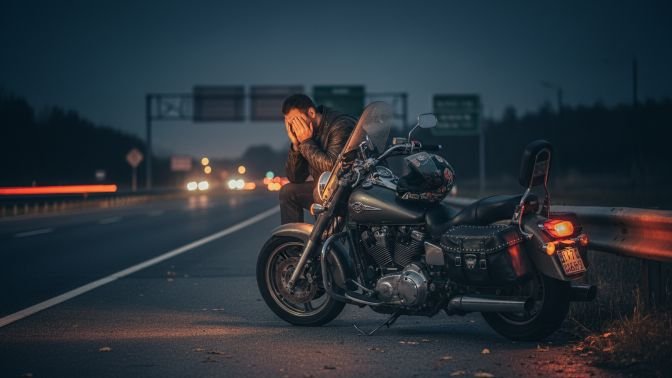
You are more likely to feel very tired at night, especially between midnight and 6 a.m. That tiredness cuts your alertness and slows your reaction time.
When you are sleep-deprived, your decision-making weakens. Simple choices—like judging speed, distance, or whether to change lanes—become harder and slower.
Brief microsleeps can happen without warning. Those seconds of lost attention can make you miss traffic signals, drift out of your lane, or fail to brake in time.
Fatigue affects you like alcohol does. After a night without sleep, your driving performance can match someone over the legal blood-alcohol limit. You may not notice how impaired you are.
Use this checklist to spot warning signs:
- Heavy eyelids or frequent blinking
- Trouble keeping your head up or focus
- Missing exits or following too closely
- Wandering thoughts or repeated yawning
If you see these signs, stop driving. Pull over to a safe place, take a short nap, or switch drivers. Rest and clear thinking reduce risk much more than trying to push through tiredness.
Summary Of Night Riding Risks
You see less at night, and that limits your time to react. Reduced visibility hides hazards like potholes, debris, animals, and cyclists until they are very close.
You face more tired or impaired drivers on the road. That raises the chance someone will not notice you or will behave unpredictably.
Your own fatigue and reduced alertness make mistakes more likely. Long rides or late hours slow your reactions and impair judgment.
Weather and road surfaces can be harder to judge in the dark. Wet roads, fog, and dew cut traction and mask lane markings.
Visibility tools matter. Bright headlights, reflective clothing, and bike lights help, but they do not eliminate risk. Assume other drivers may not see you.
You can reduce risk with habits that improve detection and response:
- Slow down and give yourself more stopping distance.
- Choose well-lit, familiar routes when possible.
- Use high-visibility gear and keep lights clean and working.
- Ride defensively and expect the unexpected.
FAQs
Why is vision worse at night?
Your eyes get less light, so colors and depth are harder to judge. Glare from headlights and streetlights also cuts contrast and hides hazards.
Are more drivers impaired at night?
Yes. Fatigue and alcohol use rise during late hours, which makes other drivers slower to react. You must assume reduced attention from others.
How does weather make night riding riskier?
Fog, rain, and dew are more common at night and reduce traction. Wet roads plus low light makes stopping and turning harder.
Can you reduce risks with gear and lighting?
Yes. Bright headlights, reflective clothing, and extra lighting boost visibility. Keep your headlight and visor clean and aim lights correctly.
Is speed a bigger problem after dark?
Speed stays dangerous because visibility is shorter at night. You should lower speed to match how far you can see and stop safely.
Conclusion
Riding at night raises risks because you can see less, other drivers may be impaired, and fatigue can slow your reactions. These three factors often combine to make hazards harder to spot and avoid.
You can cut your risk by improving visibility. Use bright clothing, reflective gear, and extra lighting. Keep headlights, taillights, and visor clean and in good working order.
Adjust how you ride. Slow down, increase following distance, and choose familiar routes when possible. Anticipate hazards like animals, slick surfaces, and poorly lit turns.
Manage your condition and timing. Avoid late-night rides when you are tired or after drinking. Plan rest stops and ride with a partner if the trip is long or you expect risky conditions.
Treat night riding as a different skill set. Practice low-light scanning, smooth throttle and brake control, and defensive positioning. Small habits reduce your odds of a crash.
Key quick tips:
- Wear reflective gear and bright colors.
- Keep your lights and visor clean.
- Slow down and increase following distance.
- Avoid riding when tired or impaired.
Follow these steps to make your night rides safer and more predictable.
