You already know intersections demand your full attention. Ride like others might make mistakes: slow down, pick a clear lane position, and signal every move so drivers can see and predict you. Always assume others may not yield and position yourself to be seen and to stop safely.
I’ll walk you through when to claim the lane, how to use signals and eye contact, and how to handle tricky spots like multi-lane turns or blind corners. Follow a few simple habits and you’ll cut your risk and ride with more confidence.
Key Takeaways
- Choose a visible, predictable lane position and control your space.
- Signal early and use clear communication to show your intentions.
- Slow down and prepare to stop when right-of-way is uncertain.
Understanding Right-of-Way at Intersections
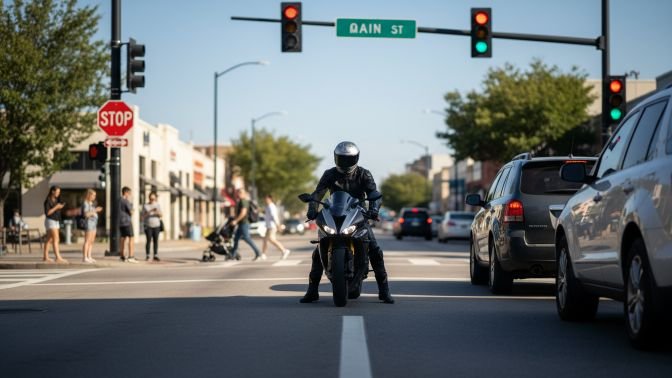
I will explain who should go first, how to tell what kind of intersection you face, and what to do at four-way stops so you can make safe, lawful moves.
Yielding Rules for All Road Users
I treat right-of-way as a duty to yield, not a gift. Pedestrians in crosswalks always get priority; I stop and wait until they clear the lane before I proceed. Bicyclists get the same care as other vehicles when they use the roadway or a marked bike lane.
When merging or changing lanes, I yield to traffic already on the road. That means matching speed, signaling early, and finding a safe gap. If two vehicles arrive at the same time from different directions, the driver on the left yields to the driver on the right.
Emergency vehicles with lights and sirens always have the right-of-way. I pull over and stop if it is safe. School buses stopping to load or unload children also take priority; I stop when their lights and stop arm are active.
Identifying Controlled versus Uncontrolled Intersections
A controlled intersection has traffic signals, stop signs, or yield signs that tell me what to do. I obey the posted device: green means go when safe, red means stop, and a flashing or yellow signal means proceed with caution. At a stop sign, I make a full stop and follow the right-of-way rules before moving.
Uncontrolled intersections have no signs or signals. I slow down and prepare to stop. If vehicles arrive at the same time, I yield to the vehicle on my right. I also watch for hidden hazards like parked cars or trees that block views.
When visibility is limited, I creep forward slowly only when I can see all approaching lanes. If unsure, I wait—patience prevents mistakes.
Navigating Four-Way Stops
At a four-way stop, I come to a complete stop and note the order of arrival. The first vehicle to stop goes first. If two or more vehicles stop at the same time, the vehicle on the right has priority.
If I and the driver across from me both want to go straight, we can go at the same time. If one of us is turning, I yield to oncoming traffic going straight or turning right. I use clear signals and eye contact when safe to confirm intentions.
When confusion arises, I yield and let the other driver go. Being cautious keeps traffic moving and reduces crash risk.
Safe Positioning Approaches for Riders
I focus on three things at intersections: choose the lane spot that gives me the best view, keep myself visible to drivers, and leave escape space. Small moves in lane position and speed can buy time and reduce risk.
Proper Lane Selection
I pick the lane position based on traffic flow and the turn I intend to make. If I plan to go straight, I usually ride in the left or right third of the lane—not directly behind a car—so I can see around vehicles and drivers can see me. For left turns, I move toward the center or slightly left of the lane to keep the turning driver’s sightline on me. For right turns, I stay right but avoid the gutter and parked-car zones where doors or pedestrians can appear.
I also avoid last-second lane changes near intersections. That surprises drivers and closes escape routes. When lanes allow, I use the lane that gives the clearest view of cross traffic and traffic signals, and I signal early so others know my plan.
Maintaining Visibility to Other Drivers
I position myself where drivers expect to see motorcyclists: not hidden in blind spots. I avoid riding directly beside or behind larger vehicles, and I make small lateral movements in the lane to catch a driver’s eye. I ride with my headlight on and use reflective gear or bright clothing in low light.
When approaching intersections, I make eye contact when possible with drivers who might turn across my path. If I can’t get eye contact, I slow and be ready to brake. For official guidance on visibility and defensive riding, I check the Motorcycle Safety Foundation (https://www.msf-usa.org).
Keeping Adequate Space from Vehicles
I keep a safety cushion on all sides. At intersections I leave extra space in front to stop if needed, and more room on the side I might use to escape. If a car pulls up beside me, I back off to avoid being boxed in between vehicles.
When stopped, I avoid tailgating and leave a diagonal escape path toward the curb or shoulder. I also watch for vehicles preparing to turn and give them room—this gives me time to react if they miss seeing me. For tips on spacing and lane placement, I reference state riding guides like Team Oregon (https://oregonda.org) for practical drills and examples.
Signaling and Communication Best Practices
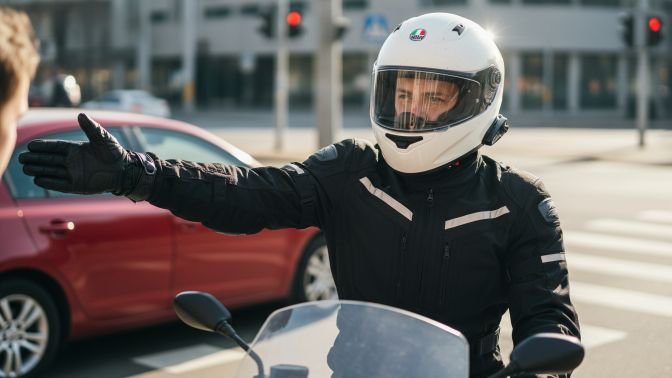
I focus on clear signals, visible position, and confirming that other road users see me. This helps prevent surprises and keeps traffic moving safely through intersections.
Using Hand Signals Clearly
I use standard hand signals so other riders and drivers know my intentions before I turn or stop. For a left turn I extend my left arm straight out. For a right turn I bend my left arm upward at the elbow. For a stop I bend my left arm downward with palm open. I keep the signal visible for several seconds before the action.
I make the motion deliberate and hold it until the turn or stop is complete. I avoid quick flicks or half signals that drivers might miss. If visibility is poor, I combine hand signals with my motorcycle’s turn signals to double up.
When riding in a group, I signal early enough for the rider behind to react. I also check mirrors and glance back to confirm the signal was seen. Practice these motions until they feel natural.
Making Eye Contact with Drivers
I try to make eye contact with drivers when possible to confirm they’ve seen me. At intersections I slow enough to meet a driver’s gaze through their window or mirrors. This reduces guesswork about who has the right of way.
If I can’t see a driver’s eyes, I look for other cues: brake lights, steering input, or head movement. I treat any lack of acknowledgement as a reason to wait. I position my bike where I am most visible—slightly left or right in the lane—so drivers have a clear sight line.
When facing large vehicles or trucks, I give extra space and wait for a clear signal from the driver. I use hand signals and vehicle lights together to reinforce my intent and confirm mutual awareness.
Awareness of Traffic Signals and Signs
I watch traffic signals and signs closely so I can make safe moves at intersections. I use clear signals, slow down early, and position myself where drivers can see me.
Obeying Signal Changes
I stop fully at red lights and wait behind the line or crosswalk until the light turns green. If a signal does not detect my bike, I wait for a safe gap or use a crosswalk as a pedestrian where allowed.
When a light turns yellow, I decide quickly: if I can stop safely, I stop; if stopping would cause a hazard, I proceed with caution. I never speed up to beat a red light.
I treat flashing signals as special cases. A flashing red means stop and go when clear. A flashing yellow means slow and watch for cross traffic. I always scan left and right before entering the intersection, even on green.
Recognizing Stop and Yield Signs
I come to a complete stop at stop signs, placing my bike so I can see oncoming traffic. I check left, right, and then left again before moving. At four-way stops, I follow the first-come, first-served rule and use eye contact or hand signals to confirm others’ intentions.
At yield signs, I slow and be ready to stop if traffic has the right of way. I merge smoothly into gaps and do not assume drivers will yield without clear signs. When visibility is poor, I take extra space and make myself visible with lights or reflective gear.
Navigating Complex Intersection Scenarios
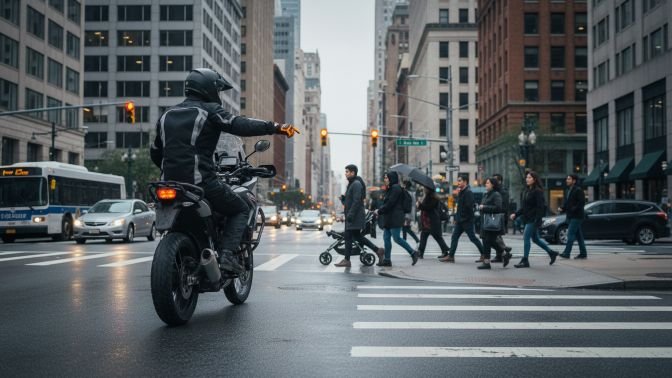
I focus on clear actions: where to position my bike, when to signal, and how to read other road users. I stay visible, predict movements, and pick the safest lane early.
Turning Safely at Intersections
I signal well before I turn and keep my signal on until the turn is complete. For right turns, I move into the rightmost lane or the bike lane when safe, check my mirrors, and look over my shoulder for traffic or cyclists before I merge. For left turns, I use a protected turn lane if one exists. If there is no protected lane, I either make a two-stage left (pulling up to the crosswalk, then waiting for a gap to complete the turn) or move into the center left-turn lane only when clear.
I reduce speed before the turn and keep both hands on the bars until I need to shift. I watch for pedestrians in crosswalks and for vehicles running lights. If visibility is poor, I wait for a bigger gap and avoid quick, sharp steering that could cause a loss of control.
Handling Multi-Lane Crossings
I choose the correct lane early and hold that lane through the intersection. If I need to cross multiple lanes, I don’t weave; I move over lane by lane when safe, using mirrors and shoulder checks each time. On wide roads, I aim to be predictable: point my body toward my intended path and signal changes well in advance.
When crossing with traffic lights, I position myself where drivers expect me—usually the lane that matches my destination. If the intersection has a dedicated bike signal or box, I use it. In heavy traffic, I make eye contact with drivers when possible and avoid blind spots, especially beside large vehicles.
Adapting to Different Conditions
I focus on clear actions that keep me visible and safe. I adjust speed, position, and signaling based on light, weather, and traffic flow.
Dealing with Low Visibility
In fog, rain, dusk, or night I slow down and increase following distance. I ride with headlights on and wear reflective gear so drivers see me sooner. I favor the lane position that gives the best sight lines and escape route — usually the left portion of my lane where I can be seen in mirrors.
I use smooth, predictable inputs: steady speed, gradual braking, and early signaling. I avoid sudden lane changes or riding in drivers’ blind spots. If visibility drops very low, I pull off at a safe spot and wait for conditions to improve.
For more on lighting and visibility standards, I check resources from the National Highway Traffic Safety Administration (NHTSA) and local motorcycle safety programs like Team Oregon.
Reacting to Heavy Traffic
When traffic is dense I reduce my speed and increase space cushions. I pick a lane position that balances visibility and escape routes — often the center or left of the lane to avoid dooring and to keep sight of cross-traffic. I watch brake lights two to three cars ahead, not just the vehicle directly in front.
I make my intentions obvious: I signal early, use headlight flashes to gain attention, and keep steady throttle control to avoid abrupt stops. I avoid filtering between lanes unless laws and conditions clearly allow it. If traffic becomes unpredictable, I exit the flow and wait where I can see intersections and drivers clearly.
For tips on shared-lane behavior and legal guidance, I consult state DMV materials and bicyclist/pedestrian intersection guidance from the Federal Motor Carrier Safety Administration.
Legal and Ethical Responsibilities for Riders
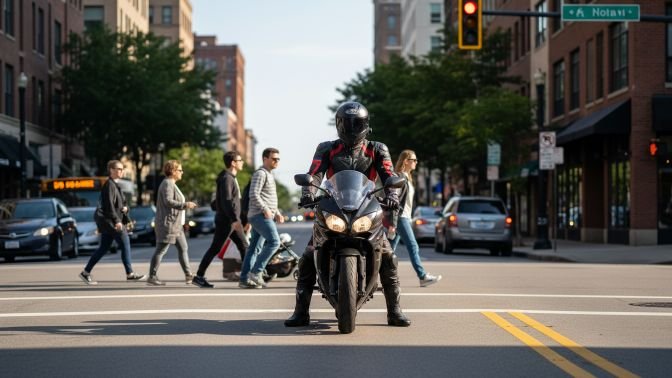
I expect riders to follow the law and treat others with respect at intersections. Doing both cuts crash risk and keeps traffic moving predictably.
Following Local Laws
I stop at red lights and stop signs every time, just like a car driver must. I ride with the flow of traffic on the right side of the lane unless I need to move left to pass or avoid hazards.
I use hand signals for turns and lane changes so drivers and cyclists know my intent. I yield the right-of-way when signs or signals require it and when pedestrians occupy a crosswalk.
I carry any required lights, reflectors, or helmet (if my state mandates one). I obey local rules about where bikes may ride—bike lanes, shoulders, or the main lane—and I avoid sidewalks where laws ban cycling.
Respecting Pedestrians and Other Cyclists
I give pedestrians clear space and always yield at crosswalks. I slow to walking speed when passing people on shared paths and call out or ring a bell before I pass.
I ride predictably near other cyclists: I match lane position, signal, and avoid sudden swerves. In group rides, I follow the lead rider’s signals and maintain a safe gap to prevent pile-ups.
When right-of-way is unclear, I err on the side of caution and let others go first. I treat everyone’s safety as my responsibility, not just my own.
Common Mistakes Riders Should Avoid
I often see riders assume every driver sees them. This leads to entering intersections without checking for turning cars or drivers running lights. I always scan left, right, and ahead before moving.
Many riders skip a quick pre-ride check and pay for it later. Tires, brakes, lights, and oil matter. I use a simple T-CLOCS check to catch obvious problems fast.
Riders sometimes ride too fast into intersections. Speed cuts reaction time and increases stopping distance. I slow down and approach intersections at a controlled pace.
I notice riders hugging blind spots or lane-splitting where it’s unsafe. Staying visible in a lane and avoiding tight gaps keeps me safer. I pick a position that makes me easier to see.
Assuming the other driver will yield is risky. Yield the right of way when unsure. I make eye contact when possible and don’t rely on signals alone.
Some riders forget protective gear for short or slow rides. Even low-speed crashes can cause injury. I put on helmet, gloves, and jacket every ride.
I sometimes see riders distracted by phones, radios, or passengers. Distraction steals focus. I keep both hands free and my attention on the road.
- Quick checklist I follow:
- Look for left turns and drivers running lights
- Slow down before entering
- Do a T-CLOCS pre-ride check
- Maintain visible lane position
- Wear protective gear
FAQs
How should I position my bike when approaching an intersection?
I stay visible and pick the lane position that matches my intended move. I use the center of the lane for turns and the right side when going straight, unless hazards or parked cars force me to adjust.
What should I do at uncontrolled intersections?
I slow down and prepare to stop. I yield to traffic on my right and never assume other road users see me.
How can I reduce risk from turning vehicles?
I make eye contact when I can, signal early, and ride where drivers expect me. I avoid filtering between lanes in intersections and give myself an escape path.
What if a light turns yellow as I approach?
I judge distance and speed, and I stop if I can do so safely. If stopping would cause a crash, I proceed through the light with caution.
Do I need special checks before crossing?
I scan left-right-left, watch for riders at the edge of lanes, and read brake lights and turn signals. I stay ready to brake or swerve to avoid sudden conflicts.
Conclusion
I stress the importance of staying alert and predictable at intersections. I scan early, signal clearly, and choose a lane position that makes me visible to other road users.
I trust the rules of right-of-way, but I do not assume others will follow them. I slow when uncertainty appears and prepare to stop if a driver or cyclist behaves unpredictably.
I use my mirrors and glance over my shoulder before changing lanes or turning. I keep my speed manageable so I can react to sudden hazards.
I wear bright gear and keep my lights on to improve visibility. I also practice defensive space management, leaving room to escape if needed.
I commit to continuous learning and practice. Small habits built at intersections reduce risk and help me ride with more confidence and control.